Watchmakers Adopt AI and Space-Themed Innovation
Swiss watch exports fell for a second consecutive year in 2025, and established brands presented a three-pronged response at Watches and Wonders 2026, according to DMARGE. DMARGE reports that Audemars Piguet CEO Ilaria Resta said the company is using AI in restoration, servicing, and inventory work to recover historical designs and manage thousands of references. DMARGE cites a Deloitte survey of 420 senior luxury executives that ranked AI and materials innovation as the sector's most transformative forces and found over 40% of respondents are implementing generative AI in selected areas. Publicly available product pages and press material from Swatch Group document ongoing space-themed lines such as the Bioceramic MoonSwatch and the 2024 "Mission on Earth" collection; reporting from Stuff.com shows Swatch teasing a new MoonSwatch collaboration for May 16, 2026. DMARGE frames a third innovation vector as "disappearing complications."
What happened
DMARGE reports Swiss watch exports declined for the second year running in 2025, marking an industry correction after the post-pandemic boom. DMARGE reports that Audemars Piguet CEO Ilaria Resta said at Watches and Wonders 2026 that the brand is using AI in restoration and servicing to recover original designs and component details for watches reaching back 150 years and to build a digital inventory of the thousands of references produced since 1875. DMARGE cites a Deloitte survey of 420 senior luxury-brand executives that ranks AI and materials innovation as the most transformative forces and reports that more than 40% of the companies surveyed are already implementing generative AI in selected areas.
Technical details
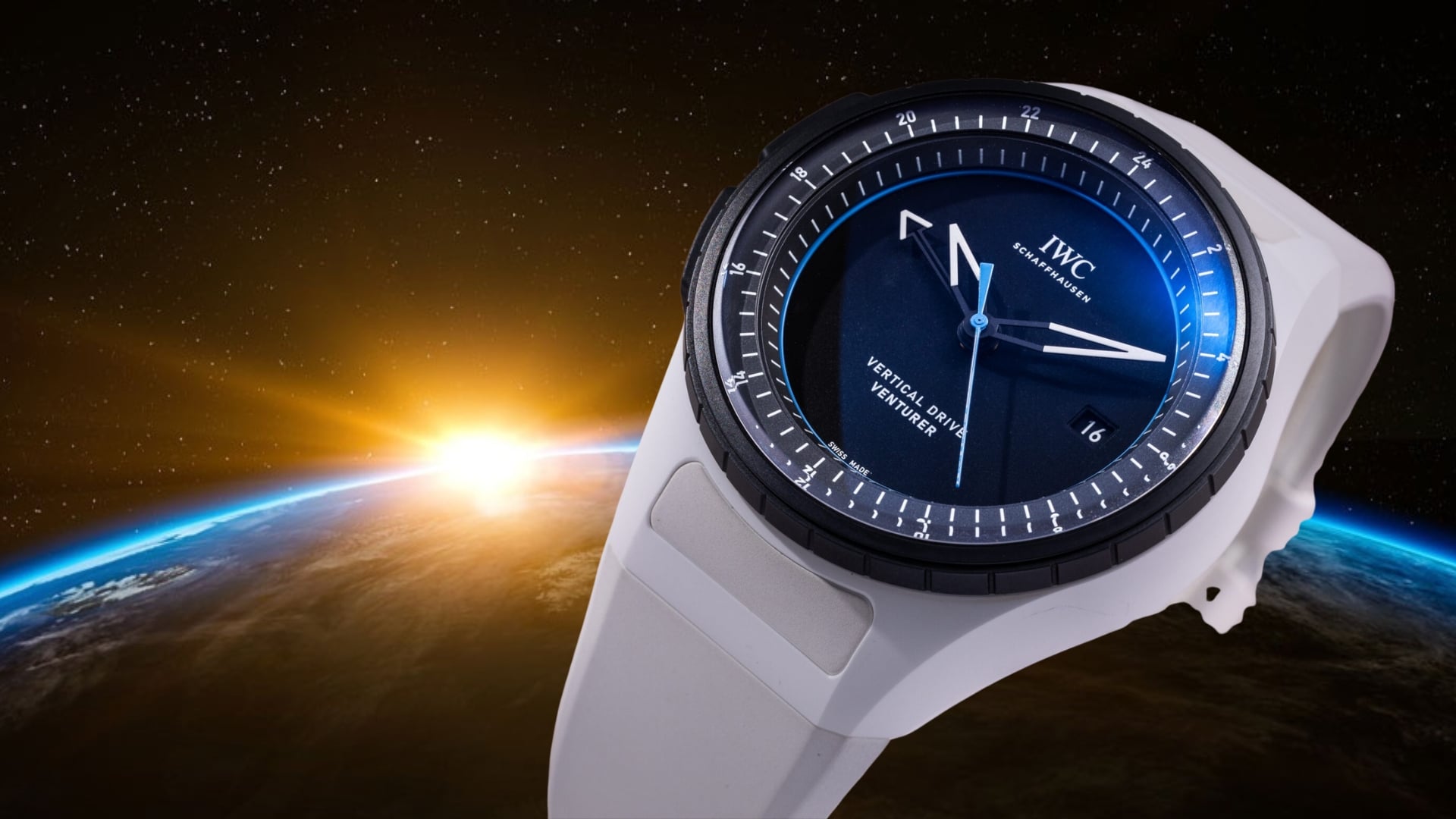
Per the Swatch Group archive and product pages, the Bioceramic MoonSwatch family and related "Mission" releases, including the 2024 Mission on Earth line, are active product programs that explicitly reference space imagery and collaboration with OMEGA design elements. Swatch product pages list model specifications and pricing for the MoonSwatch family, and Stuff.com reports that Swatch teased a new MoonSwatch collaboration with a May 16, 2026 reveal.
Context and significance
Luxury watchmaking combines centuries-old craft with modern branding and product marketing. Public reporting shows brands are turning to generative and computer-vision tools to speed restoration workflows and manage large legacy catalogs, while other parts of the market pursue consumer-facing narratives tied to space exploration and collectible collaborations. Swatch Group product pages and DMARGE reporting together show the market split between high-horology houses integrating technical AI support and mass-market or collaborative lines leaning on space-themed storytelling.
Editorial analysis
The coverage collected by DMARGE and brand materials from Swatch Group illustrate three concurrent innovation vectors in contemporary watchmaking: - AI and digital tooling for restoration, inventory, and supply-chain predictability; - space-themed and space-qualified design, reflected in product lines and public collaborations; - mechanical experimentation, described in reporting as "disappearing complications," meaning design moves that emphasize minimalism or novel displays over traditional multi-function dials.
For the broader AI/DS community, these developments are notable because they illustrate demand for industry-specific tooling: image-to-CAD reconstruction, historical parts matching, and robust indexing of legacy production records. Such workloads emphasize labeled archival data, domain-specific OCR, and fine-tuned vision models integrated into service workflows.
What to watch
Industry context
Observers should watch for: - further public disclosures from brands about the specific AI tools or vendors they adopt; - patent filings or technical writeups that detail image-reconstruction or restoration pipelines; - collaborations between heritage brands and aerospace or testing organizations if any brand pursues flight-qualification for timepieces, with reporting so far limited to product marketing and DMARGE coverage.
For practitioners
These are application-level uses of AI rather than public model releases. The concrete AI use cases reported are document and image reconstruction, historical reference matching, and digital cataloguing. Those rely on high-quality imaging, structured metadata, and potentially custom retrieval or computer-vision pipelines rather than frontier-model experimentation.
Monitor whether luxury brands publish technical case studies or partner with enterprise AI vendors; such disclosures would create reproducible signals about data quality, model types, and evaluation metrics needed to deliver trustworthy restoration and inventory systems. Also track how brands operationalize model outputs into regulated repair and archival processes, since provenance and auditability will matter for collectible valuations.
Key Points
- 1Luxury houses are applying AI to restoration and inventory, creating demand for high-quality archival imaging and retrieval systems.
- 2Space-themed product lines, documented by Swatch Group, are a marketing and design vector rather than a purely technical program.
- 3Industry observers should track vendor disclosures and technical case studies to understand production-grade AI workflows in heritage manufacturing.
Scoring Rationale
This story is moderately important for AI/DS practitioners because it documents applied AI use cases-restoration, cataloguing, and image reconstruction-in a heritage manufacturing context. It is not a frontier-model or infrastructure event, but it signals practical, production-facing demand for domain-specific vision and retrieval tooling.
Sources
Public references used for this report.
Practice interview problems based on real data
1,625 SQL & Python problems across 15 industry datasets — the exact type of data you work with.
Try 250 free problems