
Nvidia Drives AI Factory Buildouts and Infrastructure
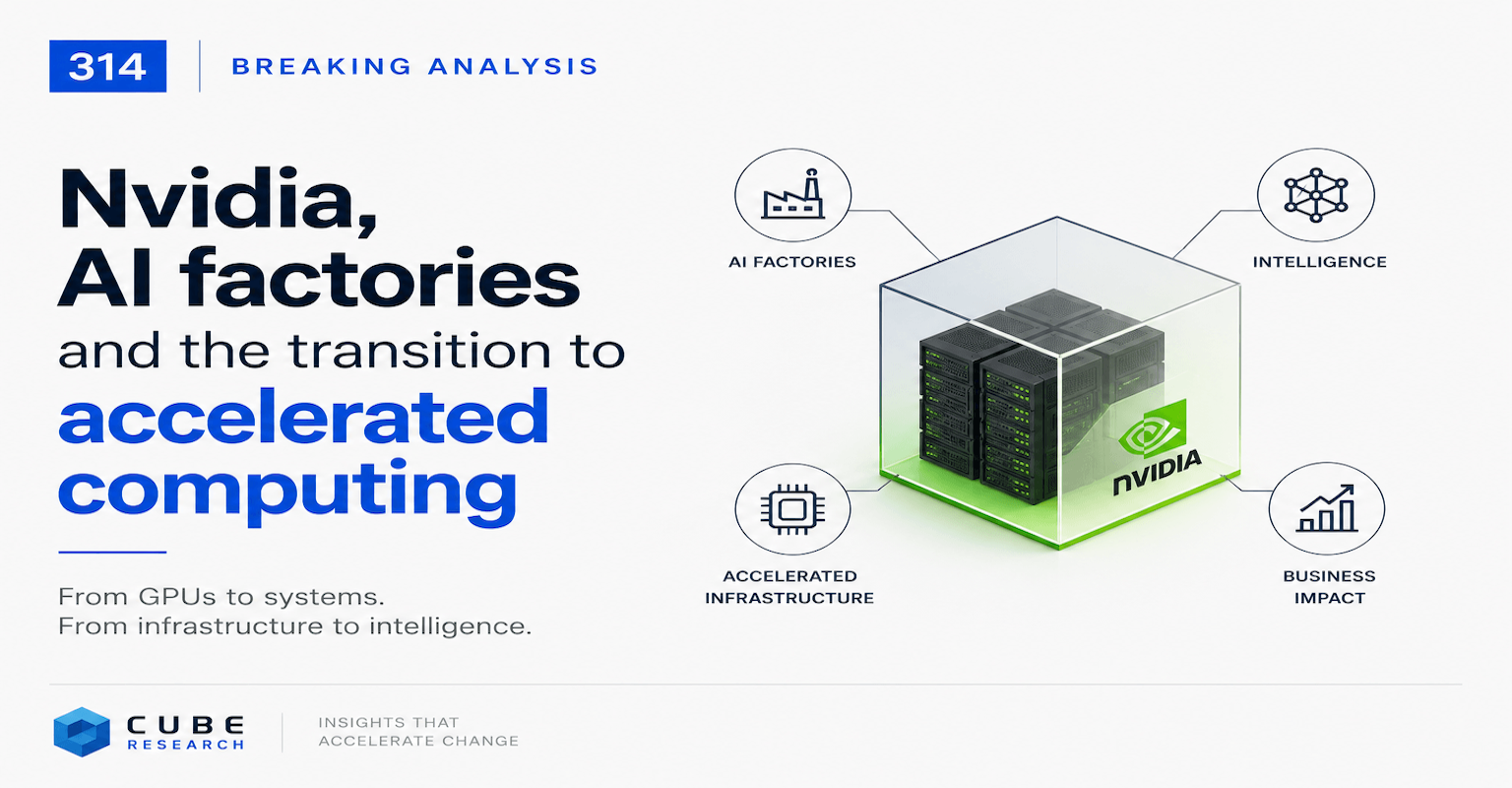
NVIDIA announced a multiyear commercial and technology partnership with Corning to expand U.S. manufacturing of optical connectivity needed for large-scale AI data centers, according to a May 8 NVIDIA press release. The release states Corning will increase U.S. optical connectivity manufacturing capacity by 10x, expand U.S. fiber production capacity by more than 50%, and create more than 3,000 jobs. Separately, NVIDIA said it is accelerating seven systems at U.S. Department of Energy labs and supporting the Solstice system, which NVIDIA describes as featuring 100,000 Blackwell GPUs, per NVIDIA news. NVIDIA's Enterprise Reference Architectures white paper frames the "AI Factory" as a repeatable blueprint for building accelerated computing environments to transform data into production AI at scale.
What happened
NVIDIA and Corning announced a multiyear commercial and technology partnership to expand U.S.-based manufacturing of optical connectivity for AI infrastructure, according to a May 8 NVIDIA press release. The press release states Corning will increase its U.S. optical connectivity manufacturing capacity by 10x, expand U.S. fiber production capacity by more than 50%, and create more than 3,000 new jobs. NVIDIA's corporate announcements also describe collaborations to accelerate seven systems at U.S. Department of Energy labs, and say the Solstice system will feature 100,000 NVIDIA Blackwell GPUs while the Equinox system will include 10,000 Blackwell GPUs, per NVIDIA news dated May 8.
Technical details
Per NVIDIA's Enterprise Reference Architectures white paper, the company frames an AI Factory as a converged, repeatable architecture that pairs accelerated compute, high-performance networking, software stacks, and validated blueprints to move from experimentation to production. The white paper lists the principal engineering challenges as scaling GPU clusters, integrating high-speed optical connectivity, managing power and cooling, and providing validated software and orchestration for model lifecycle operations.
Industry context
Why it matters for practitioners
What to watch
Editorial analysis
Industry reporting places this announcement in a broader shift toward accelerated computing at hyperscale. Companies building comparable large AI deployments typically require orders-of-magnitude increases in optical fiber bandwidth and tighter integration between silicon, photonics, and systems integration, which drives upstream investments in manufacturing and supply chains. Strategic supplier partnerships, like the NVIDIA-Corning deal, match a known pattern where compute demand creates follow-on demand for materials, cabling, and photonics.
For ML engineers and infrastructure teams, the emphasis on validated reference architectures and on expanding optical connectivity supply chains reduces friction in provisioning dense GPU clusters. The white paper's framing of repeatable blueprints speaks to common operational pain points: reproducible hardware stacks, network topologies, and power/cooling design. Observers who manage on-prem or co-lo deployments should treat validated reference designs and supplier roadmaps as inputs to capacity planning and procurement timelines rather than as vendor lock-in prescriptions.
Monitor published reference-architecture details, open-source or partner-provided tooling that maps orchestration to hardware topologies, and availability timelines for the announced manufacturing expansions. Also watch interoperability efforts from server OEMs, cloud providers, and software vendors that implement or certify against NVIDIA's blueprints, and DOE deployment schedules for the Solstice and Equinox systems as practical benchmarks for large-scale Blackwell GPU availability.
Key Points
- 1NVIDIA and Corning's partnership addresses a bottleneck: optical connectivity must scale alongside GPU deployments to enable hyperscale AI data movement.
- 2NVIDIA's Enterprise Reference Architectures position 'AI Factories' as repeatable blueprints, accelerating enterprise transition from experiments to production deployments.
- 3Industry suppliers expanding U.S. manufacturing capacity signal a broader shift from component scarcity to industrial-scale AI infrastructure supply chains.
Scoring Rationale
The story covers major infrastructure commitments and a technology partnership that materially affect capacity for large-scale GPU deployments, plus DOE-scale systems with 100,000 Blackwell GPUs. That combination has high operational relevance for practitioners provisioning AI compute.
Sources
Public references used for this report.
Practice interview problems based on real data
1,625 SQL & Python problems across 15 industry datasets — the exact type of data you work with.
Try 250 free problems

