Nvidia Deploys OpenAI Codex To 10,000 Employees

NVIDIA has rolled out OpenAI's Codex, powered by GPT-5.5, to more than 10,000 employees across engineering, product, legal, marketing, finance, sales, HR, operations, and developer programs. The deployment runs on NVIDIA rack-scale GB200 NVL72 systems, which NVIDIA says deliver dramatically lower cost per million tokens and higher token throughput per megawatt compared with prior-generation infrastructure. Internal reports cite large productivity gains: debugging cycles shortened from days to hours, multi-file experiments collapsing from weeks to overnight, and teams shipping end-to-end features from natural-language prompts. Jensen Huang framed the move as a company-wide jump to the "age of AI," while Sam Altman confirmed broader access to Codex. This is a meaningful enterprise-scale validation of agentic, model-powered developer tooling and GPU-accelerated inference economics.
What happened
NVIDIA has provisioned OpenAI's agentic coding app Codex, powered by GPT-5.5, to over 10,000 NVIDIAN employees across engineering, product, legal, marketing, finance, sales, HR, operations, and developer programs. The service is hosted on GB200 NVL72 rack-scale systems and, according to NVIDIA, yields substantial cost and efficiency improvements. Jensen Huang framed the rollout as a shift into the "age of AI," and Sam Altman confirmed the expanded internal access.
Technical details
GPT-5.5 is presented as a step up in agentic capability, matching prior per-token latency while performing more complex, multi-step tasks. NVIDIA reports the GB200 NVL72 deployment achieves 35x lower cost per million tokens and 50x higher token output per second per megawatt relative to previous systems, making frontier-model inference more viable at enterprise scale. Early internal outcomes include faster debugging, shorter experiment cycles, and end-to-end feature delivery from natural language prompts. Key technical claims and operational changes:
- •Codex now operates as an agentic, multi-tool application able to plan, use external tools, and carry tasks to completion using GPT-5.5.
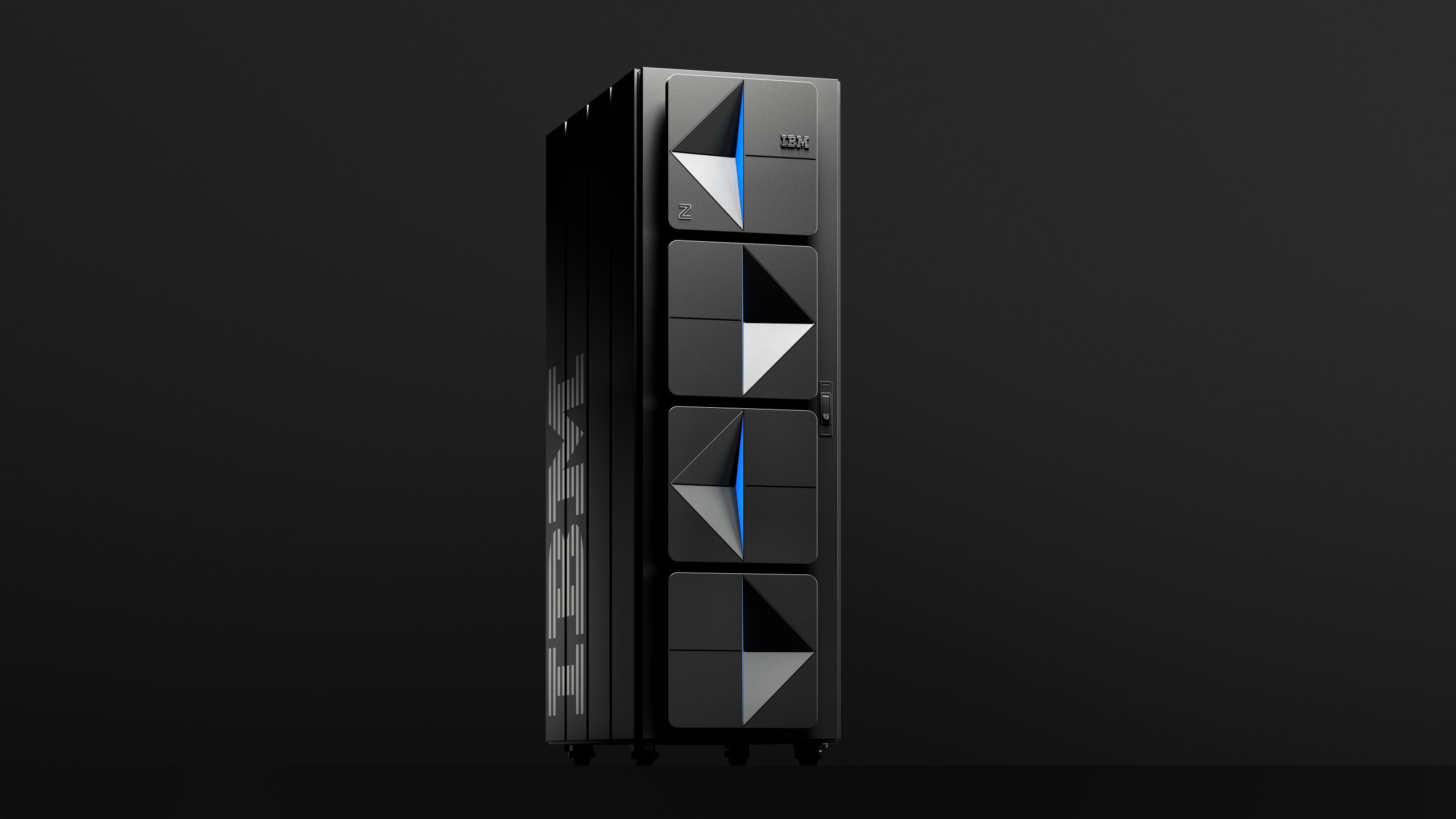
- •Serving on GB200 NVL72 emphasizes power efficiency and throughput improvements for low-latency inference workloads.
- •OpenAI reports token efficiency gains, meaning fewer tokens required per Codex task, which lowers operational cost and extends usable quotas for token-limited products.
Context and significance
This is a significant enterprise validation of two linked trends: the maturation of agentic models for knowledge work, and infrastructure-driven reductions in inference cost. For practitioners, the deployment demonstrates that advanced agentic models are crossing from R&D proofs to company-wide productivity tools. GPT-5.5 claims stronger multi-step reasoning, tool use, and efficiency compared with prior frontier models, which matters for teams building internal developer platforms and CI/CD-integrated assistants. NVIDIA's emphasis on energy and throughput gains underscores an accelerating feedback loop: more efficient hardware lowers the marginal cost of running larger, more capable models, which in turn drives more aggressive internal adoption and tighter hardware-model co-design.
Why this matters for engineering teams
The combination of model capability and optimized serving means organizations can consider broader, lower-risk rollouts of agentic assistants beyond a small developer pilot. Token efficiency and power improvements change cost modeling for internal tooling, making continuous-coding assistants, automated test generation, and multi-file refactors operationally affordable for larger user bases. The reported productivity effects, if reproducible, can compress development timelines across many teams and shift how companies staff and structure engineering work.
What to watch
Validate claims in real-world pilots, especially around reliability, hallucination modes, and guardrails for legal, finance, and HR workflows. Monitor how OpenAI exposes GPT-5.5 on the API and what additional safeguards or rate-control mechanisms appear for enterprise customers. Also watch competitors and platform partners to see whether similar efficiency gains and enterprise rollouts accelerate industrywide adoption.
Bottom line
The NVIDIA-OpenAI internal deployment is an early, material example of agentic models moving to broad enterprise use. It highlights the importance of hardware-model co-optimization and forces practitioners to reassess operational costs, safety controls, and the scope of automatable knowledge work.
Key Points
- 1NVIDIA scaled OpenAI's Codex with GPT-5.5 to over 10,000 employees, proving agentic models work at enterprise scale.
- 2Serving GPT-5.5 on GB200 NVL72 claims 35x cost and 50x throughput advantages, changing inference economics for production use.
- 3Token efficiency and multi-step capabilities make agentic coding assistants plausible for broader internal adoption, but safety and reliability remain key implementation risks.
Scoring Rationale
This is a notable enterprise-scale deployment tying a frontier model, GPT-5.5, to large-scale internal use and new GPU infrastructure efficiency claims. It materially affects how practitioners model costs and plan agentic tooling, but it is not a paradigm-shifting release.
Sources
Public references used for this report.
Practice interview problems based on real data
1,625 SQL & Python problems across 15 industry datasets — the exact type of data you work with.
Try 250 free problems