Nori Robotics Offers A3 Household Robot Under $1,700
Nori Robotics is offering the Nori A3 household robot for under $1,700 for a second batch this fall, with user training presented as an alternative to costly pre-programmed humanoids. New Atlas reports that Nori will assemble 100 A3 units at its San Francisco facility, while the available reporting leaves its training method and performance validation unspecified.
Nori Robotics is offering its A3 household robot for under $1,700, presenting a lower-cost route to task-capable home robotics than expensive pre-programmed humanoid systems. According to New Atlas, the company describes the A3 as a robot that users can train to perform a wide range of tasks.
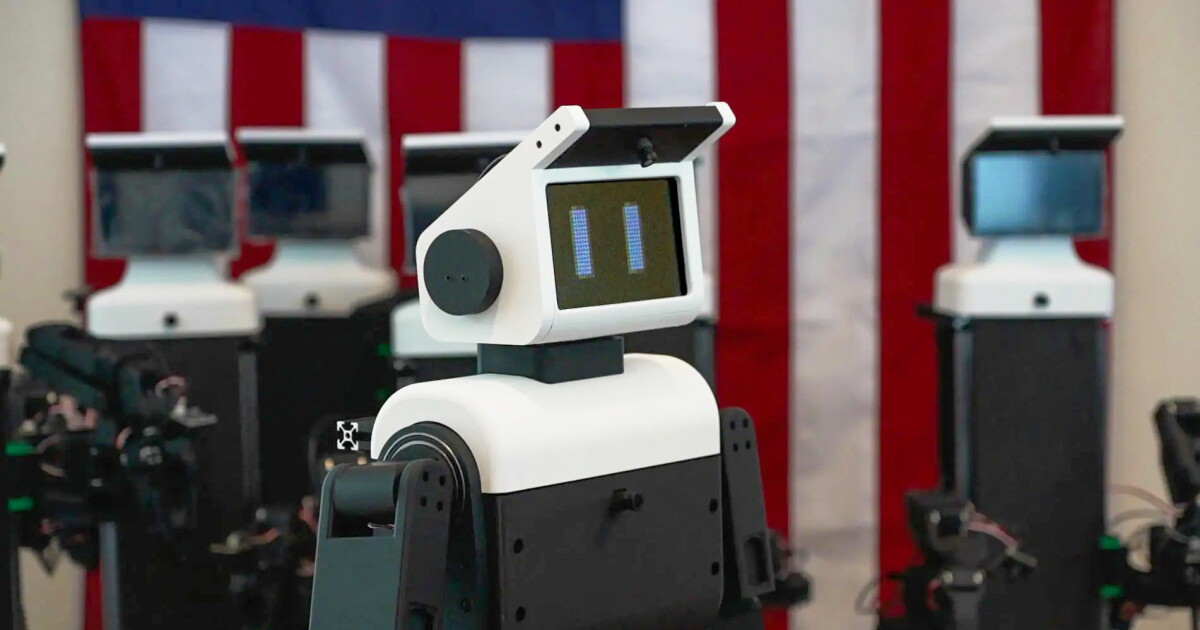
New Atlas reports that Nori will assemble 100 A3 units in its San Francisco facility for a second batch this fall. The publication characterizes the machine as visually utilitarian rather than polished, while reporting Nori's claim that users can customize its behavior through training.
Training is the central product claim
The A3's relevance is not simply its advertised price. It rests on whether users can teach useful household behaviors with enough repeatability to justify deploying a robot around homes, objects, and layouts that vary substantially from one household to another.
For robotics engineers, that makes the interface between human demonstrations and robot execution a more consequential question than the headline price. Home manipulation systems typically need to cope with object variation, clutter, grasp uncertainty, changing lighting, and safety constraints near people. Companies pursuing comparable systems commonly face a tradeoff between broad task adaptability and predictable, bounded performance.
The available reporting does not establish the A3's training method, sensing stack, autonomy level, task-success rates, or safety-validation process. Those details would be necessary to evaluate whether its claimed customizability is practical outside controlled demonstrations.
A small production batch
A 100-unit batch is a limited manufacturing run rather than evidence of broad consumer availability. It may nevertheless provide a real-world test of user training workflows, hardware reliability, and support requirements, assuming the reported production schedule is met.
New Atlas frames the A3 as an attempt to make household robotics accessible at a much lower purchase price than many humanoid projects. The story illustrates a recurring robotics challenge: lowering hardware cost does not by itself resolve the data, control, evaluation, and safety problems involved in general-purpose manipulation.
Key Points
- 1Nori Robotics advertises the A3 below $1,700, making user-trained household manipulation the product's central technical and commercial proposition.
- 2New Atlas reports a 100-unit fall batch, a limited deployment that could expose reliability and support constraints outside demonstrations.
- 3Across household robotics, affordable hardware still requires robust perception, manipulation, demonstration learning, and safety validation in highly variable environments.
Scoring Rationale
The A3 is a notable consumer-robotics product claim because it pairs an unusually low advertised price with user-trained task customization. However, the available reporting provides limited technical validation, and the reported 100-unit batch indicates an early-scale deployment rather than broad market availability.
Sources
Public references used for this report.
Practice interview problems based on real data
1,625 SQL & Python problems across 15 industry datasets — the exact type of data you work with.
Try 250 free problems