
New York Requires Labels for Synthetic Performers in Ads
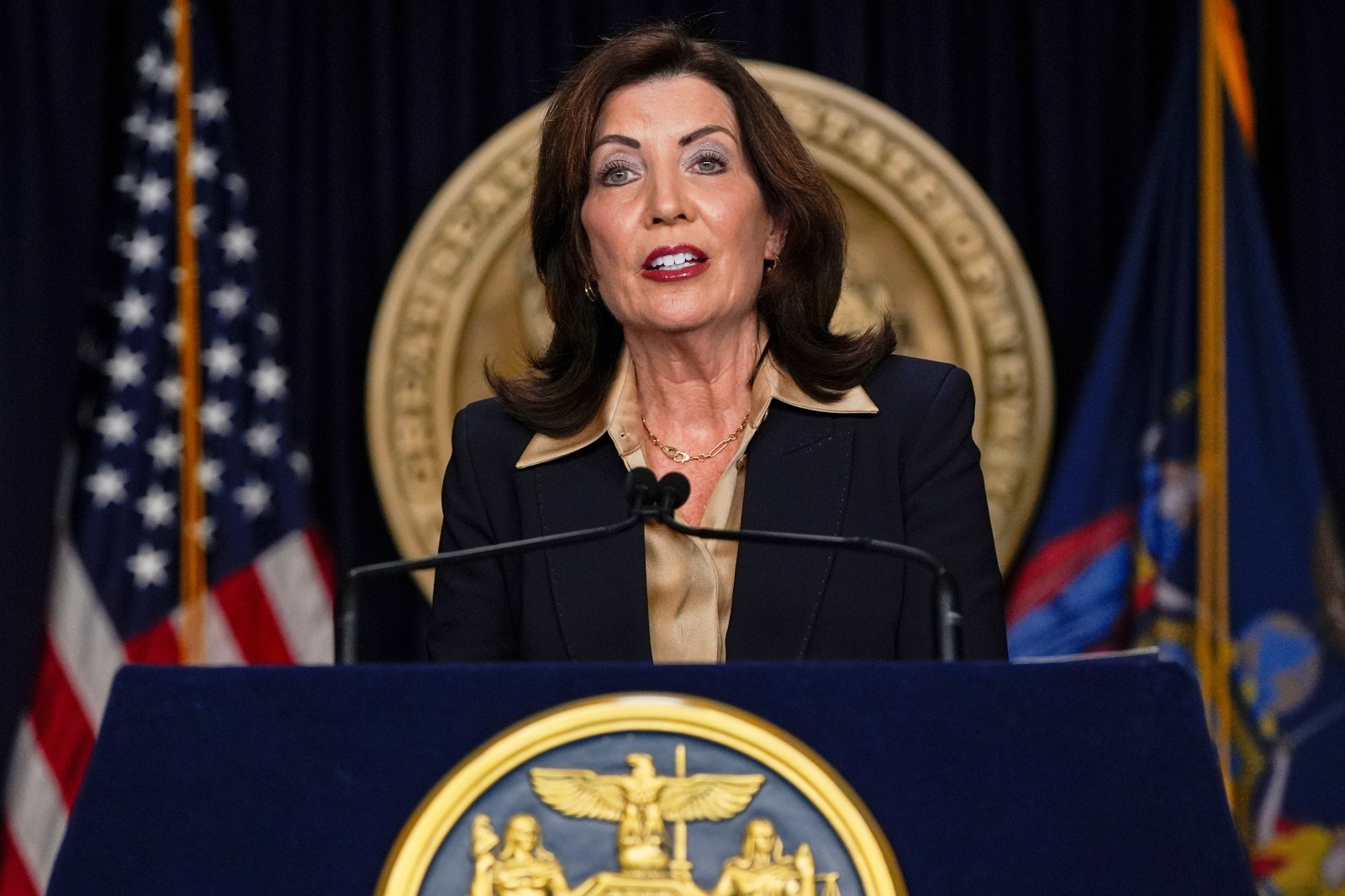
The New York law S.8420-A/A.8887-B, signed by Governor Kathy Hochul in December 2025, went into effect on June 9, 2026, and requires advertisers to conspicuously disclose when an advertisement uses a "synthetic performer," defined as digitally created media that appear as a real person (Governor's press release; NY Senate bill page). The statute applies to advertisements in any medium but exempts promotional materials for expressive works (movies, television, streaming, video games), audio-only ads, and uses of AI solely for language translation (Skadden; NY Senate bill). Penalties are $1,000 for a first violation and $5,000 for subsequent violations (AP; Skadden). Trade groups including the American Association of Advertising Agencies objected during the legislative process, arguing the rule injects compliance uncertainty (AP).
What happened
The New York statute S.8420-A/A.8887-B, signed by Governor Kathy Hochul in December 2025, took effect on June 9, 2026, and requires persons who produce or create advertisements to disclose the use of a "synthetic performer," defined as digitally-created media that appear as a real person, according to the governor's press release and the official Senate bill text. The law prescribes civil penalties of $1,000 for a first violation and $5,000 for subsequent violations, as reported by The Associated Press and summarized by legal advisories.
Technical details
The statute's disclosure obligation applies where an advertiser has "actual knowledge" that the advertisement includes a synthetic performer, per the amendment text on the New York Senate website and law-firm summaries from Skadden and Debevoise. The law does not specify exact language, placement, or visual design for the required disclosure, a gap that law firms noted in client advisories (Skadden). Explicit exemptions include advertising for expressive works where the advertisement's use of synthetic performers mirrors the work itself, audio-only ads, and cases where AI is used solely for language translation (Governor's press release; NY Senate bill).
Editorial analysis
Industry reporting places this as a first-in-the-nation statutory disclosure regime aimed at consumer transparency and protection of performers; the governor's office described it as a "first-in-the-nation law" to boost transparency (Governor's press release). Observers including trade groups voiced opposition during the bill's passage, with the American Association of Advertising Agencies warning of compliance burdens and uncertainty for advertisers operating in New York (AP). For legal practitioners, the combination of a narrow statutory definition and an unspecified disclosure format creates immediate compliance questions for multi-jurisdictional ad buys.
Context and significance
For practitioners: similar state-level regulations are increasingly targeting generative-AI outputs in commercial contexts, and New York's law extends that trend into advertising by tying disclosures to the presence of AI-generated human likenesses. Industry law firms have flagged that advertisers and agencies should assess downstream vendor practices and the threshold of "actual knowledge" when synthetic content is produced by third parties (Skadden; Debevoise). The law sits alongside a second New York statute expanding post-mortem publicity rights to cover digital replicas, increasing legal exposure for commercial uses of deceased individuals' likenesses (Governor's press release; Skadden).
What to watch
For practitioners: how enforcement is applied in practice, whether New York regulators or courts clarify what constitutes a "conspicuous" disclosure, and whether advertisers adopt standard disclosure language or platform-level labeling conventions. Industry trade groups may seek guidance or challenge through rulemaking and litigation; meanwhile, law firms have recommended that businesses review contracts and vendor representations to capture whether AI-generated performers are used (Skadden; Debevoise). Observers will also monitor whether other states adopt comparable disclosure rules or whether federal guidance emerges.
Bottom line
The law creates a concrete, state-level compliance obligation for advertisements using AI-generated humans and introduces modest statutory penalties, while leaving open technical and implementation details that will matter to advertisers, agencies, and platform operators (AP; Governor's press release; Skadden).
Key Points
- 1New York's law S.8420-A/A.8887-B requires disclosure when an ad uses an AI-generated "synthetic performer," effective June 9, 2026.
- 2Penalties are $1,000 for a first violation and $5,000 for subsequent violations, creating a clear civil-enforcement mechanism.
- 3Industry response is mixed; legal advisors urge advertisers to audit vendor workflows and clarify what counts as 'actual knowledge.'
Scoring Rationale
This is a notable, practice-relevant regulatory development that imposes new compliance obligations on advertisers and content producers using generative AI. It is not a model or research breakthrough, but it sets a state-level precedent likely to influence legal and operational choices in ad production.
Sources
Public references used for this report.
View 8 more sources
- New York Enacts Landmark AI & Right of Publicity Laws - Debevoisedebevoise.com
- NY Legislature Passes Groundbreaking Legislation Requiring ...sagaftra.org
- AI Legal Updates: Synthetic Performer Transparency; State + ...dglaw.com
- New York legislation requires disclosure on AI-generated ...lowenstein.com
- NY Law Requires Disclosure of “Synthetic Performers” in Adskelleydrye.com
- Contracts, Consent, and Clones: Navigating Requirements for AI ...jdsupra.com
- New York’s AI advertising law: What it means for your brand or agency right nowfoxwelldigital.com
- US AI Law Tracker: New Yorkai-law-center.orrick.com
Practice with real Ad Tech data
90 SQL & Python problems · 15 industry datasets
250 free problems · No credit card
See all Ad Tech problems