Narwal Releases Flow 2 Robot Vacuum with VLM
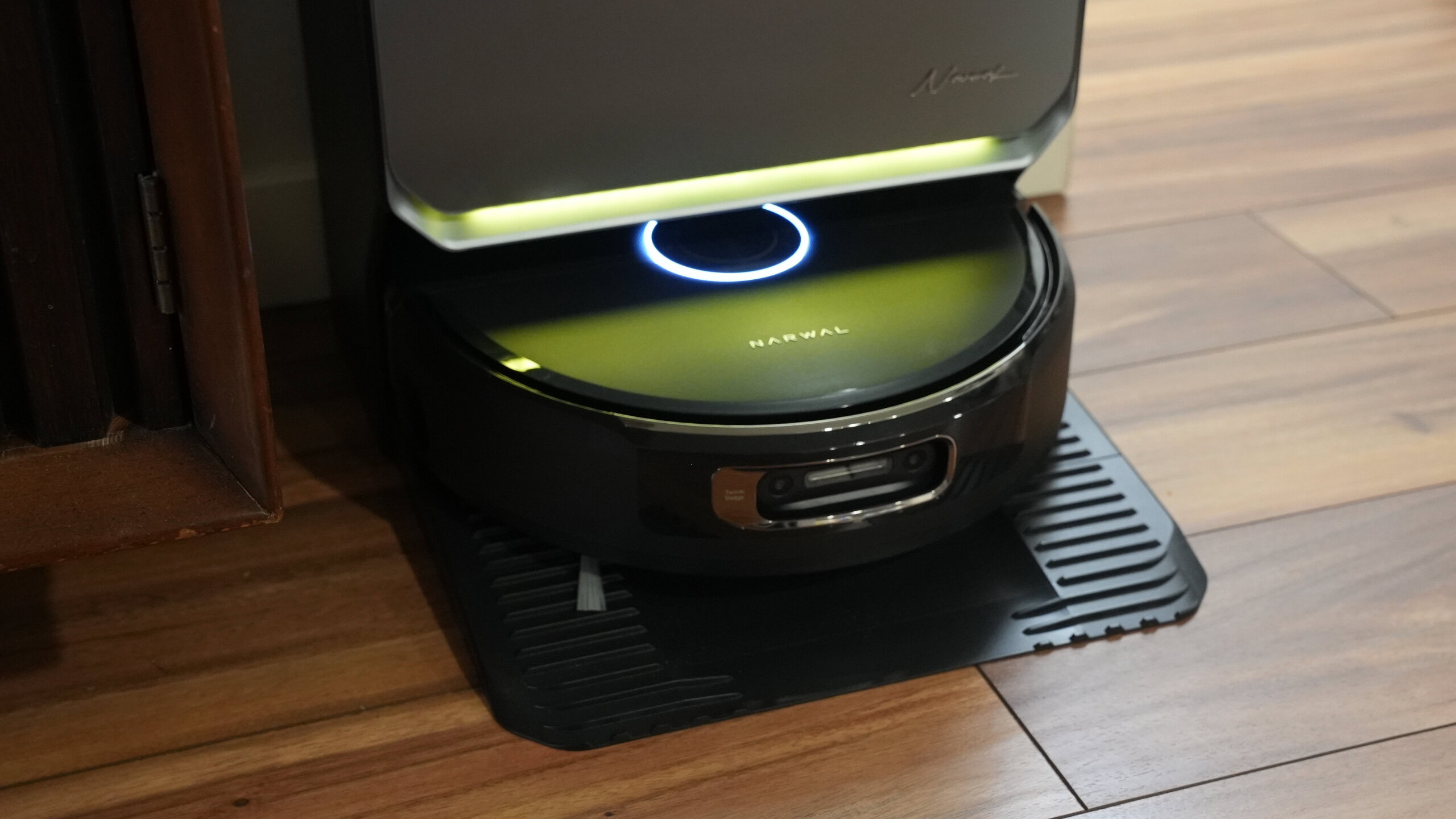
Narwal launched the Flow 2, a flagship robot vacuum and mop that pairs 30,000Pa suction with a Vision Language Model and the NarMind Pro autonomous system. The product combines dual 1080p cameras, laser, RGB, and infrared sensors with hybrid on-device and cloud inference to enable continuous learning, scenario-based modes like Baby Care and Pet Care, and a new AI Floor Tag system. Hardware upgrades include a heated FlowWash track mop running at over 100 RPM, 12N downward force, 140°F self-cleaning, and a base station that handles self-emptying, hot-water washing, and hot-air drying. Pricing positions Flow 2 at the premium end, reflecting aggressive specs and advanced embodied-AI features that matter for home robotics and VLM deployment at scale.
What happened
Narwal announced the Flow 2 robot vacuum and mop, its 2026 flagship that combines high-end cleaning hardware with an integrated Vision Language Model and the NarMind Pro autonomous system. The device pairs 30,000Pa suction and 12N mopping pressure with a heated FlowWash system that reaches 140°F, and a multifunction base station for self-emptying, hot-water mop washing, and hot-air drying. Narwal showcased the product at CES 2026 and begins shipping with a $1,499.99 MSRP in North America.
Technical details
The NarMind Pro system fuses dual 1080p RGB cameras, laser, RGB, and infrared sensors to build dense spatial awareness and obstacle recognition. The VLM enables object-level classification and scenario-aware behaviors; when on-device confidence is insufficient, images can be sent to the cloud for disambiguation, supporting continuous improvement of obstacle avoidance. Key hardware and system specs include:
- •30,000Pa suction with CarpetFocus mode and a DualFlow tangle-resistant brush system
- •12N downward mopping force, a track-style mop running at over 100 RPM, and 16 nozzles for heated water rinsing at 140°F
- •Dual 1080p cameras with ~136-degree field of view, laser + IR sensors, and hybrid on-device/cloud inference for the VLM
- •Base station functions: self-emptying, hot-water wash, integrated scraper, wastewater containment, and hot-air drying
- •Software features: AI Floor Tag for priority avoidance, Baby Care Mode, Pet Care Mode, Adaptive Obstacle Avoidance, Adaptive Smart Cleaning, and automatic floor-type detection with mop/ride-height adjustments
Context and significance
The Flow 2 illustrates how embodied devices are moving beyond simple mapping and scripted behaviors to richer semantic understanding via VLMs and hybrid inference. Narwal is combining high-throughput mechanical design with perception-driven behavior, which matters because cleaning tasks require both contact mechanics and scene-level reasoning. The hybrid architecture, where images are classified locally and escalated to cloud models when needed, is a pragmatic pattern for constrained-edge robotics: it preserves low-latency autonomy while enabling aggregated learning across a fleet. For practitioners, the Flow 2 is a concrete example of deploying a VLM in a consumer device, including practical engineering choices like fallbacks to cloud for low-confidence cases, telemetry-driven model updates, and scenario presets tuned to household contexts.
Privacy and operational trade-offs
Flow 2's camera-first approach raises predictable privacy and security questions. Narwal documents local capture with conditional cloud upload for classification, which reduces but does not eliminate data exfiltration. Expect device-level controls, opt-outs, and disclosure of retention policies to be focal points for early adopters and regulators. Operationally, cloud-reliant classification improves accuracy over time, but introduces dependency on connectivity, potential latency for rare object classes, and the usual data labeling and feedback loop costs for continuous improvement.
What to watch
Monitor Narwal's model update cadence, privacy controls, and developer or enterprise APIs for fleet learning. Competitors will adopt similar VLM-on-robot patterns, so benchmarks that measure perception robustness, false positive avoidance, and cleaning efficacy across mixed-floor homes will determine which vendors lead in real-world performance.
Key Points
- 1Narwal pairs high-flow mechanical cleaning, 30,000Pa suction and 140°F FlowWash, with perception-driven behavior, improving cleaning efficacy across floor types.
- 2A hybrid on-device and cloud Vision Language Model enables continuous learning, universal object recognition, and scenario modes like Baby Care and Pet Care.
- 3Design choices favor fleet learning and accuracy at the cost of cloud dependence and privacy trade-offs, important for deployment and regulatory scrutiny.
Scoring Rationale
Flow 2 is a notable, practitioner-relevant product that demonstrates VLMs applied to embodied home robotics. It is not a frontier research breakthrough, but its hybrid inference, fleet learning design, and aggressive hardware specs make it important for robotics engineers and product teams.
Sources
Public references used for this report.
Practice interview problems based on real data
1,625 SQL & Python problems across 15 industry datasets — the exact type of data you work with.
Try 250 free problems