Musk and OpenAI Executives Face Intense Trial Questioning
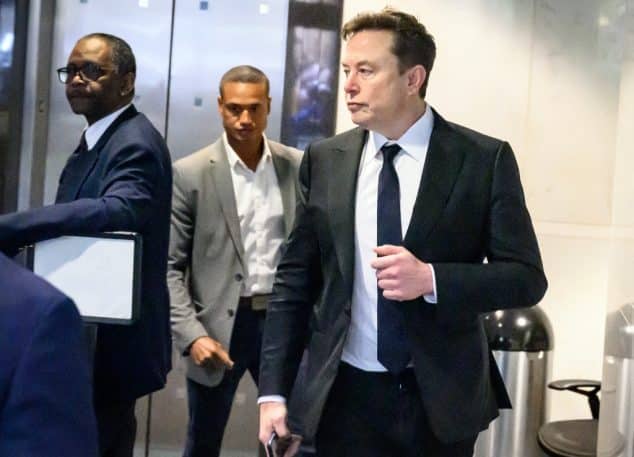
Elon Musk, OpenAI co-founder Greg Brockman, and other executives testified this week in a federal trial in Oakland over OpenAI's conversion from a nonprofit to a for-profit structure. Reuters reports former OpenAI CTO Mira Murati testified that Sam Altman sowed "chaos" and distrust among executives. Musk took the stand and described himself as "a fool," according to CryptoBriefing. CNBC reports a text from Musk to Greg Brockman about a settlement was filed and discussed in court. Musk is seeking $150 billion in damages, Reuters reported. Coverage highlights testimony about recruitment attempts, internal diary entries read in court, and questions about Microsoft investments and OpenAI's governance.
What happened
Elon Musk took the witness stand in a federal courtroom in Oakland, California, and described himself as "a fool" for funding OpenAI, according to CryptoBriefing. Greg Brockman, OpenAI's president and co-founder, testified about early governance discussions and diary entries that flagged the financial stakes of moving from a nonprofit to a for-profit structure, reported The New York Times and Technology Review. Reuters reported that former OpenAI CTO Mira Murati testified via recorded video, saying, "My concern was about Sam saying one thing to one person and completely the opposite to another person," and that she believed Sam Altman created distrust among executives. CNBC reported that a text message from Musk to Brockman about exploring a settlement was filed and discussed in court. Reuters also reported Musk is seeking $150 billion in damages.
Technical details
Editorial analysis - technical context
The trial centers on corporate governance and fundraising choices rather than on model architectures or benchmark claims. Public reporting frames the dispute around OpenAI's institutional structure: a nonprofit origin, a capped-profit subsidiary, and major outside investment, including billions from Microsoft, as described across coverage by The New York Times, Reuters, and CryptoBriefing. Witness testimony introduced evidence about recruitment efforts and internal decision-making, but technical claims about model capabilities were not the trial's focus in the reported testimony.
Context and significance
High-profile litigation that questions a major AI organization's governance attracts attention because it intersects with investor rights, nonprofit law, and competitive dynamics among leading AI labs. Reporting by Technology Review and The New York Times places the trial in the broader race among OpenAI, Google, Anthropic, and Musk's xAI, and notes potential implications for OpenAI's future fundraising and IPO prospects (Technology Review reported coverage suggesting the trial could affect an anticipated IPO valuation). The hearing has produced detailed on-the-record accounts of founders' interactions, including testimony that Musk tried to recruit Sam Altman, per Technology Review.
What to watch
For practitioners
Observers will likely monitor legal rulings on the relief Musk seeks, including any order affecting OpenAI's corporate structure or leadership; Reuters and other outlets flagged the scale of the damages claim. Media reporting also identifies documentary evidence-diary entries, texts, and recorded testimony-that courts may weigh more heavily than public statements. Tracking subsequent filings and Judge Yvonne Gonzalez Rogers' courtroom rulings will show how the judge frames remedy options and factual findings.
Observed patterns in similar cases
Industry analysts note that litigation over nonprofit-to-for-profit transitions often hinges on charter language, donor expectations, and fiduciary duties; such suits can materially delay strategic milestones like IPOs or governance restructurings. Public coverage of this trial emphasizes how documentary records and witness credibility shape high-stakes outcomes more than retrospective narratives about mission or intent.
Key Points
- 1High-profile testimony has centered on documentary evidence and interpersonal disputes, which courts often treat as determinative in governance litigation.
- 2The suit links corporate-structure questions to competitive stakes, because reporting ties OpenAI's outside funding, including from Microsoft, to later strategic shifts.
- 3Observers monitoring the case should focus on judicial rulings and admitted evidence, since remedies hinge on legal findings rather than technical product claims.
Scoring Rationale
This is a notable governance and legal story that affects major AI industry players and could influence fundraising and IPO timelines, but it does not directly change model capabilities or developer tools.
Sources
Public references used for this report.
View 8 more sources
- Musk texted OpenAI's Brockman about settlement two days before trial begancnbc.com
- ‘I Actually Thought He Was Going to Hit Me,’ OpenAI’s Greg Brockman Says of Elon Muskwired.com
- 'I thought he was going to hit me,' OpenAI co-founder says of Muskbbc.com
- Elon Musk accuses Google co-founder of loving robots as much as people: ‘Larry Page called me a ‘specieist”fortune.com
- What I saw at the Musk-OpenAI trial: petty billionaires, protests and a ...theguardian.com
- OpenAI trial: Expert witness outlines expectations from contributorsnbcbayarea.com
- Everything you need to know from the first 2 weeks of the Musk v ...finance.yahoo.com
- Inside Elon Musk and Sam Altman's Battle Over OpenAI - KQEDkqed.org
Practice interview problems based on real data
1,625 SQL & Python problems across 15 industry datasets — the exact type of data you work with.
Try 250 free problems