Microsoft AI CEO Predicts White-Collar Automation Timeline
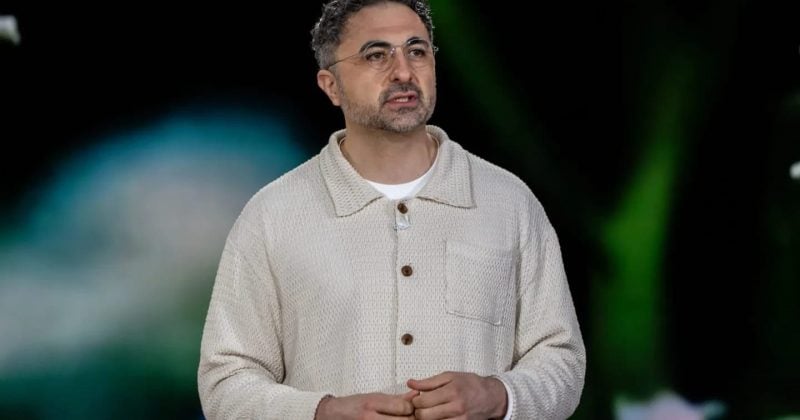
In an interview with the Financial Times, Mustafa Suleyman, CEO of Microsoft AI, said "most, if not all, professional tasks" across roles such as accounting, legal, marketing, and project management could be "fully automated by AI within the next 12 to 18 months" (reported by Fortune, Yahoo, and others). He also cited large recent increases in training compute, saying there has been a "1 trillionfold increase in training compute" over 15 years and predicting further orders-of-magnitude growth (Yahoo/Financial Times). Reporting by CryptoBriefing and Reuters notes deployment of AI in legal and accounting workflows, but finds human review and judgment remain common and that mass displacement has not yet materialized; Challenger, Gray & Christmas tallied about 49,135 AI-related job cuts (CryptoBriefing). Industry observers should treat Suleyman's timeline as a high-profile view that contrasts with mixed empirical evidence of displacement so far.
What happened
In a February interview with the Financial Times, Mustafa Suleyman, CEO of Microsoft AI, said "most, if not all, professional tasks" performed by people who "sit down at a computer" could be "fully automated by AI within the next 12 to 18 months," according to reporting in Fortune and Yahoo. Suleyman named accounting, legal, marketing, and project management as categories he considers particularly vulnerable (Fortune, Yahoo). He also told the Financial Times that there has been a 1 trillionfold increase in training compute over roughly 15 years and predicted an additional 1,000x increase in the next three years (Yahoo/Financial Times).
Technical details
Editorial analysis - technical context
Rapid compute scaling and model size growth are commonly cited drivers of recent capability gains. Observers have linked improved code generation, document synthesis, and task automation to larger models and more compute, but capability gains are uneven across tasks and often require task-specific data, prompting continued human-in-the-loop validation in many professional workflows (industry reporting across Fortune, CryptoBriefing, Reuters).
Context and significance
What to watch
Industry context
Observers should monitor three measurable indicators over the next 6-18 months:
- •the emergence of validated, end-to-end systems that remove human review in regulated workflows (evidence would include client certifications, audit records, or regulatory approvals)
- •labor-market signals such as role eliminations explicitly tied to automation in corporate filings or layoff announcements
- •independent benchmarking showing parity with professional practitioners on real-world, high-stakes tasks. Reporting so far documents capability gains and workforce disruption signals, but not the removal of human oversight at scale (CryptoBriefing, Reuters, Challenger Gray & Christmas)
Implications for practitioners
For practitioners
Teams building applications in legal, accounting, marketing, and project management should expect continued investment in evaluation, validation, and human-in-the-loop controls. Industry experience to date shows systems speed task execution and change workflows, while downstream responsibilities-compliance, liability, nuanced judgment-remain largely human-centered in public reporting (CryptoBriefing, Reuters).
Limitations of the claim
Editorial analysis
High-profile timelines from AI executives shape public debate and policy attention even when empirical displacement is incomplete. Reporting compiled by CryptoBriefing and Reuters finds active deployment of AI in legal and accounting workflows-drafting, auditing, and analysis-yet humans typically remain responsible for review and final decisions. Challenger, Gray & Christmas has tracked roughly 49,135 AI-related job cuts to date, and CryptoBriefing noted Microsoft reduced about 15,000 positions in the prior year without attributing those cuts directly to AI (CryptoBriefing). These data points show adoption is material but not synonymous with full automation.
Suleyman's timeline is a high-profile forecast grounded in compute-scaling arguments he described to the Financial Times; public reporting does not yet supply corroborating, sector-wide evidence of zero-human-involvement automation. Where sources quote specific numbers or quotes from Suleyman, those citations are included above (Financial Times via Fortune and Yahoo).
Key Points
- 1Mustafa Suleyman told the Financial Times that "most, if not all, professional tasks" could be automated within 12-18 months, highlighting compute growth.
- 2Empirical reporting shows active AI use in legal and accounting but continued human review; tracked AI-related cuts total about 49,135 so far.
- 3Industry observers should track end-to-end validation, explicit automation-linked layoffs, and independent benchmarks to assess real displacement.
Scoring Rationale
A high-profile timeline from the head of Microsoft AI draws industry and policy attention and could accelerate debate and investment, but current reporting documents capability gains without clear evidence of full, scaled automation, making this notable but not yet industry-shaking.
Sources
Public references used for this report.
Practice interview problems based on real data
1,625 SQL & Python problems across 15 industry datasets — the exact type of data you work with.
Try 250 free problems