McKinsey Predicts AI Agents Transform Workplace by 2030
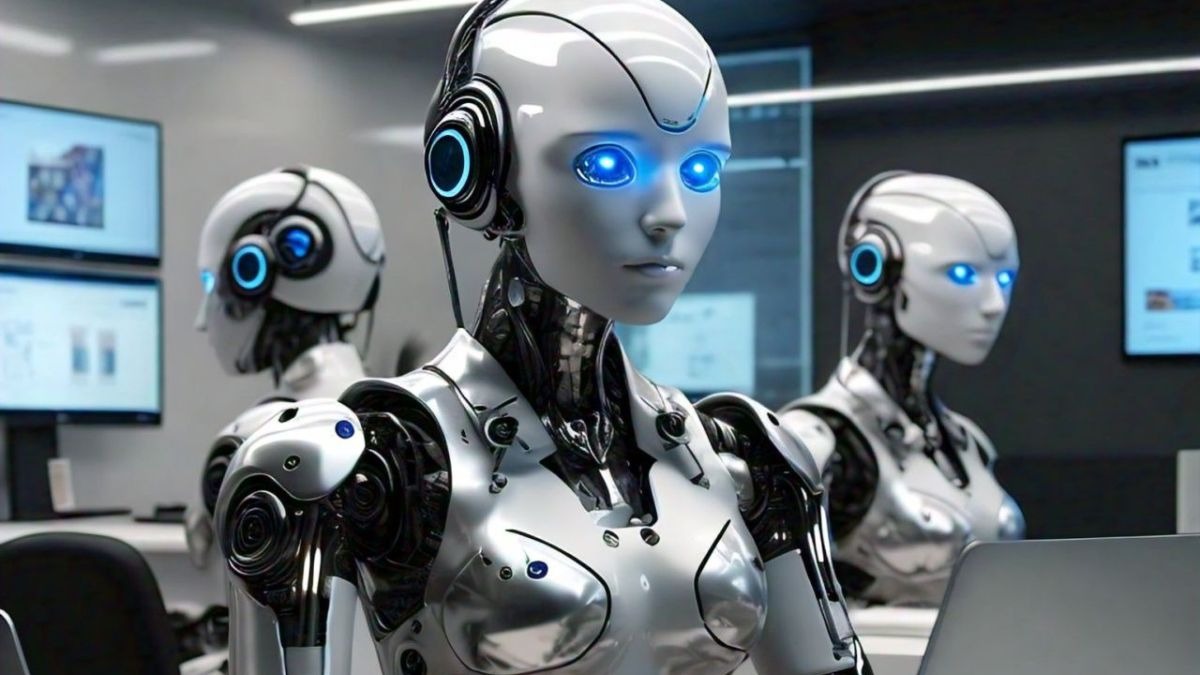
McKinsey's new Global Institute report forecasts that workplaces will shift from humans versus machines to structured partnerships by 2030, unlocking an estimated USD 2.9 trillion in the US if organizations redesign workflows. The report highlights that up to 30 percent of hours could be automated through AI agents, robots, drones, and robotic rovers, with humans moving into supervisory, validation, and decision roles. The new core workplace skill will be effective interaction with machines, commonly framed as prompting, which will command a salary premium. The transition will require large-scale reskilling, role redesign, and investment in systems that support human-agent coordination and safety.
What happened
McKinsey Global Institute lays out a 2030 scenario where work is organized as partnerships among humans, AI agents, and robots rather than competition. The report estimates an additional USD 2.9 trillion could be unlocked in the US alone if companies successfully redesign workflows, and that technologies could automate up to 30 percent of hours across the economy.
Technical details
The report describes concrete task-level shifts and system architectures that practitioners should care about. Robots, drones, and robotic rovers will take on physically risky or repetitive inspection and maintenance tasks while AI agents perform data synthesis, drafting, and predictive triage. Humans will retain responsibility for value judgement, exceptions, and final approvals.
- •Task automation: inspection, routine drafting, predictive maintenance, and scheduling
- •Human roles: supervisors, exception handlers, prompt engineers, and domain validators
- •System requirements: integrated telemetry, human-in-the-loop decision points, explainability logs, and robust failover for safety
Context and significance
This is not a single-technology claim but a systems-level forecast tying robotics, perception pipelines, and generative AI together. The emphasis on "prompting" as a workplace skill reframes human-computer interaction: prompts become a lingua franca for decomposing objectives, constraining agent behavior, and eliciting structured outputs. That matters for ML practitioners because it increases demand for interfaces, prompt tooling, prompt-versioning, and structured evaluation metrics for human-agent handoffs.
Economic and workforce implications The net opportunity is large but conditional. Realizing the USD 2.9 trillion requires investments in reskilling, workflow redesign, and safety controls. McKinsey points to substantial occupational transitions and a need for coordinated policy and corporate training programs to avoid uneven displacement.
What to watch
Organizations should prototype human-agent workflows, instrument handoff points for auditability, and measure productivity lift per redesigned process. Pay attention to tooling that standardizes prompts, records lineage, and enforces guardrails, and to reskilling programs that surface supervisory and validation competencies.
Key Points
- 1Work shifts from substitution to partnership: machines handle routine and risk, humans handle oversight and exception decision-making.
- 2Prompting becomes a core workplace skill, increasing demand for prompt engineering, interfaces, and prompt-version control systems.
- 3Realizing the USD 2.9 trillion opportunity requires large-scale reskilling, workflow redesign, and investments in safety and auditability.
Scoring Rationale
The McKinsey report crystallizes an influential, economy-scale vision connecting robotics, AI agents, and workforce transformation. It is highly relevant to practitioners planning systems and reskilling programs, though it is a forecast rather than a technical breakthrough.
Sources
Public references used for this report.
Practice interview problems based on real data
1,625 SQL & Python problems across 15 industry datasets — the exact type of data you work with.
Try 250 free problems