
Marketing Analysts Evolve Into Strategic Advisors
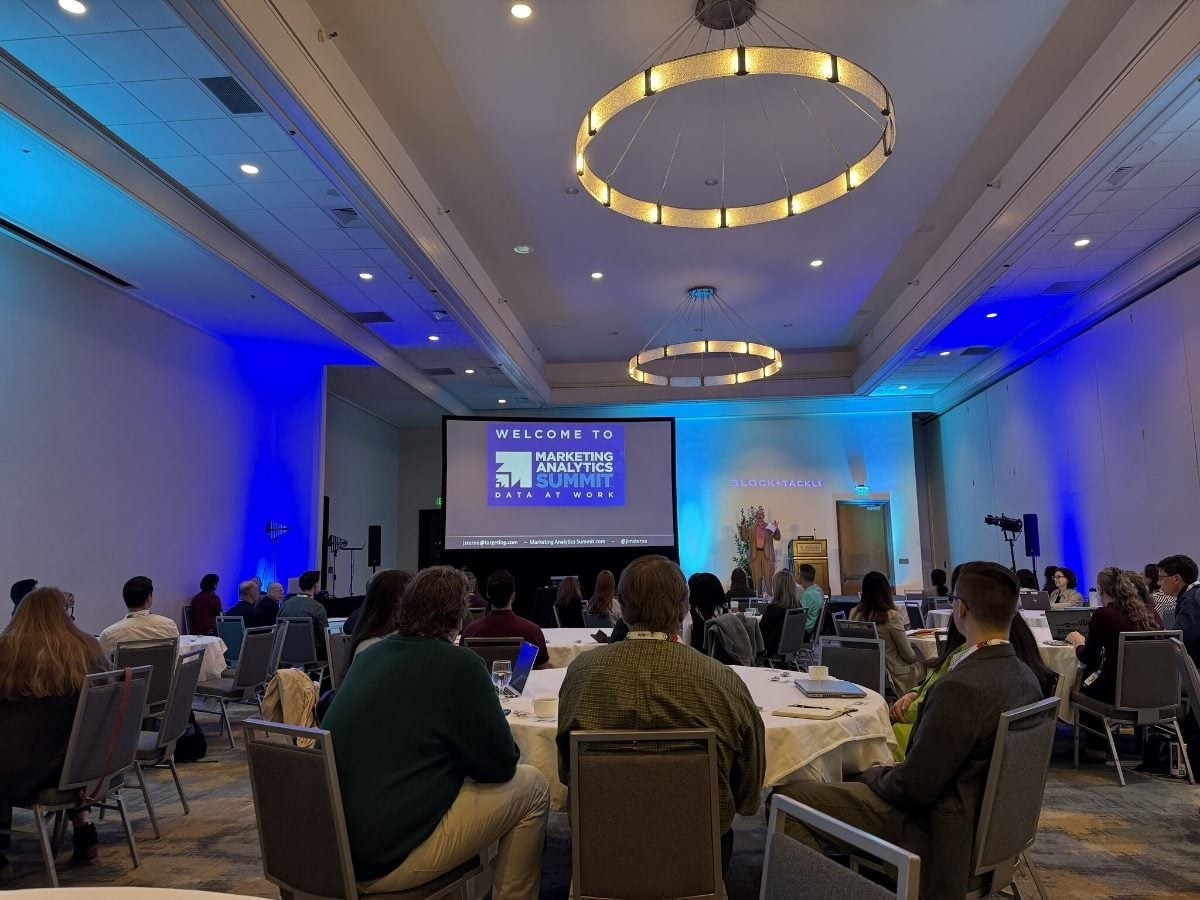
Per CMSWire, sessions at the 25th-anniversary Marketing Analytics Summit (April 28-29, 2026, Santa Barbara) argued that AI has reinvigorated marketing analytics, while poor data quality remains the chief obstacle to turning insights into action. CMSWire reports practitioners described growing pressure for analysts to move beyond dashboard delivery and act as advisors, particularly as AI automates routine reporting tasks. According to the outlet, speakers said AI can clean data, write code, and generate insights on demand, but cannot understand a business's context, anticipate stakeholder needs, or judge whether an output actually makes sense - leaving communication and organizational influence as the recurring operational challenges raised at the summit.
The practical takeaway for data teams is less about AI capability and more about a widening skills gap: as AI increasingly automates the mechanics of reporting, the bottleneck for analytics teams is shifting from technical tooling to judgment - deciding whether an AI-generated number is trustworthy and framing it in a way that changes a stakeholder's decision.
What happened
Per CMSWire, sessions at the Marketing Analytics Summit, in its 25th year and held April 28-29, 2026 in Santa Barbara, argued that AI has reinvigorated analytics work but that poor data quality is the primary barrier to turning insights into action. CMSWire reports attendees said analysts face increasing pressure to move beyond dashboard delivery and act as advisors as AI takes over routine reporting tasks; the outlet notes speakers framed data quality, not tool selection, as the deciding factor in whether AI output is a useful signal or confident-sounding noise.
Industry context
CMSWire reports that Improvado, an analytics vendor, found 78% of companies now use AI to augment analytics teams rather than replace them - a pattern consistent with the summit's framing that entry-level reporting work is increasingly automated while advisory and communication work is becoming more valuable. The official summit program lists sessions on working with imperfect data (optimizing consent rates, bot-mitigation, first-party-data gap-filling) as part of the same 25th-anniversary agenda.
For practitioners
For marketing-analytics and data teams, the summit's framing suggests two concrete priorities: investing in data-quality tooling and governance so AI outputs are trustworthy, and building the communication skills to translate analysis into decisions management will actually act on. Teams that treat AI purely as a reporting accelerator without addressing either of these risk producing outputs that look polished but do not hold up to scrutiny.
What to watch
Whether analytics teams formalize new KPIs or role definitions around advisory work, adoption of data-quality and MLOps-style tooling in marketing analytics specifically, and any published case studies quantifying the shift CMSWire describes from report generation to stakeholder advising.
Key Points
- 1CMSWire reports Marketing Analytics Summit speakers said AI is automating routine reporting, pushing analysts toward advisory and interpretive work instead.
- 2Persistent data-quality gaps, not tool selection, are described as the main limit on whether AI-generated marketing insights are trustworthy.
- 3Analytics teams that pair AI adoption with data-quality governance and stakeholder communication skills are positioned to show clearer ROI from analytics work.
Scoring Rationale
A single-outlet trade-press recap of a niche marketing-industry conference. The AI-augments-not-replaces-analysts theme is directionally useful for marketing-analytics practitioners but is a generic, evergreen industry observation rather than a frontier development, so it is calibrated down from the initial score into the solid-but-narrow tier.
Sources
Public references used for this report.
Practice with real Ad Tech data
90 SQL & Python problems · 15 industry datasets
250 free problems · No credit card
See all Ad Tech problems


