MagicLab Embraces Synthetic Data for Robot World Models
KR-Asia reports that MagicLab showcased new foundation-model and hardware products at the Global Embodied AI Innovation Summit in San Jose on April 28, 2026. Reporting describes Magic-Mix as a world model with two engines, Magic-WAM and Magic-Creator, designed to generate synthetic data and close a loop of data generation, training, and real-world feedback, per KR-Asia. KR-Asia also reports MagicLab has set a revenue target of USD 14 billion by 2036. Separately, Unitree Robotics' IPO prospectus showed RMB 1.707 billion (USD 250.1 million) in revenue for 2025 and shipments exceeding 5,500 units, and KR-Asia cites Unitree founder Wang Xingxing saying overseas revenue exceeded 50% of total in recent years.
What happened
KR-Asia reports that MagicLab staged the Global Embodied AI Innovation Summit (GEIS) in San Jose on April 28, 2026 and unveiled a suite of foundation-model and hardware announcements. Reporting describes Magic-Mix as a world model composed of two engines, Magic-WAM (perception and world understanding) and Magic-Creator (offline synthetic-data generation). KR-Asia reports the company framed the system as supporting a closed loop of data generation, model training, real-world feedback, and further data generation. KR-Asia also reports MagicLab set a revenue target of USD 14 billion by 2036.
What was announced
- •Magic-Mix, a world-model stack with two engines, Magic-WAM and Magic-Creator, described in KR-Asia coverage as enabling simulated data creation and world understanding.
- •MagicHand H01, a dexterous hand with 20 degrees of freedom and 44 high-resolution 3D tactile sensors, targeted at fine manipulation use cases.
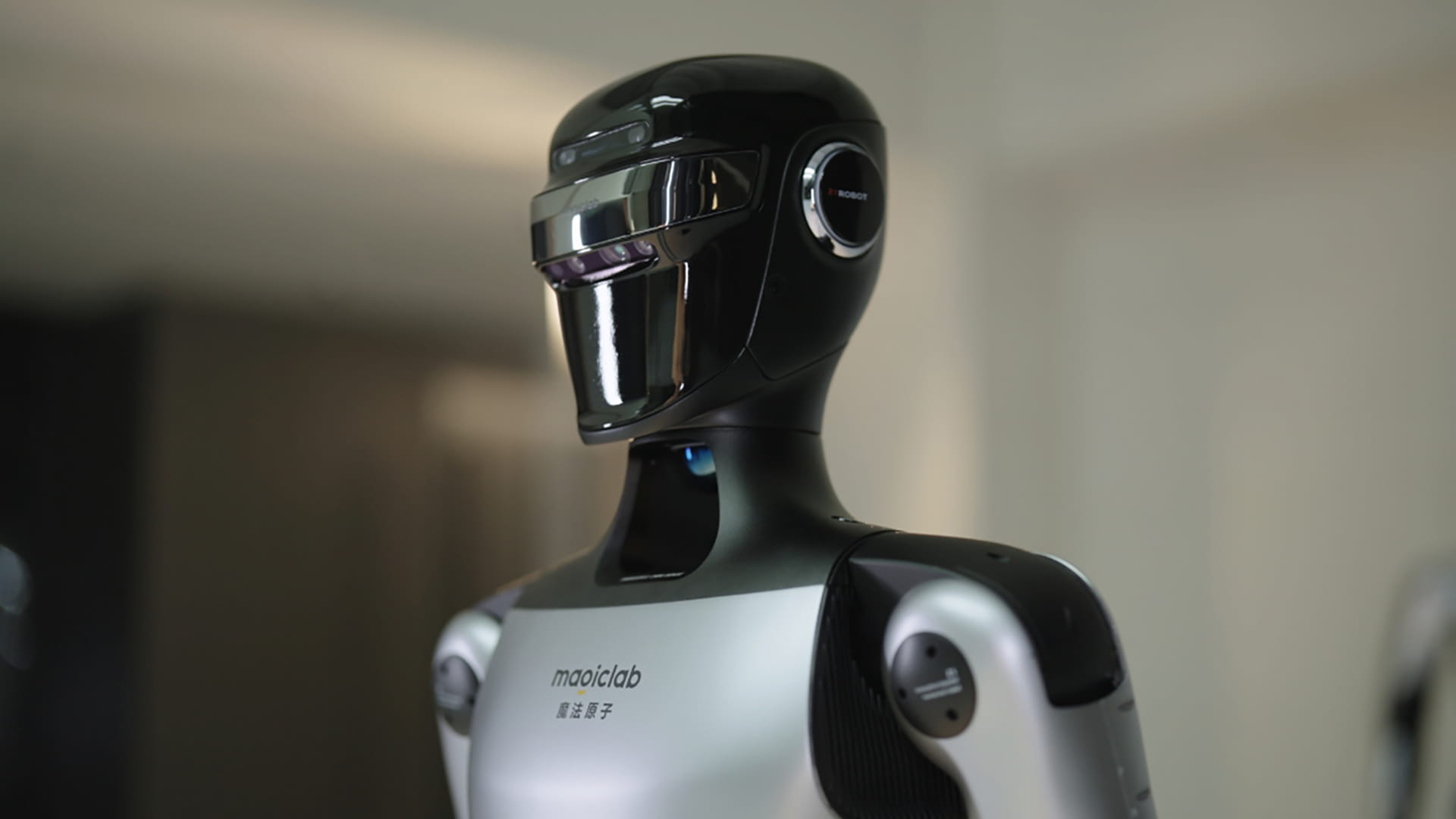
- •MagicBot X1, a humanoid platform reported as 180 centimeters tall, 70 kilograms, with 31 active DoF.
Technical details
Editorial analysis - technical context: Companies building embodied intelligence increasingly combine learned world models with simulated data pipelines to scale coverage of rare interactions and edge cases. Synthetic-data engines like the reported Magic-Creator are used to produce diverse sensor streams and labeled trajectories that accelerate training for perception, planning, and manipulation. Industry-pattern observations: practitioners often balance synthetic data with targeted real-world collection to close sim-to-real gaps, using iterative loops of deployment telemetry to refine simulators and domain randomization strategies.
Context and significance
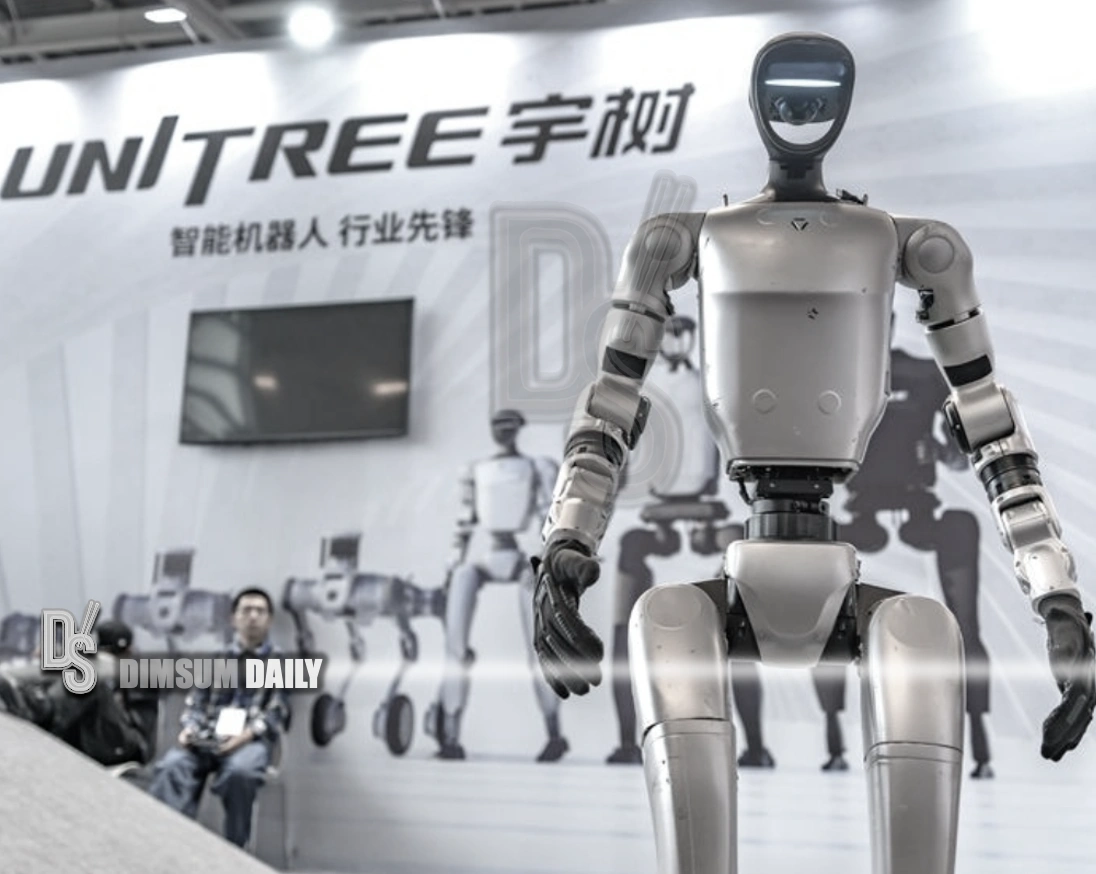
Industry context: KR-Asia frames the announcements within a broader uptick in commercialization from Chinese robot makers, citing Unitree Robotics' 2025 revenue of RMB 1.707 billion (USD 250.1 million) and shipments above 5,500 units, per the company's IPO prospectus, and a KR-Asia-cited remark from Unitree founder Wang Xingxing that overseas revenue has exceeded 50% of total in recent years. For practitioners, the combination of dedicated synthetic-data tooling and higher-fidelity tactile hardware, if implemented as described, could shorten iteration cycles for manipulation policies and reduce dependence on costly physical trials.
What to watch
Industry context: observers should track empirical measures of sim-to-real transfer from vendors using synthetic pipelines, including published benchmarks or third-party evaluations of manipulation success rates and robustness. Also monitor whether vendors release tooling or datasets that allow independent verification of synthetic-data efficacy and whether companies publish ablations showing which synthetic strategies reduce real-world fine-tuning needs.
Key Points
- 1MagicLab announced Magic-Mix, combining world-modeling and synthetic-data generation to accelerate embodied learning cycles.
- 2KR-Asia contextualizes the push with Unitree's RMB 1.707 billion (USD 250.1 million) 2025 revenue and increasing exports, underscoring commercial momentum.
- 3Industry-pattern observation: synthetic-data loops can scale rare interaction coverage, but practitioners still need targeted real-world validation for sim-to-real transfer.
Scoring Rationale
The story highlights a notable technical and commercial trend: combining world models and synthetic-data engines for robots, which matters to practitioners building manipulation and perception pipelines. It is not a frontier-model breakthrough but is relevant for engineering teams scaling embodied systems.
Sources
Public references used for this report.
Practice interview problems based on real data
1,625 SQL & Python problems across 15 industry datasets — the exact type of data you work with.
Try 250 free problems