KPMG Finds Firms Lack Clarity on AI Costs
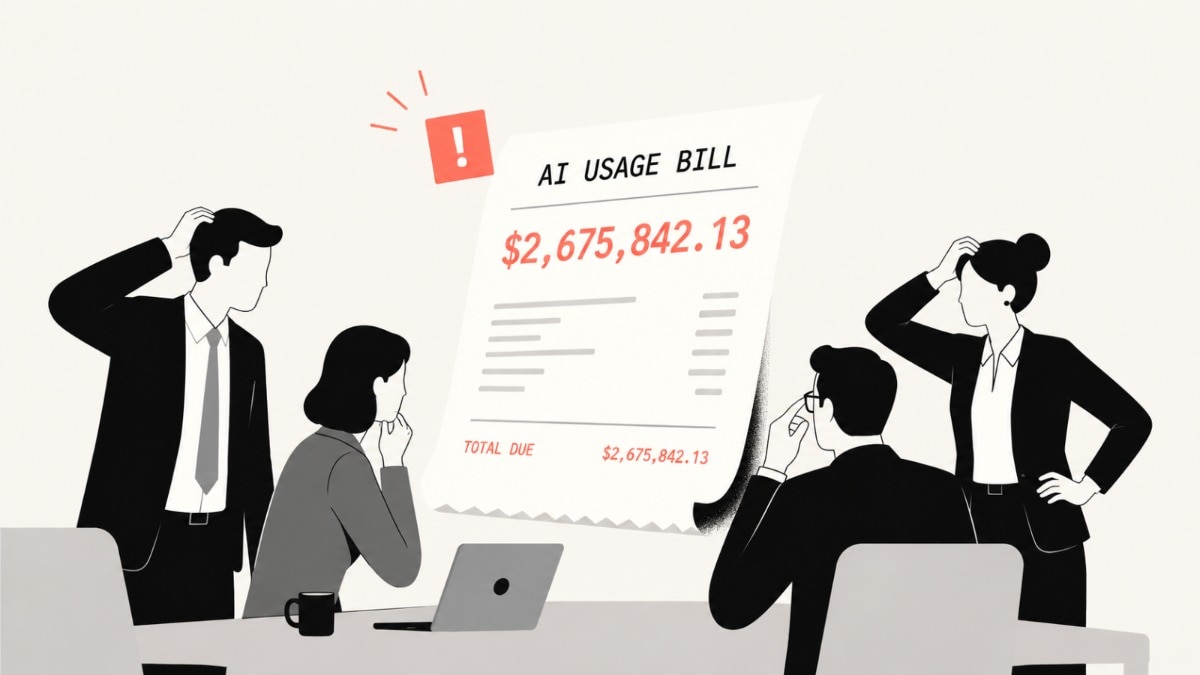
According to a KPMG survey reported by the Wall Street Journal, only 26% of companies say they have a comprehensive view of their AI usage costs, 50% have partial visibility, and 22% have little or none or learn costs only after billing. The WSJ quotes KPMG's global head of AI, Steve Chase, saying some clients have exhausted annual token and cloud budgets within months, and that one client's token usage rose sixfold. The coverage notes that AI vendors including Anthropic, OpenAI, Microsoft, and Salesforce bill enterprise customers at least partly by usage, measured in tokens, the units of text models process. The WSJ also reports that some firms, such as Corning, have restricted employee access to certain AI tools, while others, such as Life360, are building toward real-time token monitoring, per Life360 finance chief Russell Burke.
What happened
According to a KPMG survey reported by the Wall Street Journal, only 26% of companies say they have a comprehensive view of their AI usage costs, 50% report partial visibility, and 22% have little or none, in some cases learning costs only when the bill arrives. The WSJ quotes Steve Chase, KPMG's global head of AI, saying KPMG is working with clients that have consumed annual token and cloud budgets within months, and that one client's token usage rose sixfold. The WSJ notes that AI providers including Anthropic, OpenAI, Microsoft, and Salesforce bill enterprise customers at least partly by usage. The coverage cites Corning restricting employee access to certain tools and Life360 working toward real-time token monitoring, per finance chief Russell Burke.
Technical details
Usage-based AI pricing is commonly denominated in tokens, the units of input and output text a model processes. The reporting frames the move to token billing as part of a broader shift in which vendors combine seat-based licensing with consumption meters, changing how cost maps to activity and making spend harder to forecast.
Industry context
Rapid adoption paired with metered pricing creates operational risk for finance and engineering teams. The combination pressures organizations to attribute consumption to teams, products, or workflows, an emerging pattern across recent deployments. Agentic workflows, prompt changes, and background embedding or retraining jobs are common sources of unexpected token spend.
For practitioners
Finance teams accustomed to fixed subscriptions face unpredictability when costs track variable token volume and cloud compute, creating cross-functional coordination needs with engineering. Likely responses include request-level cost attribution, chargeback tooling, and architecture choices that trade model size or context length for lower per-token cost.
What to watch
- •Adoption of real-time token monitoring and chargeback tooling across organizations.
- •Vendor pricing changes that blend seat and usage tiers.
- •Whether firms tighten governance controls or invest in prompt and token efficiency.
Key Points
- 1Visibility gap: only 26% of firms report a comprehensive view of AI costs, per the KPMG survey cited by the WSJ, leaving most exposed to billing surprises.
- 2Billing shift: usage-based, token-denominated pricing from vendors including Anthropic and OpenAI moves cost risk toward variable consumption.
- 3Response: some companies are restricting AI access or building real-time token monitoring to contain unpredictable spend, according to the WSJ.
Scoring Rationale
A well-sourced survey, led by Wall Street Journal reporting, on a real and widespread operational problem, AI cost visibility and token billing, that matters to finance, procurement, and engineering teams. It is a notable business and operations story rather than a technical breakthrough, placing it in the solid mid-range.
Sources
Public references used for this report.
Practice interview problems based on real data
1,625 SQL & Python problems across 15 industry datasets — the exact type of data you work with.
Try 250 free problems