Kioxia and Sandisk Begin 10th-Gen 3D NAND Production
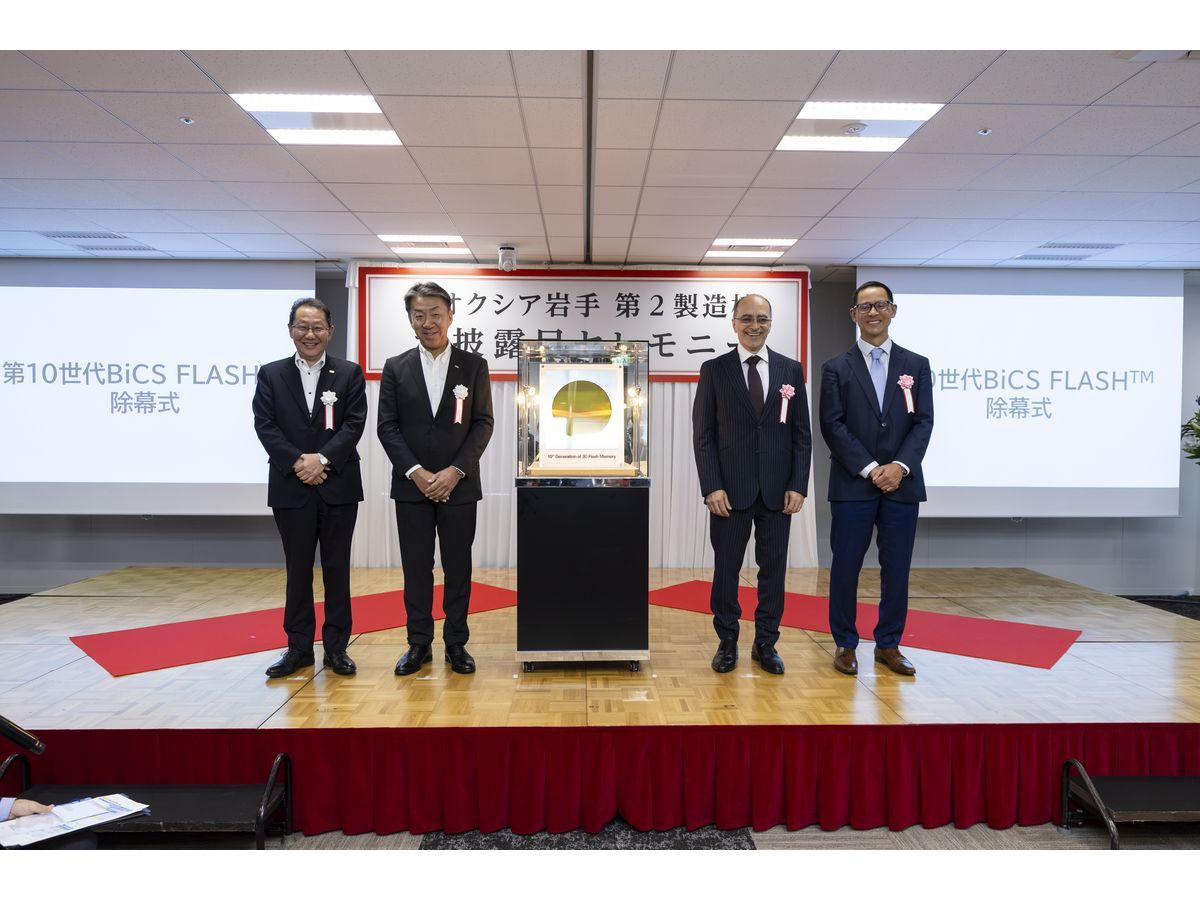
Kioxia and Sandisk began production of their 10th-generation 3D flash memory at Fab2 (K2), their joint-venture fab in the Kitakami Plant in Iwate Prefecture, Japan, the companies announced July 3, 2026. Fab2 opened in September 2025 producing 8th-generation NAND and will now scale 10th-generation output using CBA (CMOS directly Bonded to Array) technology, which Kioxia has separately said increases bit density about 59% over the 8th generation (332 layers versus 218) with a 33% faster 4.8 Gb/s interface. The companies also confirmed they extended their NAND joint-venture framework through December 2034. For AI/DS teams, higher-layer 3D NAND at scale typically lowers per-bit storage cost over multi-year ramps, which matters for large training-dataset retention and caching architecture decisions.
For AI/DS infrastructure teams, the operationally relevant detail here is not the ceremony but the bit-density math: if Kioxia's disclosed specs for 10th-generation BiCS FLASH hold at scale, per-bit NAND cost should keep falling through this fab's multi-year ramp, which is one of the more durable levers on total cost of ownership for large-scale training-data storage and caching tiers.
What happened
Kioxia and Sandisk announced July 3, 2026, that they began production of their 10th-generation 3D flash memory at Fab2 (K2), the fab their joint venture operates at the Kitakami Plant in Iwate Prefecture, Japan. Fab2 opened in September 2025 producing the companies' 8th-generation 3D flash products and will now scale up 10th-generation output; both generations use CBA (CMOS directly Bonded to Array) technology, which bonds CMOS control logic directly to the memory array. Kioxia Iwate Corporation president and CEO Koichiro Shibayama and Sandisk CTO Alper Ilkbahar both spoke at the facility's unveiling ceremony. The companies also confirmed they extended their NAND joint venture, in place for more than 25 years, through December 2034 (Business Wire).
Technical context
Kioxia has separately disclosed that its 10th-generation BiCS FLASH technology stacks 332 layers, versus 218 layers in the 8th generation, a roughly 59% increase in bit density, alongside a 4.8 Gb/s NAND interface speed that is about 33% faster than the prior generation. Fab2 itself uses an earthquake-absorbing structural design and AI-assisted production-efficiency systems, and the companies say its layout maximizes clean-room space for manufacturing equipment.
For practitioners
Higher-layer 3D NAND generations generally translate into lower cost-per-bit and improved energy-per-bit over a multi-year production ramp, the metric that matters most for teams sizing large-scale training-data retention, checkpoint storage, or SSD-backed caching tiers. The signals worth tracking are Fab2's volume-ramp timeline, published datasheet specs (capacity points, endurance, sustained latency) once 10th-generation parts ship generally, and whether SSD or controller vendors need firmware changes to exploit the new die.
What to watch
Kioxia and Sandisk's disclosed bit-growth and volume-ramp targets for Fab2, product datasheets as 10th-generation parts reach general availability, and any movement in enterprise SSD contract pricing as the new capacity comes online.
Key Points
- 1Kioxia and Sandisk began 10th-generation 3D NAND production at their Kitakami Fab2, extending their joint venture through December 2034.
- 2The new generation reportedly boosts bit density about 59% via 332 memory layers and speeds the NAND interface 33% to 4.8 Gb/s.
- 3Higher-layer NAND generations typically lower per-bit storage costs over time, a lever practitioners should track for large-scale AI data retention.
Scoring Rationale
A verified fab-production milestone with genuine technical substance (332-layer 10th-generation NAND, ~59% bit-density gain, faster interface) that matters for long-run AI storage cost-per-bit, but all syndicated coverage traces to a single paid Business Wire release with no independent verification, which caps it below the major tier.
Sources
Public references used for this report.
Practice interview problems based on real data
1,625 SQL & Python problems across 15 industry datasets — the exact type of data you work with.
Try 250 free problems