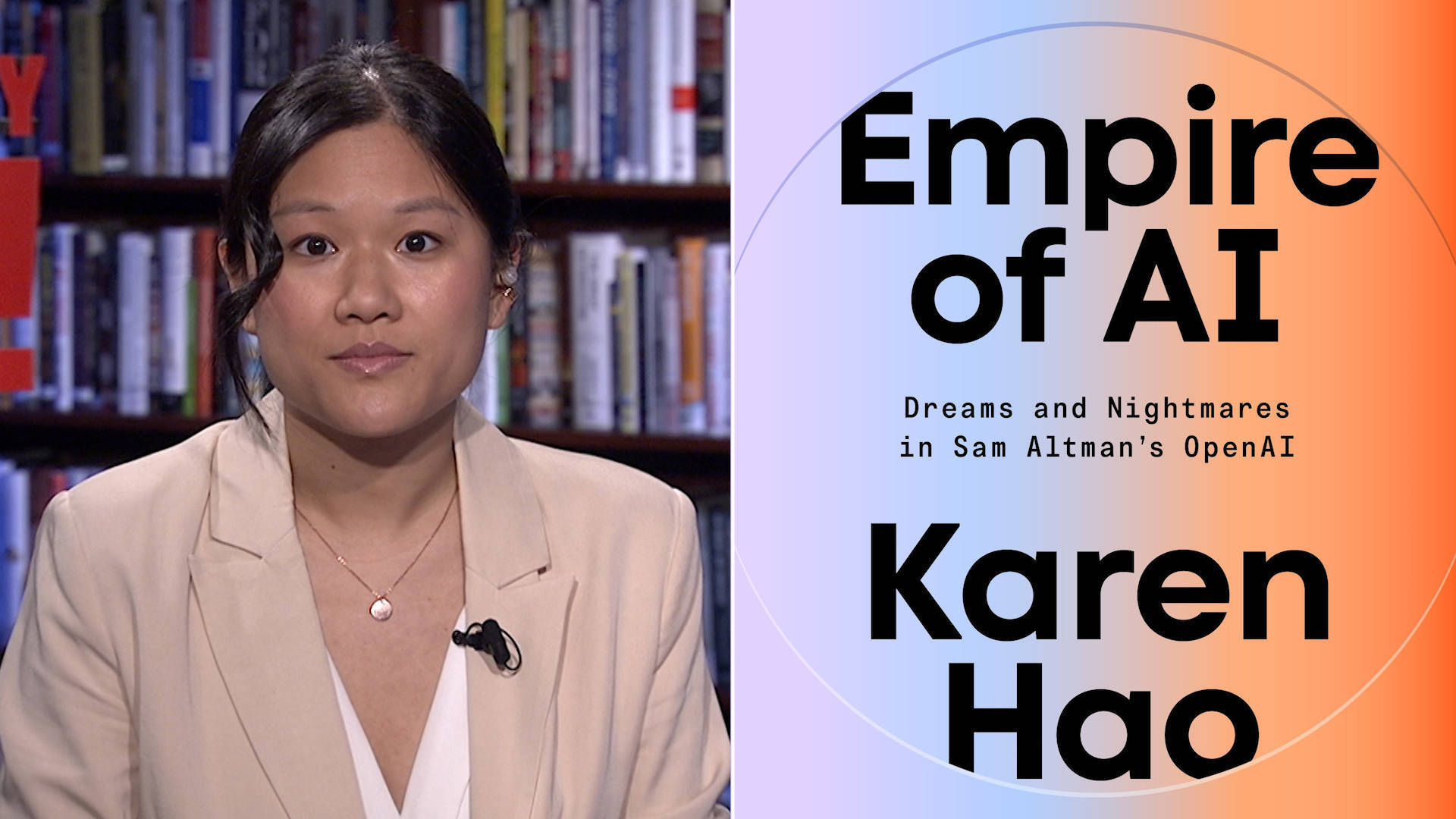
Karen Hao Critiques Sam Altman, OpenAI and AGI Narratives
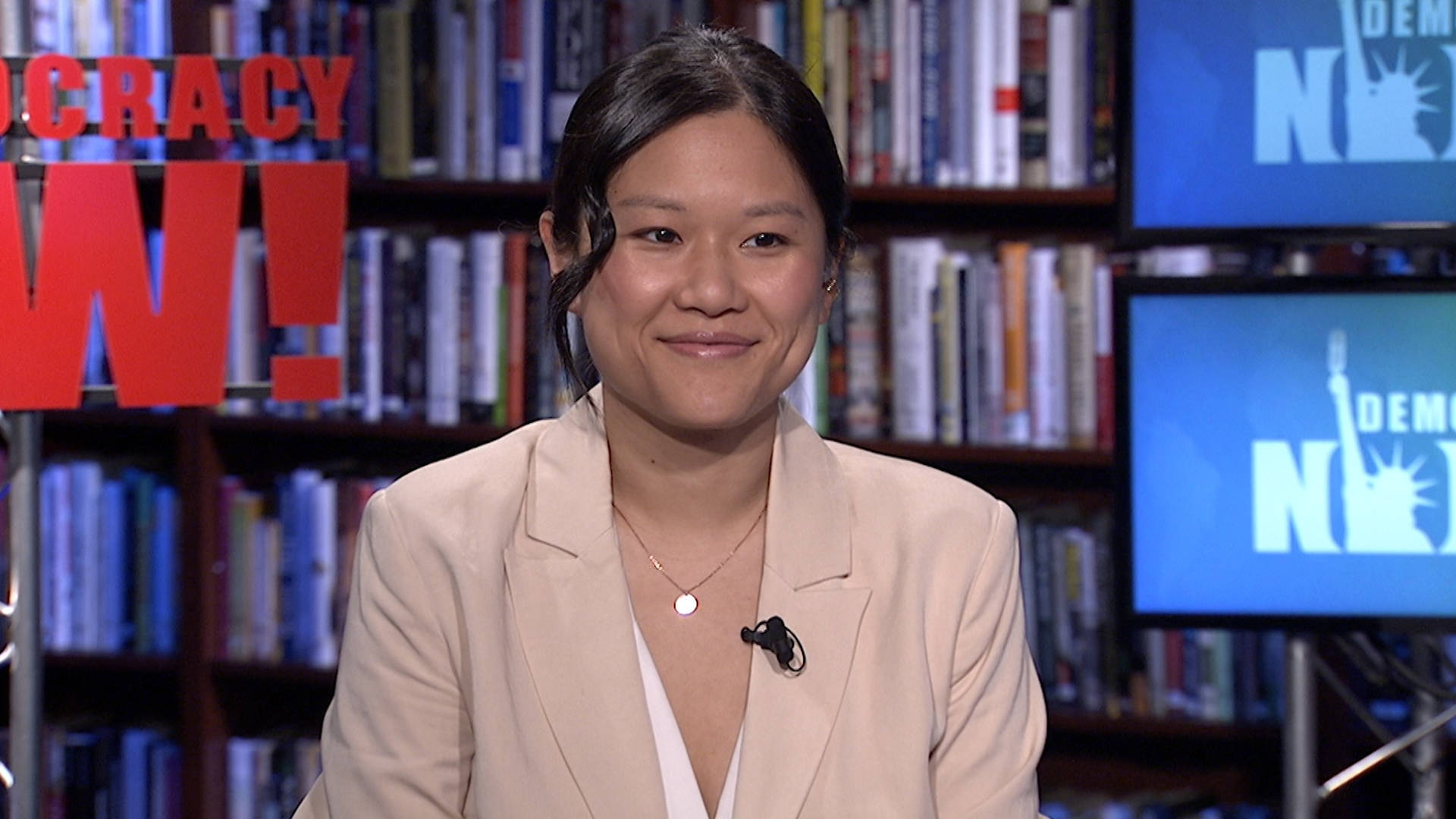
Journalist Karen Hao, author of the award-winning *Empire of AI*, said in a Democracy Now! interview - rebroadcast July 3, 2026 as part of the network's July Fourth special revisiting her 2025 conversation - that Silicon Valley's AGI push functions as a "quasi-religious" belief system, arguing the "concept of artificial general intelligence is not one that's scientifically grounded." Hao, the first journalist to embed inside OpenAI in 2019, points to Sam Altman's own 2013 blog line, "the most successful people build religions," as evidence the company's AGI mission was built to attract capital and talent. She contrasts OpenAI's costly compute buildout, including the $500 billion Stargate project, with DeepSeek's disputed roughly $6 million training-run claim, arguing that scale-at-all-costs AI development is a business choice, not a technical necessity.
For AI practitioners, the useful thread in Karen Hao's critique isn't the "quasi-religious" label itself - it's the concrete counter-evidence she marshals that scale-at-all-costs compute spending is a strategic choice, not a technical requirement for capability gains, and that alternative approaches already work in production.
What happened
In a Democracy Now! interview - originally recorded in 2025 and rebroadcast July 3, 2026 as part of the network's July Fourth special - journalist Karen Hao, author of Empire of AI: Dreams and Nightmares in Sam Altman's OpenAI, told host Amy Goodman that AGI has become a belief system rather than a scientific consensus: "There are what I call quasi-religious movements that have developed within Silicon Valley ... The concept of artificial general intelligence is not one that's scientifically grounded," she said. Hao traces OpenAI's definition of AGI - "highly autonomous systems that outperform humans in most economically valuable work" - back to a 2013 blog post Sam Altman wrote years before co-founding OpenAI: "Successful people build companies. More successful people build countries. The most successful people build religions," Altman wrote, adding that "the best way to build a religion is actually to build a company." Hao opens her book with that quote.
Technical context
Hao, who embedded inside OpenAI for three days in 2019 and published the company's first outside profile for MIT Technology Review in 2020 (after which, she says, OpenAI declined to speak with her for three years), argues that the industry's internal factions - self-described "boomers," who expect AGI to deliver utopia, and "doomers," who fear it could end human dominance - share an unfalsifiable premise: that sufficient data and compute will eventually reproduce human intelligence. She points to China's DeepSeek/High-Flyer as a practical counterexample: the company's widely reported roughly $6 million V3 training run (a figure that covers only the final training compute, not total R&D and infrastructure - independent estimates put High-Flyer's total hardware spend far higher) delivered competitive model capability against OpenAI's far more expensive systems, undercutting the claim that only massive scale produces frontier performance. She also cites Te Hiku Media, a Maori-language nonprofit broadcaster in New Zealand that built a working speech-recognition model from a few hundred hours of consented, community-donated audio, as evidence that small, curated datasets can outperform the scale-at-all-costs default for well-defined tasks.
For practitioners
Hao's account carries direct relevance to compute and data strategy: teams justifying large training runs on capability grounds should weigh DeepSeek's disputed but directionally significant efficiency claim, and teams facing labor-automation mandates should note Hao's distinction between "labor-automating" AI (framed as replacing workers) and "labor-assistive" AI (augmenting them), which she argues produces measurably better outcomes in fields like medicine and education. She also flags U.S. export controls on advanced chips - intended to slow Chinese AI development - as a factor that pushed Chinese researchers toward more compute-efficient techniques.
What to watch
Indicators consistent with Hao's framing: continued large capital raises tied to AGI timelines (OpenAI's Stargate infrastructure plan, financed largely through SoftBank rather than U.S. government funds, was pitched at up to $500 billion); further efficiency breakthroughs from compute-constrained labs; and whether major labs shift public language from AGI-timeline framing toward safety, evaluation, or efficiency benchmarks.
Editorial analysis
Hao's colonialism and "quasi-religious" framings are her own editorial argument, not new technical findings, and should be read as one journalist's interpretation of an industry pattern rather than a claim about any individual's private intent - though the Altman quotes she cites are drawn verbatim from his own public writing.
Key Points
- 1Karen Hao traces OpenAI's AGI mission to a 2013 Sam Altman blog post about building a religion, not new scientific evidence.
- 2DeepSeek's disputed roughly six-million-dollar training claim challenges the assumption that frontier AI capability requires OpenAI-scale compute spending.
- 3Practitioners weighing large training budgets should note Hao's distinction between labor-automating and labor-assistive AI design choices.
Scoring Rationale
Substantive, richly-sourced journalistic critique from an award-winning author with directly verified quotes and concrete, checkable claims (Altman's 2013 blog post, DeepSeek's disputed training cost, Stargate's financing structure) carrying real practitioner relevance for compute strategy and AGI framing, though it remains an interview/opinion piece rebroadcasting a year-old conversation rather than new technical or product news.
Sources
Public references used for this report.
Practice interview problems based on real data
1,625 SQL & Python problems across 15 industry datasets — the exact type of data you work with.
Try 250 free problems