Joint Chiefs Chair Embraces Autonomous Weapons Integration
Joint Chiefs Chairman Gen. Dan Caine declared that autonomous weapons will be a "key and essential part" of future U.S. military operations, signaling a push to normalize AI and automation across the joint force. He highlighted applications in drones and command-and-control and urged the Pentagon to become a "better" buyer of advanced technology. His remarks come amid tensions with commercial AI provider Anthropic, whose frontier model Mythos Preview has been restricted for certain federal uses and labeled a supply-chain risk by the Defense Department, prompting a White House order to phase out some Anthropic tools. The statement frames procurement friction, vendor trust, and operational adoption as immediate policy and technical priorities for defense AI practitioners.
What happened
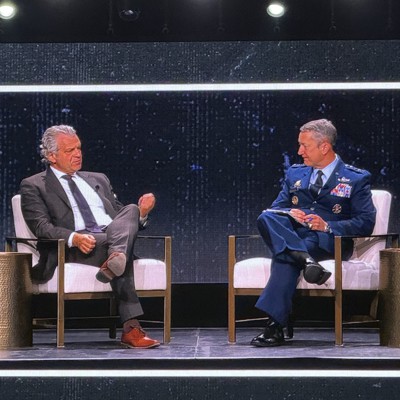
Joint Chiefs Chairman Gen. Dan Caine told an audience at Vanderbilt University's Asness Summit that autonomous weapons will be a "key and essential part" of future warfare, and urged the Pentagon to "normalize" AI usage across the joint force and to become a "better" buyer of advanced technologies. His comments explicitly connected operational adoption with procurement reform and supply-chain concerns.
Technical details
Caine singled out applications such as drones and command-and-control where automation and AI will change decision timelines and force composition. The Pentagon already uses large language model technology internally in limited ways; external tensions center on frontier models like Mythos Preview from Anthropic, which the Defense Department flagged as a supply-chain risk. The article notes that the NSA has access to Mythos Preview while a broader federal phase-out of some Anthropic tools was ordered at the White House level.
- •Areas highlighted for AI and autonomy: drone operations, command-and-control augmentation, and automated decision-support.
- •Procurement concerns include vendor restrictions, supply-chain risk designations, and legal disputes that complicate acquisition timelines.
- •Operational integration will require updated doctrine, certification pathways, and human-machine interface standards.
Context and significance
This is a clear senior-leader endorsement of fielding autonomous systems, not a theoretical debate. For ML engineers and systems architects, that means increased demand for hardened, certifiable models, explainability, and secure deployment pipelines that meet DoD risk frameworks. The Anthropic episode illustrates how provider policies and model governance can directly affect military adoption; commercial model constraints can create capability gaps or force in-house alternatives.
What to watch
Expect accelerated work on procurement reforms, certification requirements for autonomy, and tighter collaboration between defense labs and trusted vendors; monitor whether the Pentagon moves to develop or fund alternative, controllable models and acceleration of policies governing autonomy and human-in-the-loop constraints.
Key Points
- 1Senior defense leadership endorses autonomous weapons, pushing normalization of AI across the joint force and operational doctrine.
- 2Procurement friction with providers like Anthropic shows vendor policies and supply-chain risk labels can block access to frontier models.
- 3Engineers must prioritize certifiable, secure models and deployment pipelines to meet DoD risk frameworks and acquisition timelines.
Scoring Rationale
A senior U.S. military endorsement of autonomous systems is notable for practitioners because it accelerates demand, procurement changes, and governance requirements. The Anthropic supply-chain conflict raises operational and vendor-risk implications that affect model selection and secure deployment.
Practice interview problems based on real data
1,625 SQL & Python problems across 15 industry datasets — the exact type of data you work with.
Try 250 free problems