Jensen Huang rejects nuclear analogy, defends GPU exports
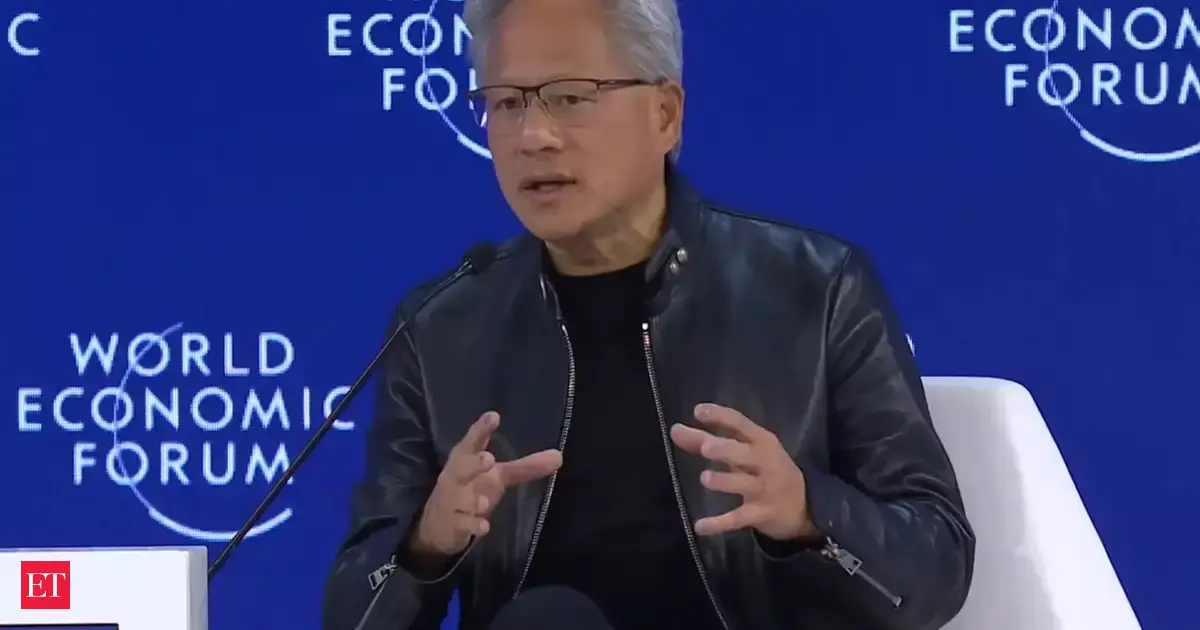
Nvidia CEO Jensen Huang pushed back against an analogy equating AI GPUs with nuclear weapons during public remarks reported by Tom's Hardware and NDTV. Tom's Hardware quotes Huang calling the comparison "stupid," and saying he "advocate[s] Nvidia GPUs to all of you" while contrasting GPUs with atomic bombs. The analogy originated in public comments by Anthropic CEO Dario Amodei, who compared selling advanced chips to China to selling nuclear weapons to North Korea, as reported by both outlets. NDTV also reports that the US government approved sales of Nvidia H-200 chips to China under terms that include a 25 percent government fee on sales. Huang made the comments during recent public interviews and appearances, including a discussion with podcaster Dwarkesh Patel, per NDTV and Tom's Hardware.
What happened
Jensen Huang, CEO of Nvidia, publicly rejected a comparison between AI GPUs and nuclear weapons in comments reported by Tom's Hardware and NDTV. Tom's Hardware quotes Huang saying, "What I n fundamentally against, and it makes no sense, it makes no sense in this moment, is to compare Nvidia GPUs to atomic bombs," and he added, "I advocate Nvidia GPUs to all of you, I advocate Nvidia GPUs to my family, my kids, to people I love but I don t advocate atomic bombs to anybody." Both outlets report the analogy was made by Anthropic CEO Dario Amodei, who compared selling advanced AI chips to China to selling nuclear weapons to North Korea. NDTV reports Huang's remarks appeared during interviews including a conversation with podcaster Dwarkesh Patel and that the US authorised sales of Nvidia H-200 chips to China with a reported 25 percent government fee on such sales.
Editorial analysis - technical context
GPU-based accelerators remain the dominant commodity for large-scale neural network training and inference. Industry observers note that the practical threat model for national security depends on a combination of compute, data, and systems expertise rather than raw accelerators alone. For practitioners, differences between GPU generations (memory capacity, interconnect bandwidth, and software stack support) matter more for training frontier models than the simple presence of chips in a market.
Industry context
Industry reporting frames the exchange as part of a wider policy debate over export controls and supply-chain access for AI compute. NDTV reports that Huang engaged in lobbying that preceded the US decision to allow H-200 sales to China under fee conditions, situating his remarks within active commercial and regulatory pressure on export policy. Observers following the sector have highlighted competing perspectives: some leaders argue tighter controls reduce risks, while others, reflected in Huang's comments, argue controls can be counterproductive in practice.
What to watch
For policymakers and practitioners, indicators to follow include further regulatory clarifications on chip classes and permitted end uses, public technical comparisons between Western and domestic accelerator capabilities in China, and statements from other AI vendors and research institutions. Industry observers will also watch whether export terms such as the reported 25 percent fee become a precedent for future approvals or are altered in subsequent policy rounds.
Key Points
- 1Huang publicly rejects the GPU-nuke analogy, framing GPUs as consumer-scale hardware rather than weapons.
- 2Export policy is shifting: NDTV reports US approval of Nvidia H-200 sales to China with a 25 percent government fee.
- 3Industry pattern: debates over export controls hinge on compute availability, software ecosystems, and broader supply-chain factors.
Scoring Rationale
The story matters to practitioners because it intersects hardware access, export policy, and the public debate around national-security controls on AI compute. It is notable but not transformative: it reflects ongoing policy friction rather than a new technological breakthrough.
Sources
Public references used for this report.
Practice interview problems based on real data
1,625 SQL & Python problems across 15 industry datasets — the exact type of data you work with.
Try 250 free problems