Jensen Huang Frames AI as Job Creator, Not Destroyer
NVIDIA CEO Jensen Huang pushed back on alarmist AI-jobs narratives in several high-profile appearances, telling a World Economic Forum session with BlackRock CEO Larry Fink on January 21, 2026 that AI is a "five-layer cake" and "the largest infrastructure buildout in human history," according to NVIDIA's own blog. The National quoted Huang saying, "The facts are, AI has created more than half a million jobs in the last couple of years," while Fortune separately quoted him: "It is unlikely most people will lose a job to AI." Commentator Brian Solis, ServiceNow's Head of Global Innovation, coined the phrase "Return on Intelligence" as his own framing of Huang's argument for measuring AI's value by what it enables rather than what it eliminates - a distinction worth noting since some earlier coverage misattributed the phrase to Huang himself.
(Correction: an earlier version of this write-up attributed the phrase "Return on Intelligence" to Jensen Huang; it was coined by Brian Solis, ServiceNow's Head of Global Innovation, as his own framing of Huang's argument, and is corrected below.)
For practitioners tracking how AI vendors frame the labor-market debate, Huang's remarks are best read as an influential chip executive's public messaging - shaping enterprise adoption narratives and investor expectations - rather than as independent labor-market data.
What happened
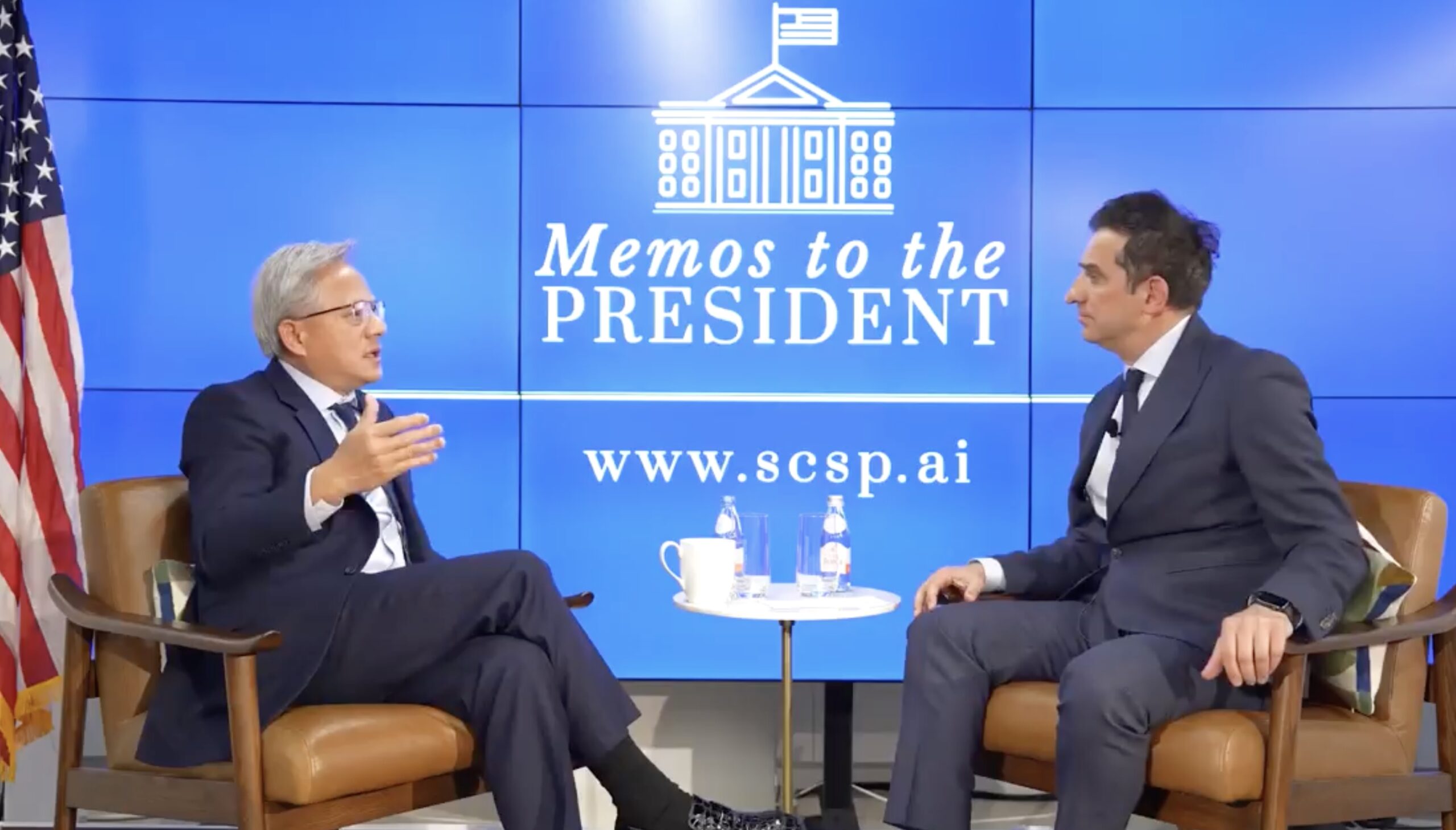
Jensen Huang, founder and CEO of NVIDIA, rebutted narratives portraying AI as a net destroyer of jobs across several high-profile forums in late 2025 and early 2026. At a World Economic Forum session with BlackRock CEO Larry Fink on January 21, 2026, Huang described AI as a "five-layer cake" and part of "the largest infrastructure buildout in human history," per NVIDIA's own blog. The National quotes Huang saying, "The facts are, AI has created more than half a million jobs in the last couple of years." Fortune separately quoted him: "It is unlikely most people will lose a job to AI." Commentator Brian Solis recapped Huang's appearance on the Special Competitive Studies Project podcast "Memos to the President" and introduced the term "Return on Intelligence" - his own framing, not Huang's - to describe measuring AI's value by what it enables rather than what it eliminates.
Industry context
Huang is one of the most influential executives in the AI supply chain, and his remarks appear across technical and investor-facing venues, including the SCSP podcast, the WEF discussion, and interviews with Fortune and The New York Times. Public messaging from chip and platform vendors commonly links hardware and cloud-capacity buildout to downstream job creation in energy, construction, manufacturing, and software - a pattern Huang's comments echo. Coverage frames his remarks as a counterpoint to more cautious or alarmist claims from other executives and think tanks.
For practitioners
The recurring theme in this coverage is that AI deployment creates ancillary and enabling roles across the stack - systems engineering, MLOps, data engineering, and application integration - even as it changes which specific tasks and jobs persist. A Writer survey cited by Fortune ties AI adoption to management and promotion outcomes inside companies, though that is one vendor-commissioned survey rather than independent labor data.
What to watch
Track hiring trends in infrastructure roles (chip manufacturing, data-center operations, cloud engineering), the split of venture capital between AI-native startups and automation tooling, and workforce outcomes - promotion and redundancy rates - reported in independent surveys rather than vendor-commissioned ones. Because Huang has a direct commercial interest in continued AI infrastructure spending, his framing should be weighed alongside independent labor-economics research rather than treated as neutral analysis.
Key Points
- 1Huang reframes AI's labor impact as human augmentation rather than job elimination, pointing to hiring across chips, data centers, cloud, and applications.
- 2The 'Return on Intelligence' framing, measuring AI's value by what it enables, was coined by commentator Brian Solis, not by Huang himself.
- 3Huang's public statements shape enterprise adoption narratives and investor expectations given his central commercial role in the AI hardware supply chain.
Scoring Rationale
Comments from Jensen Huang matter because he leads a critical part of the AI supply chain and his framing influences enterprise adoption narratives and investor expectations; scored slightly below the prior pass because this is fundamentally one executive's repeated public messaging with a direct commercial interest, not independent labor-market data.
Sources
Public references used for this report.
View 5 more sources
- Nvidia CEO Jensen Huang says AI won't be the job killer everyone fearscnbc.com
- The Podcast Where You Can Eavesdrop on the A.I. Elitenytimes.com
- Nvidia CEO Jensen Huang Calls AI 'Brand New' Jobs' Creatoruk.news.yahoo.com
- Nvidia CEO Jensen Huang says AI has created 500,000-plus jobstimesofindia.indiatimes.com
- NVIDIA CEO Jensen Pushes Back on AI Job-Destruction Fearswccftech.com
Practice interview problems based on real data
1,625 SQL & Python problems across 15 industry datasets — the exact type of data you work with.
Try 250 free problems