ixigo launches AI-native app with TARA assistant
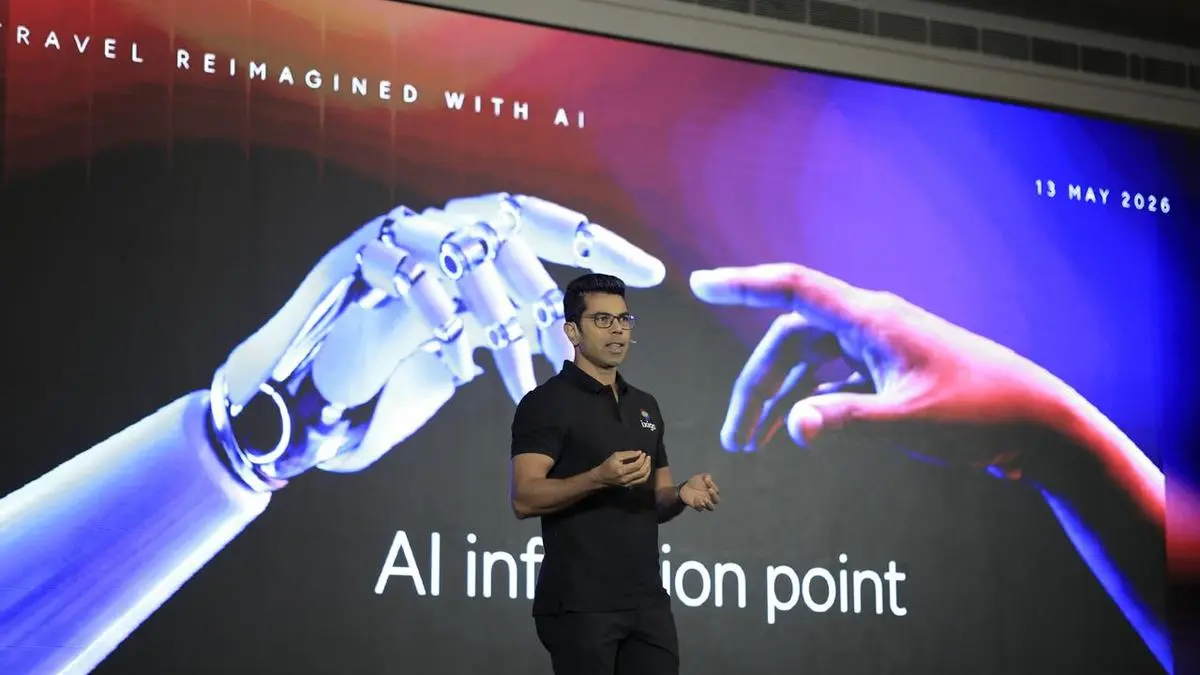
Online travel platform ixigo launched a rebuilt, AI-native version of its app on May 13, 2026, integrating a multimodal travel assistant called TARA, according to ETtech and AutocarPro. The upgraded app adds a consolidated Trip Mode for post-booking itinerary management and introduces "agentic travel flows" that let AI agents perform background tasks such as sending boarding passes to WhatsApp and integrating with Apple Wallet and Google Wallet, AutocarPro reports. ETtech reports that TARA resolved 3.81 million customer queries in Q3 FY26, up from 2.11 million in Q4 FY25, and that 76% of voice calls were end-to-end resolved by AI in Q3. The company showcased the launch at its ixigo NEXT event; Aloke Bajpai said, "We believe the future of travel will be agent-led, with AI that can understand intent, take proactive actions and assist travellers seamlessly before, during, and after their trips," ETtech reports.
What happened
Online travel platform ixigo unveiled a fully rebuilt, AI-native mobile app on May 13, 2026, with a multimodal AI travel assistant named TARA, per ETtech and AutocarPro. The redesign integrates conversational voice, text and tap interactions across the user interface rather than layering AI on top of legacy screens, AutocarPro reports. The launch was presented at ixigo NEXT, and ETtech published statements from founders Aloke Bajpai and Rajnish Kumar describing agent-led travel use cases.
Technical details
AutocarPro describes TARA as supporting voice conversations in English, Hindi and Hinglish, with additional languages planned. The assistant can handle complex itinerary requests, provide contextual trip data such as gate details and weather, and run background "agentic travel flows" that perform tasks like sending boarding passes to WhatsApp and enabling Apple Wallet and Google Wallet integration, AutocarPro reports. ETtech notes that TARA originated as a chatbot in 2018 and that the company reports the assistant handled 3.81 million customer queries in Q3 FY26 versus 2.11 million in Q4 FY25, with 76% of voice calls end-to-end resolved by AI in Q3 (ETtech).
Editorial analysis
Companies building conversational, agentic features typically balance conversational UX gains against integration, permissioning and privacy trade-offs. Industry practitioners implementing similar background agents commonly need robust consent flows, audit trails, and retry semantics for external integrations such as wallets and messaging platforms.
Practical significance
What to watch
Industry context
The packaging of post-booking data into a single Trip Mode window follows a broader pattern in travel tech toward context-rich, task-focused surfaces. For product and ML teams, this pattern raises data engineering and real-time inference requirements, and increases the surface area for edge cases such as schedule changes and third-party API failures.
Observers should track adoption metrics, opt-in rates for agentic flows, latency and error rates on background tasks, and third-party integration reliability. Also watch regulatory and privacy responses around proactive agent actions and message-based boarding-pass delivery.
Direct quotes
ETtech records Aloke Bajpai saying, "We believe the future of travel will be agent-led, with AI that can understand intent, take proactive actions and assist travellers seamlessly before, during, and after their trips." ETtech also quotes Rajnish Kumar describing the system handling about 150,000 end-to-end AI calls during a December disruption, with AI covering "90% of all calls" during that period.
Key Points
- 1ixigo rebuilt its app as an AI-native product, centralising conversational interactions to simplify multi-step travel planning for users.
- 2Agentic travel flows automate background tasks like boarding-pass delivery and wallet integration, which raises integration and permission-management requirements.
- 3Consolidating post-booking data in a Trip Mode mirrors a sector trend toward context-rich journey surfaces, increasing demand for real-time data pipelines.
Scoring Rationale
The launch is a notable product-level move showing how conversational and agentic features are being productized in travel tech. It is regionally important and instructive for practitioners, but it does not introduce a frontier model or new ML research.
Sources
Public references used for this report.
View 7 more sources
- ixigo goes AI-native with new app as race for conversational travel booking heats upmoneycontrol.com
- ixigo Unveils AI-Native App With Multimodal Travel Assistant and Agentic Booking Featuresautocarpro.in
- May 13, 2026 LTTL/L&S/2026-27/05/04 To, The Listing Department, National Stock Exchange of India Limited, Exchange Plazabseindia.com
- Ixigo launches AI-native app with Trip Mode and TARA assistantnewsbytesapp.com
- ixigo Reimagines Travel With a Fully AI-Native App - The Hans Indiathehansindia.com
- ixigo Reimagines Travel With a Fully AI-Native App - ScanXscanx.trade
- ixigo Adds AI Assistant TARA for Personalized Travel Planningwhalesbook.com
Practice interview problems based on real data
1,625 SQL & Python problems across 15 industry datasets — the exact type of data you work with.
Try 250 free problems