IRM Seminar Urges Pakistan to Prioritize Skills-Based AI Education
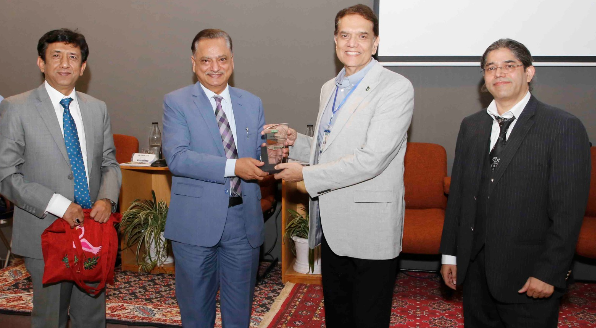
According to APP, a seminar in Islamabad organised by the Institute of Rural Management (IRM) convened education experts, policymakers, and development professionals to discuss skills and education for an AI-shaped economy. According to APP, participants said Pakistan's workforce will need practical skills rather than degrees alone and called for reforms in education, training, and workforce development. According to APP, the event, themed "Beyond Degrees: The Future of Education, AI, and Skills That Matter," covered AI impacts on education, healthcare, agriculture, employment, and governance. According to APP, Prof Dr Raheel Qamar of COMSATS University, Israr Mohammed Khan of the National Centre for Rural Development (NCRD), and development specialist Ghulam Shabbir all highlighted curriculum updates, digital literacy, and institutional readiness.
What happened
According to APP, the Institute of Rural Management (IRM) organised a seminar in Islamabad on May 20 under the theme "Beyond Degrees: The Future of Education, AI, and Skills That Matter." According to APP, education experts, policymakers, and development professionals told the event that Pakistan's workforce will need practical skills instead of degrees alone and urged reforms in education, training, and workforce development. According to APP, participants discussed AI effects on education, healthcare, agriculture, employment, and governance.
Technical details
Editorial analysis - technical context: Public reporting from Pakistan emphasised nontechnical skill sets such as digital literacy, critical thinking, adaptability, and continuous learning rather than specific model or platform choices. For practitioners, those skill categories map to measurable curricula elements: data literacy, basic programming and tooling, human-in-the-loop evaluation, and evaluation of AI outputs in domain workflows.
What sources reported
According to APP, Prof Dr Raheel Qamar, rector of COMSATS University, said universities should update teaching methods, course content, and assessment systems to match technological change. According to APP, Israr Mohammed Khan, director general of the National Centre for Rural Development (NCRD), discussed AI use in agriculture for better farming methods, improved productivity, supply chain management, market access, and helping rural communities make informed decisions. According to APP, development and public policy specialist Ghulam Shabbir said AI readiness is not limited to technology alone.
Context and significance
Industry context: Reporting frames this seminar as part of a wider pattern in which education stakeholders in emerging markets emphasise skills-first strategies to capture near-term economic benefit from AI. For practitioners building curriculum or training programmes, the event highlights demand for modular, competency-based offerings that map directly to sector workflows such as agri-extension, telemedicine, and government services.
What to watch
For observers, track formal curriculum revisions at major universities, public-private pilot programmes linking edtech vendors with agricultural extension services, announcements of digital-literacy funding, and any government statements translating seminar recommendations into policy or vocational training pilots.
Key Points
- 1Seminar participants emphasised practical skills over degrees, reflecting demand for applied digital literacy and critical thinking in AI-era jobs.
- 2Speakers highlighted AI use cases in agriculture, healthcare, and governance, pointing to sector-specific training needs and data-literacy gaps.
- 3Industry context: comparable markets are shifting toward modular, competency-based training that maps to employer workflows and short-cycle reskilling.
Scoring Rationale
A national seminar on aligning education with AI-driven job requirements is notable for practitioners designing curricula and reskilling programmes in Pakistan and similar markets. The story is actionable locally but not a global technical milestone.
Sources
Public references used for this report.
Practice interview problems based on real data
1,625 SQL & Python problems across 15 industry datasets — the exact type of data you work with.
Try 250 free problems