iQIYI Proposes Decentralized AI Production Model for Film and TV
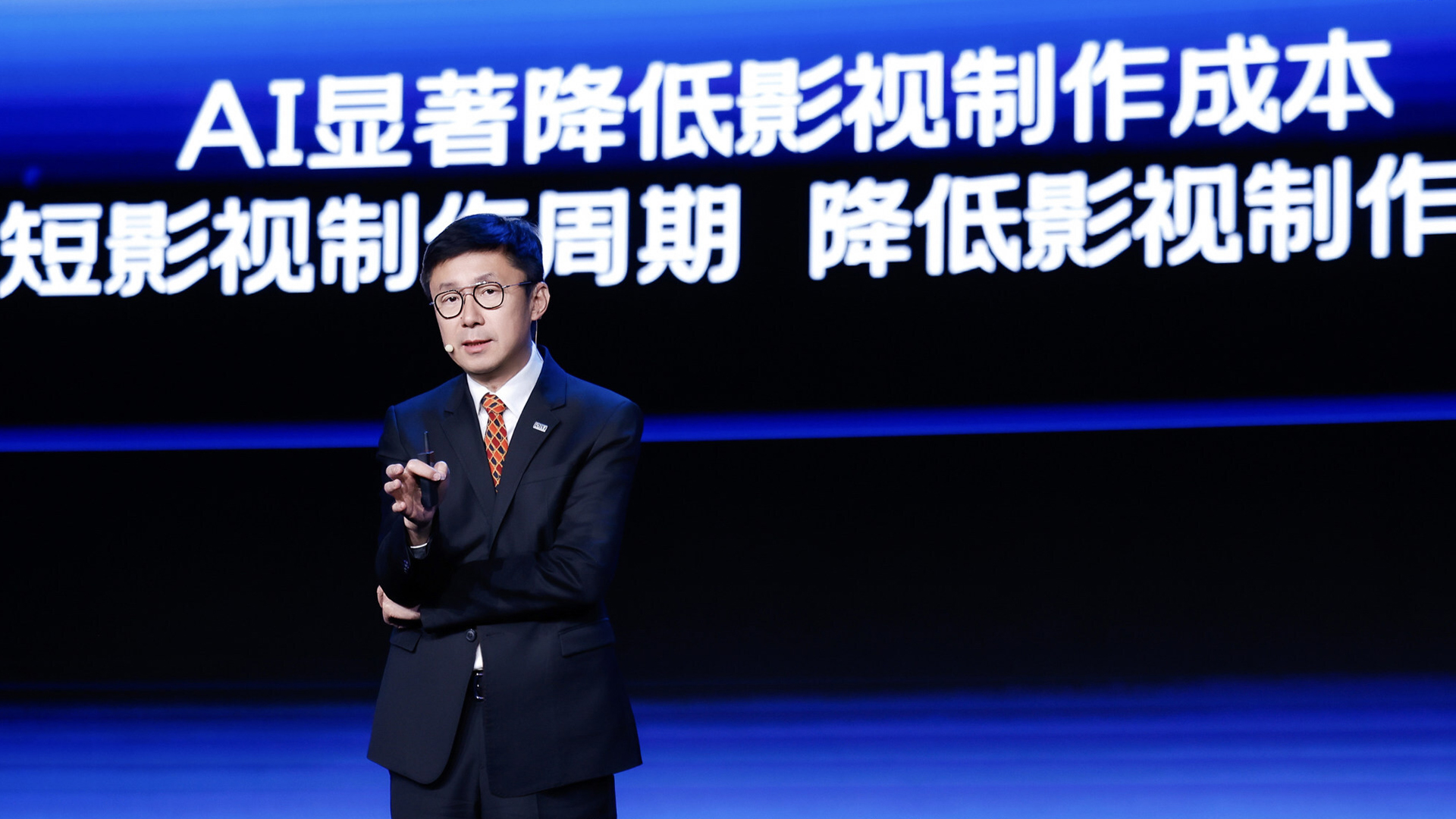
iQIYI founder and CEO Gong Yu detailed a "decentralization" strategy for film and TV production built around AI, first raised at the company's February 2026 earnings call and elaborated at iQIYI World Conference 2026 in April, according to KrASIA/36Kr. Gong's "one-one-two" framework holds that AI cuts unit production costs by roughly one order of magnitude while increasing the number of creators and finished works by one and two orders of magnitude respectively. The centerpiece is Nadou Pro, a production platform iQIYI launched in March that runs on its own Qizhi model plus third-party video generators including ByteDance's Dreamina, Kuaishou's Kling AI, and Alibaba's Wan, and now integrates nearly 70 AI agents spanning scriptwriting to marketing. Gong said Nadou Pro currently has "almost no commercialization target," with iQIYI instead offering creators IP access, revenue-sharing, and a 20% AIGC production subsidy.
The most concrete signal in iQIYI's AI strategy is not the "decentralization" rhetoric but the model-orchestration choice behind it: Nadou Pro runs on iQIYI's own Qizhi model alongside competitors' video generators, including ByteDance's Dreamina, Kuaishou's Kling AI, Shengshu's Vidu, MiniMax's Hailuo AI, and Alibaba's Wan, a multi-vendor approach that treats video-generation models as interchangeable backends rather than betting on a single proprietary model.
What happened
iQIYI founder and CEO Gong Yu laid out a "decentralization" thesis for film and TV production in a 36Kr interview published via KrASIA, building on ideas he first raised publicly at the company's February 2026 earnings call. Gong frames AI's impact as a "one-one-two" law: unit content costs fall by roughly one order of magnitude, the number of creators rises by at least one order of magnitude, and the number of finished works rises by at least two orders of magnitude, a dynamic he ties to the Jevons paradox, where efficiency gains increase total resource consumption rather than reduce it. At iQIYI World Conference 2026 in Beijing (April 20-21), the company publicly detailed Nadou Pro, a professional film and TV production platform it had quietly launched in March, according to KrASIA. PR Newswire and ANTARA report the platform now integrates nearly 70 AI agents spanning scriptwriting, directing, art design, filming, editing, and marketing, plus script and scene analysis tools. iQIYI also announced a limited-time 20% subsidy for mid-length dramas and AI-generated content, per KrASIA.
Technical context
Nadou Pro connects to iQIYI's proprietary Qizhi large model as well as third-party video-generation models, including ByteDance's Dreamina (Jimeng AI), Kuaishou's Kling AI, Shengshu's Vidu, MiniMax's Hailuo AI, and Alibaba's Wan, per KrASIA. Gong told 36Kr that Nadou Pro "currently carries almost no commercialization target" and grew out of AI tooling iQIYI built internally since setting a goal of industrialized film and TV production in 2021; more than 70 existing internal studios have adopted the platform alongside roughly ten new AI-focused studios. PR Newswire and ANTARA report iQIYI intends to open its IP library, talent network, and revenue-sharing mechanisms to outside creators, with Gong quoted saying "iQIYI will transform into a non-centralized social media-alike platform."
For practitioners
iQIYI's choice to orchestrate across five-plus third-party video models rather than commit to one is a notable production-pipeline pattern: it suggests studios building AI video workflows may get more value from model-agnostic orchestration layers than from single-vendor integration, at the cost of added complexity in asset versioning, multimodal consistency across shots, and rights metadata for cleared IP. None of the sources reviewed disclose measured output quality, latency, or cost-per-shot for Nadou Pro's pipeline.
What to watch
- •Gong told 36Kr he expects "some good works" using Nadou Pro to appear around Q3-Q4 2026; watch for iQIYI's own disclosure of adoption and output volume against that timeline.
- •Licensing terms and scope for the IP library iQIYI is opening to outside creators.
- •Whether AI-generated content reaches iQIYI's top content tier this year, which Gong told 36Kr is "uncertain" but possible.
Key Points
- 1iQIYI's Gong Yu frames AI's effect on production as a one-one-two law: costs fall, creators multiply, and finished works multiply further.
- 2Nadou Pro, launched in March, orchestrates iQIYI's own model alongside rivals like Kling AI and Alibaba's Wan rather than one proprietary system.
- 3Gong says Nadou Pro has almost no commercialization target, positioning it as industry infrastructure rather than a walled competitive product.
Scoring Rationale
Well-corroborated product/strategy story with a rich primary interview revealing genuinely new detail (Nadou Pro's multi-vendor model orchestration across five+ third-party video generators, March launch date, near-zero commercialization intent). Kept at the notable-but-not-major level since this is a single company's platform strategy in the China market, not a broad industry shift.
Sources
Public references used for this report.
View 4 more sources
- iQiyi Overhauls Content Strategy With AI-Driven Creator Ecosystemyicaiglobal.com
- iQIYI charts AI-powered future at World Conference 2026global.chinadaily.com.cn
- iQiyi Launches Largest Strategic Shift in 16 Years: Phasing Out Centralized Procurement, Betting on AI-Driven Creator Ecosystemfinance.biggo.com
- Gong Yu of iQIYI: AI Drives the Platform's Decentralizationnews.futunn.com
Practice with real Ad Tech data
90 SQL & Python problems · 15 industry datasets
250 free problems · No credit card
See all Ad Tech problems