Intel Joins McLaren as Official Compute Partner
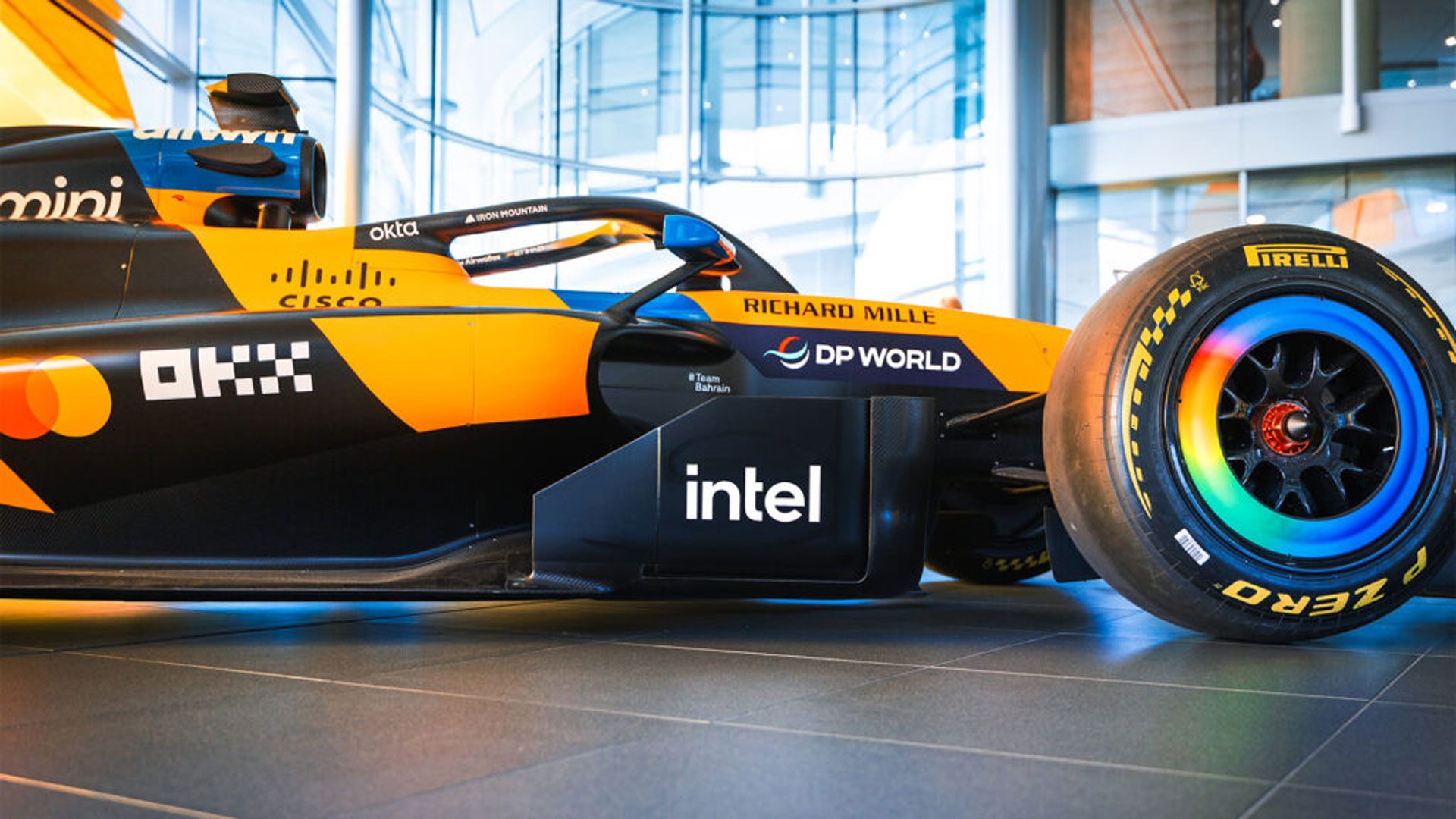
Intel and McLaren Racing announced a multi-year strategic partnership naming Intel the Official Compute Partner of the McLaren Mastercard Formula 1 Team, Arrow McLaren IndyCar Team, and McLaren F1 Sim Racing Team, according to an Intel press release and Business Wire statement. Under the agreement, Intel Xeon and Intel Core Ultra processors will support performance-critical workloads including computational fluid dynamics, aerodynamic analysis, vehicle-dynamics simulation, race strategy analytics, and the real-time decision systems that link McLaren's Technology Centre to race garages, per Intel. Intel CEO Lip-Bu Tan is quoted saying the collaboration will ''transform data into competitive advantage at every turn,'' in the company statement. Reporting by Tom's Hardware notes the deal places Intel in direct compute rivalry with AMD, which has an existing partnership with the Mercedes-AMG Petronas Formula One Team.
What happened
Intel and McLaren Racing announced a multi-year strategic partnership that names Intel as Official Compute Partner of the McLaren Mastercard Formula 1 Team, Arrow McLaren IndyCar Team, and the McLaren F1 Sim Racing Team, according to an Intel press release and a Business Wire filing dated May 14, 2026. The announcement states that Intel Xeon and Intel Core Ultra processors will be deployed to support McLaren's performance-critical workloads, including computational fluid dynamics, aerodynamic analysis, vehicle-dynamics simulation, race strategy analytics, and the real-time decision systems that connect the McLaren Technology Centre in Woking to race garages, per Intel. The press release quotes Intel CEO Lip-Bu Tan: "Formula 1 racing and IndyCar are some of the ultimate proving grounds for high-performance computing. Intel is proud to be McLaren Racing's compute partner..."
Technical details
Editorial analysis - technical context
Formula 1 teams increasingly treat engineering as an IT and data problem, running large-scale CFD and simulation pipelines alongside low-latency trackside analytics. Per Intel's statement, the collaboration spans a compute foundation that includes high-performance CPUs for data-intensive AI workloads, low-latency edge computing for trackside decision systems, and support across diverse software platforms. These are the same workload categories that benefit from faster single-thread performance for simulation, higher core counts for batch model training, and low-latency inference at the edge for strategy telemetry.
Context and significance
Public reporting frames this partnership as part of a broader compute arms race in motorsport. Tom's Hardware and other outlets highlight that the deal pits Intel directly against AMD, which has partnered with the Mercedes-AMG Petronas Formula One Team for several years. For ML and infrastructure teams, the announcement underscores how real-time analytics, simulation throughput, and edge compute reliability are material buyers of high-end server and client CPUs in latency-sensitive domains.
What to watch
Observers will watch for how McLaren integrates Intel hardware across its CFD and simulation workflows, whether the team adopts additional Intel-optimized AI or inference stacks, and how trackside edge deployments evolve to reduce decision latency during races. An industry signal to monitor is whether other teams accelerate vendor consolidation around single compute vendors to simplify validation and telemetry stacks, or whether heterogeneous vendor mixes persist to hedge performance trade-offs.
Implications for practitioners
For practitioners building high-performance simulation and low-latency inference systems, the collaboration is a reminder that optimization across hardware, compiler/toolchain, and edge orchestration materially affects turnaround times for iterative engineering cycles. Editorial analysis: Companies deploying similar workloads often invest in end-to-end benchmarking and workload characterization to choose the best mix of CPU, GPU, and specialized accelerators for both batch simulation and real-time telemetry.
Key Points
- 1Intel and McLaren formalize a compute partnership focused on CFD, simulation, and real-time analytics, emphasizing CPUs in latency-sensitive motorsport workloads.
- 2The deal intensifies a vendor rivalry in F1 compute, with AMD already partnered with Mercedes, highlighting competitive vendor deployment in edge-to-cloud stacks.
- 3For practitioners, motorsport use cases illustrate the value of combined high-throughput servers and low-latency edge compute for iterative simulation and live decision systems.
Scoring Rationale
The announcement is notable for infrastructure and HPC practitioners because it highlights real-world, latency-sensitive AI and simulation deployments at scale. It is not a frontier-model or platform release, but it signals meaningful demand for optimized CPU and edge solutions in commercial engineering workloads.
Sources
Public references used for this report.
View 6 more sources
- Intel partners with McLaren Racing as compute providerau.investing.com
- Intel has slapped its logo on the side of McLaren's F1 car as it ...tech.yahoo.com
- Intel is back in F1 as it officially partners with last year's winners ...pcgamer.com
- Intel Named Official Compute Partner of McLaren Racing - Stock Titanstocktitan.net
- Intel named official compute partner of McLaren Racing - TipRankstipranks.com
- Intel becomes official compute partner of McLaren Racing teamsstreetinsider.com
Practice interview problems based on real data
1,625 SQL & Python problems across 15 industry datasets — the exact type of data you work with.
Try 250 free problems