Institute of Science Tokyo opens unmanned robot lab
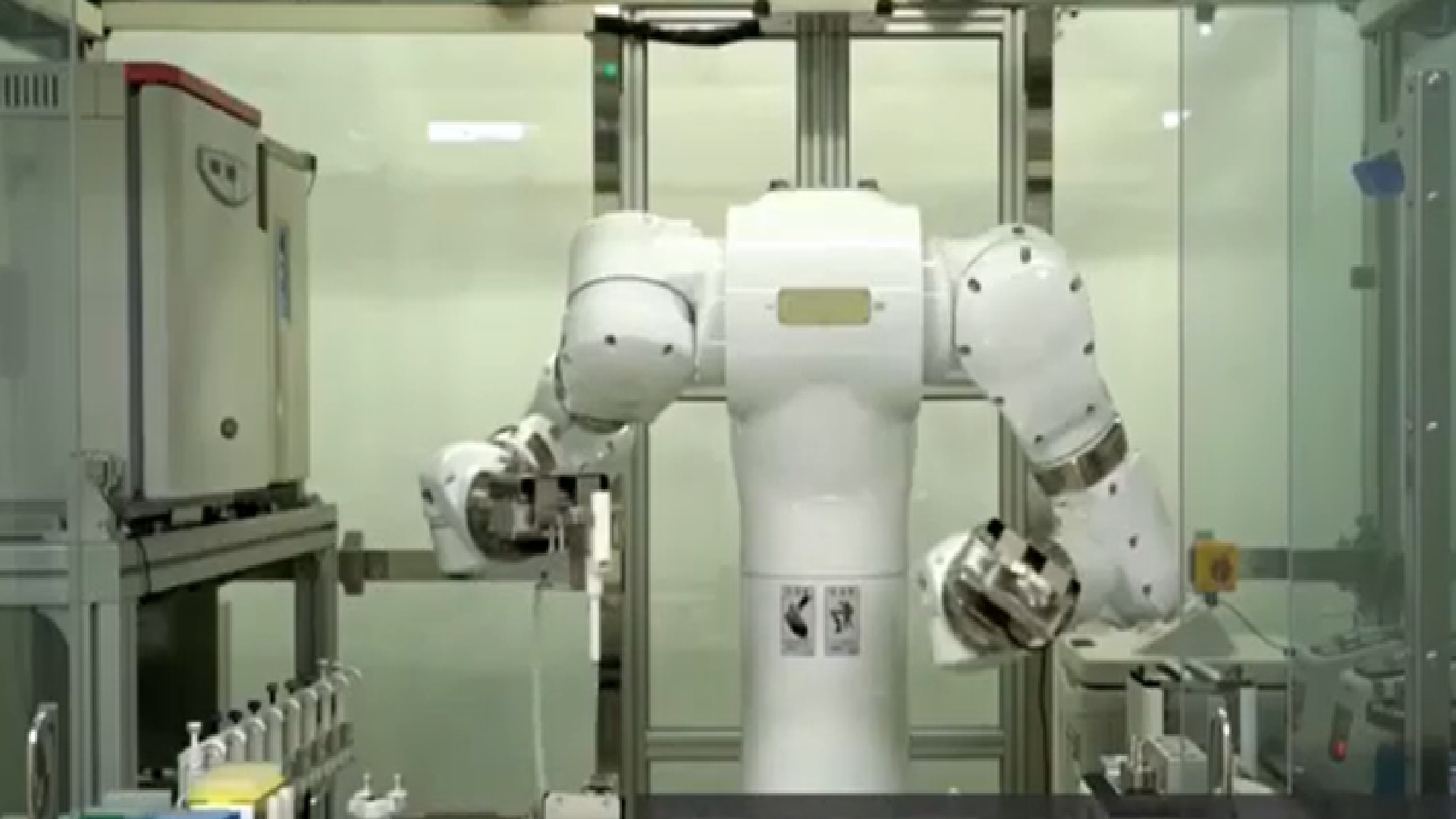
The Institute of Science Tokyo opened the Robotics Innovation Center at its Yushima campus; the facility currently operates with 10 robots, including the humanoid Maholo LabDroid, and no on-site human staff, according to Kyodo News and Mainichi. Kyodo reports the university plans to expand robot numbers to around 2,000 by 2040 and to integrate automation systems with artificial intelligence. The robots perform routine laboratory tasks such as transferring fixed reagent volumes, opening temperature-controlled equipment, and programmed cell cultivation, Kyodo and Interesting Engineering report. "We want to make Japan's science the best in the world," said Keiichi Nakayama at the center opening, per Kyodo. The deployment illustrates a broader trend toward lab automation and raises reproducibility, validation, and regulatory oversight questions for biomedical research workflows.
What happened
The Institute of Science Tokyo has opened a new facility, the Robotics Innovation Center, at its Yushima campus that operates without on-site human staff, according to reporting from Kyodo News and Mainichi. The center currently runs 10 robots, including the humanoid Maholo LabDroid, and conducts medical-experiment tasks such as transferring fixed amounts of reagents, opening doors of temperature-controlled equipment, and automated cell cultivation, Kyodo and Interesting Engineering report. Kyodo and Interesting Engineering both report the university intends to scale the initiative and has a target of around 2,000 robots by 2040. Kyodo quotes center head Keiichi Nakayama saying, "We want to make Japan's science the best in the world." Maholo has already been used in clinical research at a Kobe hospital on projects involving induced pluripotent stem cells, the outlets report.
Editorial analysis - technical context
Per the public reporting, the deployed systems are dual-arm laboratory robots capable of pipetting-like transfers and handling temperature-controlled instruments. Reporting does not include low-level control-stack details, instrument models beyond Maholo, or specific AI models used for experiment design, so technical claims about autonomy should be scoped to what sources describe: automation of repetitive physical tasks and programmed cell-culture workflows. Industry-pattern observations: lab automation platforms typically combine motion/control firmware, scheduled protocols, laboratory information management systems, and task orchestration software. Integrating those layers with AI for hypothesis generation or adaptive experiment planning requires additional validation and experiment-tracking infrastructure beyond the physical robot capabilities described in the sources.
Industry context
Kyodo frames the initiative against sector challenges including researcher shortages and the need to reduce human error in routine lab work. Interesting Engineering and regional outlets note parallel efforts such as Hokkaido University's FLUID project, an open-source 3D-printed robot for lab automation, evidencing concurrent interest in scalable, lower-cost automation in Japanese research institutions. Editorial analysis: Observers following laboratory automation note consistent trade-offs, increased throughput and reproducibility on standard protocols versus higher initial engineering, protocol validation, and long-term maintenance burdens. Reporting by Mezha and others also flags regulatory and oversight questions that typically accompany automation of clinical or preclinical processes.
For practitioners, what it means
Reporting suggests immediate gains for repetitive wet-lab tasks: improved protocol consistency and longer unattended runtimes for cell-culture chores. Editorial analysis: Practitioners should treat robot-run procedures like any automated pipeline step, require versioned, auditable protocols, experiment-tracking, and independent validation data. Integration points to monitor include sample tracking, environmental monitoring logs, error recovery routines, and compatibility with existing LIMS and QC procedures.
What to watch
- •Publication of validation studies showing equivalence between robot-run and human-run protocols.
- •Public details on software stack, experiment-tracking, and quality-control instrumentation integrated with the robots.
- •Regulatory guidance from Japanese health and research oversight bodies for automated clinical-research workflows.
- •Broader adoption signals such as collaborations with hospitals, open-source protocol releases, or third-party evaluations.
All factual claims above are drawn from reporting by Kyodo News, Mainichi, Interesting Engineering, and regional coverage cited in those outlets.
Key Points
- 1Institute of Science Tokyo opened an unmanned Robotics Innovation Center running 10 robots, including Maholo LabDroid, per Kyodo and Mainichi.
- 2The university reports a long-term target of about 2,000 robots by 2040, highlighting ambitions to scale lab automation.
- 3Editorial analysis: Automated robotics can raise reproducibility and throughput, but they increase needs for protocol validation, experiment tracking, and regulatory oversight.
Scoring Rationale
The story is a notable real-world deployment of humanoid and dual-arm robots in biomedical research, with potential operational and regulatory implications for practitioners. It is not a frontier model or major funding event, but its practical impact on lab workflows and reproducibility makes it relevant to researchers and engineering teams.
Sources
Public references used for this report.
Practice interview problems based on real data
1,625 SQL & Python problems across 15 industry datasets — the exact type of data you work with.
Try 250 free problems