
Indian workers train AI robots with headcam footage
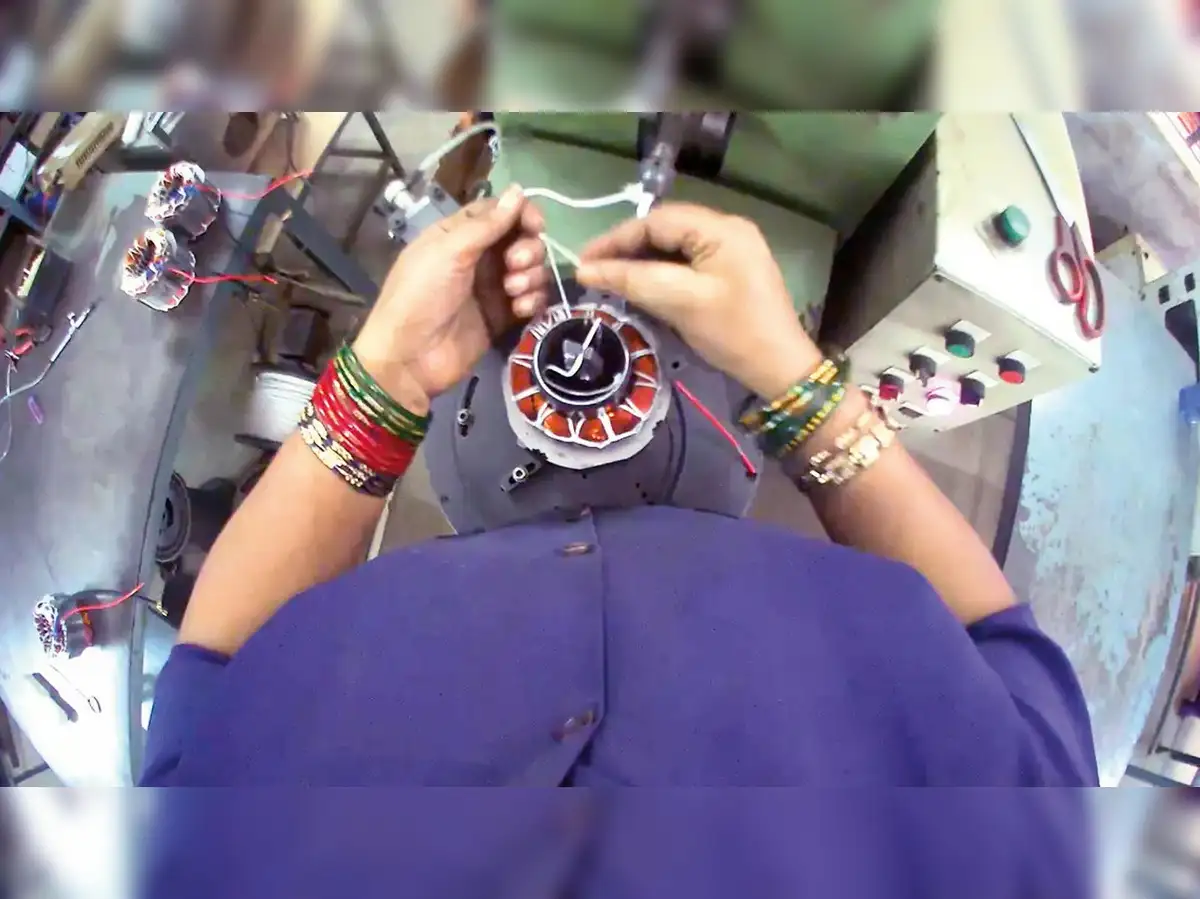
AFP and multiple outlets report that Indian workers are recording first-person household tasks to train AI systems that guide robots. Workers such as Nagireddy Sriramyachandra film chores wearing head-mounted smartphones and are paid about 250 rupees per hour (roughly $2.60), according to AFP, Al Jazeera and NDTV. Data firm Objectways, cited by The Economic Times and NDTV, collects these "egocentric" videos for Fortune 500 clients and uses platforms including Amazon SageMaker. Objectways CEO Ravi Shankar lists requested tasks such as "folding clothes, coffee making... sandwich making," per The Economic Times. Reporting also cites a Morgan Stanley projection of over one billion humanoid robots in use by 2050. Digital labour expert Aditi Surie says such data-collection services are likely to increase, per Al Jazeera.
This story is a data-supply-chain story as much as a robotics story: it documents, with a named worker and a named vendor, exactly how the "egocentric video" datasets that robotics and spatial-AI labs need are actually sourced, through low-cost, distributed human labor in India, mediated by data firms like Objectways rather than by the AI labs themselves. For practitioners building or buying robot-manipulation models, the piece is a useful reminder that real-world motion data remains a labor-intensive bottleneck, not a purely synthetic or simulation-solved problem.
What happened
AFP reporting, picked up by Al Jazeera, NDTV, and The Economic Times, documents workers in Tamil Nadu, India, recording first-person videos of everyday chores to train AI systems for robot manipulation. The pieces profile Nagireddy Sriramyachandra, who films herself slicing mangoes with a smartphone strapped to her head and earns 250 rupees per hour (about $2.60) for the footage, per AFP. Reporting names the data firm Objectways as a buyer and processor of the clips, saying it lists Fortune 500 companies among its clients and works with Amazon SageMaker.
Technical context
Coverage uses the term egocentric data for first-person video captured from head-mounted devices, including consumer smartphones, video glasses, and motion sensors that capture hand and body motion. Industry commentary quoted in the reporting describes feeding this footage into spatial-AI and robotics models so robots can imitate human manipulation in physical environments. Objectways head Ravi Shankar is quoted listing tasks clients request: "folding clothes, coffee making... cooking a very specific thing, sandwich making," per The Economic Times.
Industry context
The coverage places these recordings in a broader pattern of India as a major hub for data collection, processing, and annotation for global AI projects. Reporting cites a Morgan Stanley projection that there could be over one billion humanoid robots in use by 2050, largely for industrial and commercial purposes. Digital labour expert Aditi Surie is quoted in Al Jazeera saying "it's likely that these data collection services will increase," linking rising demand for egocentric datasets to growing robotics and spatial-AI efforts.
For practitioners
The story highlights two operational realities: high-volume, labeled real-world motion data remains a bottleneck for robot learning, and data collection at scale often relies on distributed human labor in regions with lower per-hour wages, documented here with the 250-rupee-per-hour figure. Teams sourcing this kind of data should expect the same provenance, consent, and labor-standards questions that have applied to other AI-data-labeling supply chains.
What to watch
- •Emergence of standardized egocentric datasets and commercial platforms that package such footage for robotics training.
- •Whether vendors disclose data provenance, consent practices, and annotation standards for this kind of labor.
- •Research that reduces reliance on filmed human demonstrations, such as sim-to-real techniques or self-supervised motion priors.
Editorial analysis
The piece is notable less for its specific numbers than for making a normally invisible part of the AI supply chain visible: distributed human labor recording daily activity to train systems that industry projections suggest could eventually replace similar work. That tension, between supplying the training data and potentially being displaced by what it trains, is likely to recur as embodied-AI and humanoid-robotics investment grows.
Key Points
- 1Egocentric video capture is becoming a repeatable commodity: human-recorded first-person footage supplies crucial motion data for robot learning.
- 2Using distributed human labor for data collection reduces cost barriers but centralizes annotation and quality-control needs for robotics teams.
- 3Growth in humanoid robotics projections increases demand for annotated real-world manipulation datasets, shifting some labor into data-generation roles.
Scoring Rationale
A widely-syndicated AFP story documenting a tangible data-collection pipeline for robotics that matters to practitioners building real-world manipulation models; notable but not a frontier-model event, so relevance is moderate-high.
Sources
Public references used for this report.
Practice with real Hotels & Lodging data
90 SQL & Python problems · 15 industry datasets
250 free problems · No credit card
See all Hotels & Lodging problems


