Indian Workers Record Footage to Train AI
This story is a case study in how AI's physical-world data supply chain is being built on inexpensively priced human labor with minimal consent infrastructure, a pattern practitioners sourcing egocentric or motion-capture datasets should scrutinize before using such data downstream. Reporting from AFP (via Dawn and Al Jazeera) and an investigative piece from Scroll.in describe Indian garment-factory and home workers wearing head-mounted cameras and smartphones to record first-person "egocentric" footage for AI and robotics training, including an on-record interview with Chennai worker Nagireddy Sriramyachandra, who is paid about 250 rupees (roughly $2.6) per hour of video for data firm Objectways. Scroll.in's investigation separately traced an April viral video to Pearl Global Industries' Gurugram factory, where two teenage-founded startups, Egolab.AI and its acquirer Build AI, distributed recording headsets without documented worker consent. For practitioners, the episode surfaces provenance, consent, and collective-data-rights gaps that current regulation, including India's DPDP Act, does not clearly address.
Egocentric, first-person video is becoming a cheap, high-volume input for robotics and imitation-learning pipelines, and this story is one of the clearest documented cases of how that data gets sourced: through low-wage arrangements in India with thin consent and disclosure. For AI practitioners and dataset buyers, the practical risk is provenance, not politics - a growing share of embodied-AI training data traces back to arrangements that would not satisfy standard data-governance or consent audits.
What happened
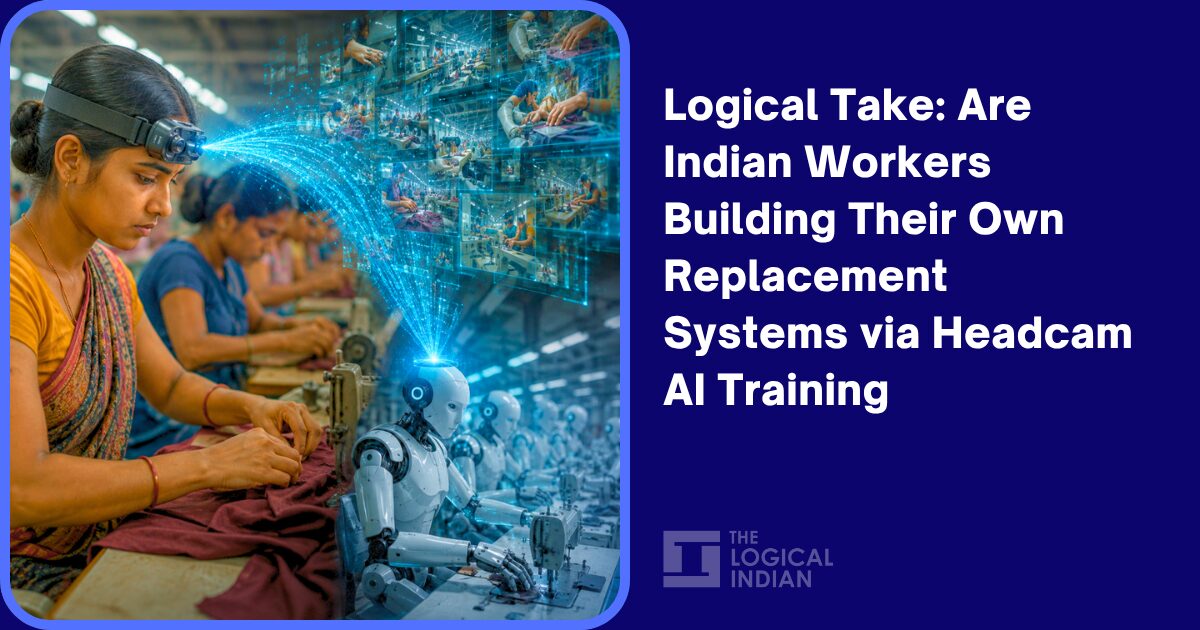
AFP photographed and interviewed workers across Tamil Nadu, including Chennai homemaker Nagireddy Sriramyachandra, who is paid about 250 rupees (roughly $2.6) for an hour of first-person video recorded for data firm Objectways; the wire report was carried in full by Dawn and Al Jazeera (both bylined AFP) on June 11, 2026. Objectways operates studios where workers repeat household tasks, folding towels, making coffee, arranging objects, in front of GoPro cameras and smart glasses, and the firm works with Amazon SageMaker and lists Fortune 500 clients, per Dawn's reporting. Separately, an April viral video of garment workers wearing head-mounted cameras on a factory floor prompted an investigation by Scroll.in (published May 20), which identified the location as the Gurugram unit of Pearl Global Industries and traced the hardware to Egolab.AI, a startup founded in January 2026 by two teenagers, later acquired by Build AI. Workers told Scroll.in they were not asked for written or verbal consent.
Consent and data-governance gap
Scroll.in reports that Egolab's head of business operations, Arnav Kabra, said the firm "took consent to use the device and we did it in our own way" without elaborating, while Pearl Global did not respond to questions. Astha Kapoor of the Aapti Institute told Scroll.in that egocentric footage falls outside India's Digital Personal Data Protection Act because it lacks a direct one-to-one mapping between a worker's data and an individual harm, arguing the issue instead needs to be addressed as a collective data right. That gap is the crux of the practitioner risk: a dataset can be commercially packaged and resold to "global AI companies building robotics, computer vision, and autonomous systems" (Egolab's own description, per Scroll.in) without the kind of individual consent record that would satisfy a Western data-protection review.
Scale and market context
This is not an isolated vendor. Scroll.in cites industry estimates that robotics labs will spend $1.5 billion to $50 billion over the next two to three years to acquire 100 million to 1 billion hours of egocentric data, and reports Build AI's CEO's claim of $22 million in venture funding (confirmed by one investor, HF0; two others had not listed the investment as of publication). Gizmodo separately reported that Human Archive, a competing data-collection startup operating in India and elsewhere, raised an $8.2 million seed round from Y Combinator and investors linked to OpenAI, Nvidia and Google in May 2026, evidence that the same collection model is attracting mainstream venture capital rather than being one company's practice.
What to watch
- •Whether any of the robotics companies named in vendor marketing (Tesla, Boston Dynamics, Figure AI, per Egolab's own claims) confirm sourcing this specific data.
- •Documentation practices: license terms, consent records, and chain-of-custody metadata that would make downstream datasets auditable.
- •Regulatory movement in India on collective data rights for workplace-collected biometric and video data, an area the Aapti Institute and others say current law does not cover.
- •Whether buyers of egocentric datasets begin requiring documented consent and provenance as a purchase condition, similar to model-card or dataset-card practices elsewhere in ML.
Key Points
- 1AFP and investigative outlet Scroll.in confirm Indian garment and home workers wear head cameras recording egocentric footage for AI and robotics training data.
- 2Pay (about 250 rupees/hour) and vendor consent processes are opaque; Scroll.in found Pearl Global factory workers were not asked for written or verbal consent.
- 3Practitioners sourcing egocentric or motion-capture datasets should demand documented consent and provenance, since India's data law does not yet cover this collective-data gap.
Scoring Rationale
Verification confirmed this is a well-corroborated, multi-angle story: an AFP wire investigation (carried in full by Dawn and Al Jazeera) with an on-record named-worker interview, a separate Scroll.in investigative piece identifying a specific factory and startup with documented consent disputes and funding details, and confirmation via Gizmodo that a second, VC-backed startup (Human Archive) runs a similar data-collection model. That breadth shows this is a systemic industry pattern rather than a single anecdote, though it remains notable-tier rather than major-tier since no regulatory or corporate policy response has yet followed.
Sources
Public references used for this report.
View 8 more sources
- Viral video sparks worry over Indian workers training their own replacementsarabnews.com
- Finding their own replacement? Factory workers with cameras on head trigger AI fearsthefederal.com
- Factories make workers wear cameras to train AI - how long until the humans are phased out?tech.yahoo.com
- Silicon Valley VCs Invest in Head-Mounted Cameras on Workers in India For Training AIgizmodo.com
- The Indian workers training AI robots to take their jobstechxplore.com
- Why are Indian factory workers wearing head-mounted camerasmoneycontrol.com
- Indian workers wear cameras to train AI on their jobs? Viral clips spark fear of AI takeover in factoriesindiatoday.in
- Viral Videos of Indian Factory Workers Wearing Cameras Spark AI Fearsoecd.ai
Practice interview problems based on real data
1,625 SQL & Python problems across 15 industry datasets — the exact type of data you work with.
Try 250 free problems