India launches AI chatbot Samadhan Didi for grievances
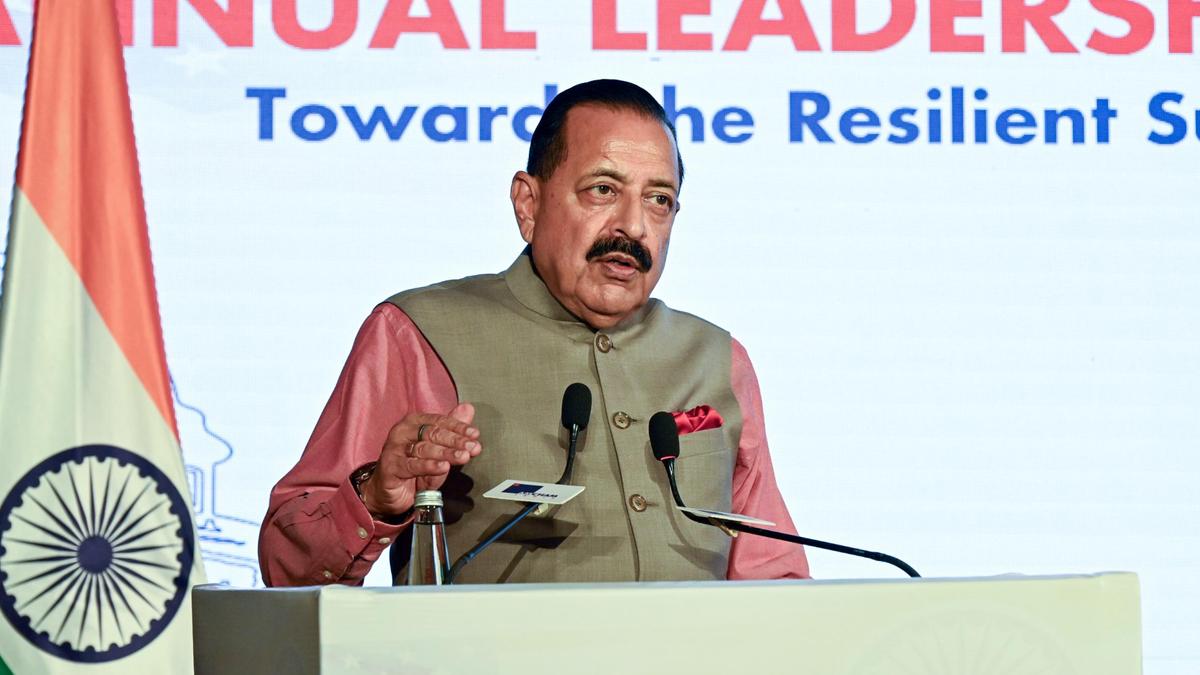
Business Standard and government press materials report that the Centre launched an AI-enabled CPGRAMS voice chatbot called Samadhan Didi to help citizens file grievances in their own language. Per Business Standard and a PIB press release, the tool was developed by the Department of Administrative Reforms and Public Grievances (DARPG) in collaboration with Bhashini, demonstrated live at the launch, and is hosted within secure government infrastructure to protect data. Newsbytes reports that Samadhan Didi can accept spoken input, automatically identify the correct ministry/department and complaint category, and file grievances; Newsbytes also states the system supports the 22 languages of the Eighth Schedule, with more regional languages to be added in phases. Union Minister Dr Jitendra Singh described the rollout as "democratisation of the public grievance mechanism," according to PIB.
What happened
Business Standard and a PIB press release report that the Indian government launched an AI-enabled CPGRAMS voice chatbot named Samadhan Didi on May 30, 2026. Business Standard and PIB state the tool was developed by the Department of Administrative Reforms and Public Grievances (DARPG) in collaboration with Bhashini and was demonstrated live in multiple Indian languages at the launch. Business Standard reports the chatbot is deployed within government infrastructure and describes data privacy safeguards as part of the rollout. Newsbytes reports the system accepts spoken descriptions, asks clarifying questions, auto-identifies the appropriate ministry/department, category and sub-category, and files the grievance on the citizen's behalf.
Editorial analysis - technical context
Industry-pattern observations: multilingual, voice-capable grievance systems typically combine speech-to-text, language identification/translation, intent classification, entity extraction, and a routing layer that maps intents to backend case-management APIs. Public-sector deployments commonly embed those components behind secure, government-hosted endpoints to meet data-governance and auditability requirements. Implementers often rely on language resources such as Bhashini to extend coverage across low-resource and scheduled languages.
Industry context
Newsbytes cites growth in public digital grievances - from about 200,000 in 2014 to over 2.5 million a year now, with an asserted resolution rate above 95% - framing a scalability need for accessible intake channels. Observers of e-government services view voice and multilingual intake as a way to lower friction for users who struggle with web forms or language barriers.
What to watch
- •adoption by state governments and integration depth with existing CPGRAMS workflows
- •expansion beyond the 22 Eighth Schedule languages and coverage for regional dialects
- •published details on data-retention, model auditing, and third-party access controls
- •accuracy and routing error rates, especially for ambiguous or multi-issue complaints
Key Points
- 1Samadhan Didi is a government-hosted, AI voice chatbot that auto-identifies departments and files grievances, lowering form and language barriers.
- 2Multilingual voice intake scales grievance volumes; public-sector deployments commonly combine speech-to-text, intent classification, and governed routing layers.
- 3Observers should monitor adoption, language expansion, published privacy controls, and measurable routing accuracy for operational reliability.
Scoring Rationale
A national government launching a multilingual, voice-enabled grievance chatbot is notable for public-sector practitioners and NLP engineers focused on low-resource languages and deployment at scale. The launch is important but not a frontier-model breakthrough.
Sources
Public references used for this report.
View 5 more sources
- Union Minister Jitendra Singh Launches AI-Enabled CPGRAMS Voice Chatbot ‘SAMADHAN DIDI’newsonair.gov.in
- AI powered ‘Samadhan Didi’ launched to simplify grievance filing across Indianewindianexpress.com
- India launches Samadhan Didi AI chatbot for multilingual complaint ...newsbytesapp.com
- India Introduces AI Chatbot for Streamlined Public Grievance Systemdevdiscourse.com
- India Introduces AI Voice Chatbot 'Samadhan Didi' to Expand ...opengovasia.com
Practice interview problems based on real data
1,625 SQL & Python problems across 15 industry datasets — the exact type of data you work with.
Try 250 free problems