Hyperscalers Expand Custom AI ASIC Investments, Broadcom Leads
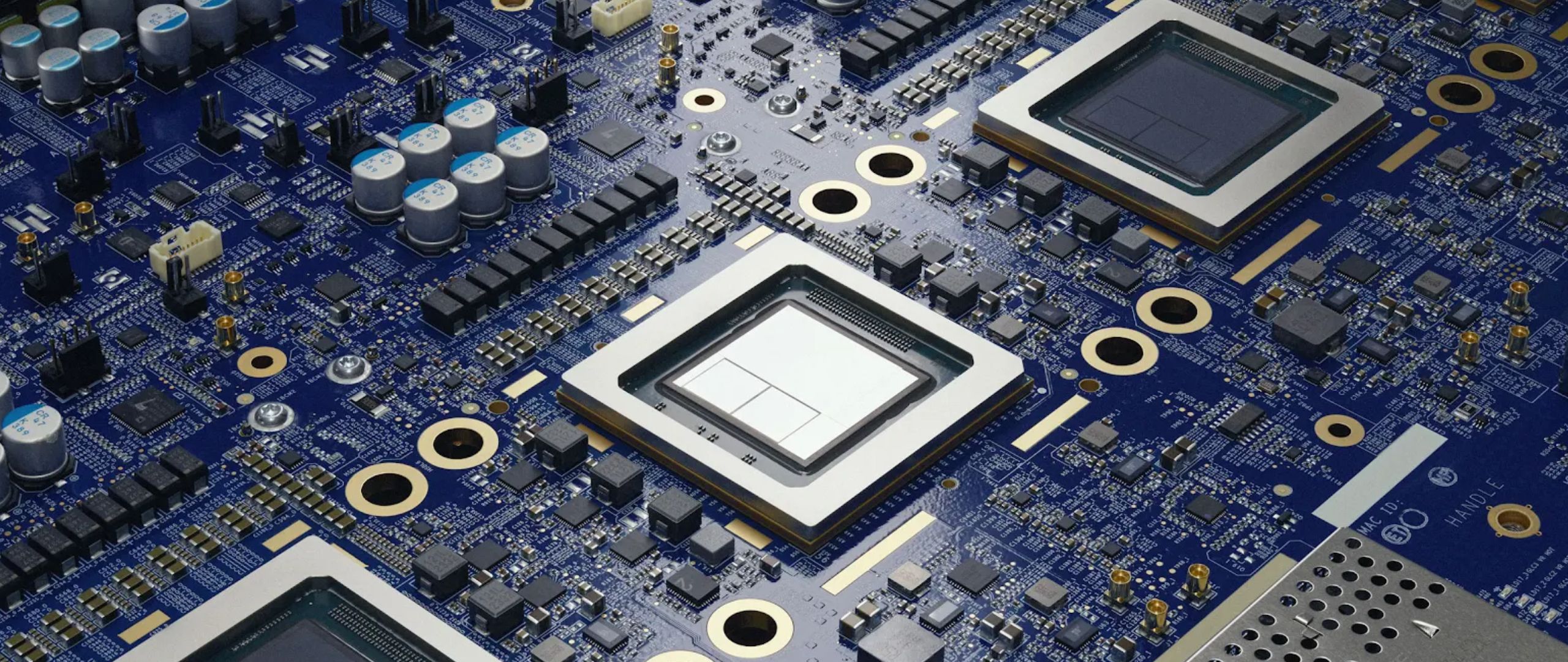
Broadcom and hyperscalers are accelerating bespoke AI silicon investment. Per Broadcom's investor release and company reporting, Broadcom recorded $8.4 billion in AI semiconductor revenue in Q1 FY2026 (a 106% year-over-year increase) and disclosed a $73 billion AI backlog while guiding to $10.7 billion in Q2, and the company projects up to $100 billion in AI chip revenue by 2027 (Tom's Hardware; Broadcom investor release). Broadcom and Meta announced a multiyear partnership to co-develop Meta's MTIA chips, with an initial commitment exceeding 1 gigawatt, support through 2029, and first 2-nanometer accelerators referenced in Broadcom's release and CNBC coverage. Reporting by Data Center Knowledge and company statements show hyperscalers including Google, Amazon, and Microsoft continue to design custom ASICs, with TSMC supplying advanced nodes and industry projections putting ASIC-based server shipments near 27.8% in 2026 (Tom's Hardware; Data Center Knowledge).
What happened
Broadcom reported $8.4 billion in AI semiconductor revenue for Q1 FY2026, a 106% year-over-year increase, and guided to $10.7 billion for Q2, according to Tom's Hardware summarizing Broadcom's results. Per Broadcom's investor release, the company disclosed a $73 billion AI backlog and described a roadmap targeting large-scale AI deployments; Broadcom's public materials and coverage reference an ambition toward $100 billion in annual AI chip revenue by 2027 (Broadcom investor release; Tom's Hardware).
Meta and Broadcom announced an expanded, multiyear collaboration to co-develop Meta Training and Inference Accelerator ( MTIA ) silicon through 2029, with an initial deployment commitment exceeding 1 gigawatt, and with Broadcom citing support for production of 2-nanometer-class accelerators in its release (Broadcom investor release; CNBC). Data Center Knowledge reports Meta plans to develop and deploy four MTIA generations within the next two years, positioning MTIA primarily for inference and ranking workloads (Data Center Knowledge). Multiple industry outlets and analyses note that hyperscalers including Google, Amazon, Microsoft, and OpenAI are investing in custom ASICs while TSMC remains the dominant foundry partner for those designs (Tom's Hardware).
Editorial analysis - technical context
Industry-pattern observations: Hyperscalers continue to adopt a multi-accelerator portfolio approach, combining GPUs for flexible training workloads with purpose-built ASICs to lower cost per inference at scale. Observers report that custom accelerators typically optimize data movement, memory hierarchy, and high-speed I/O to reduce total cost of ownership for steady-state production workloads (Data Center Knowledge; Tom's Hardware). The foundry relationship with TSMC is central: multiple reports attribute the recent ramp to access to advanced process nodes and packaging services that enable 3nm and 2nm-class ASICs (Tom's Hardware).
Context and significance
Reported figures and partnership scope indicate the AI-infrastructure market is shifting from GPU-dominated merchant ecosystems toward a hybrid market where custom ASICs capture growing share. Tom's Hardware cites projections that ASIC-based AI server shipments will reach 27.8% of the market in 2026, up from earlier years. Analysts and trade reporting also highlight that Broadcom and Marvell together represent a concentrated co-design market for hyperscaler ASICs, with Marvell projecting up to $11 billion in AI ASIC revenue for 2026 (Tom's Hardware). Those numbers matter because they affect supply-chain planning, foundry capacity allocation, and the economics of at-scale inference deployments.
Editorial analysis - commercial implications
Industry-pattern observations: Large multigenerational supplier agreements and gigawatt-scale commitments enable vendors to amortize non-recurring engineering and packaging costs across massive deployments. Public reporting shows Broadcom's expanded role includes chip logic, advanced packaging, and Ethernet fabric integration, which reflects a system-level approach to accelerator deployment rather than a narrow-device only play (Broadcom investor release; Data Center Knowledge).
What to watch
For practitioners
monitor disclosed shipment and utilization metrics for MTIA and other hyperscaler ASICs, TSMC capacity announcements for 3nm/2nm nodes, and Broadcom/Marvell revenue cadence in upcoming earnings. Also track any detailed performance or software stack disclosures that would clarify whether MTIA and similar ASICs require specialized compilers, runtimes, or tooling to be integrated into existing model-serving pipelines (Data Center Knowledge; Tom's Hardware).
Editorial analysis - risks and constraints
Industry-pattern observations: Companies moving to in-house or co-designed ASICs typically confront longer product cycles, supply-chain concentration risk around a single foundry, and the need for tighter hardware-software co-design. Those constraints are frequently cited in reporting on hyperscaler ASIC programs and are visible in how partners are emphasizing multi-generation roadmaps and network fabric integration to reduce integration friction (Tom's Hardware; Broadcom investor release).
Bottom line
Industry context
Public reporting shows a clear acceleration in hyperscaler-led custom AI silicon commitments, with Broadcom emerging as a principal commercial partner and Meta's MTIA program exemplifying multi-gigawatt procurement and multigenerational co-design. Practitioners should expect continued emphasis on system-level optimizations, foundry capacity signals, and software integration disclosures as the ecosystem scales (Tom's Hardware; Broadcom investor release; Data Center Knowledge).
Key Points
- 1Broadcom's disclosed $73B backlog and Q1 AI revenues underline large hyperscaler demand, reshaping supplier economics and capacity planning.
- 2Hyperscalers favor multi-accelerator stacks: GPUs for flexible training, custom ASICs for high-volume inference to reduce cost-per-query.
- 3Gigawatt-scale procurements and multigeneration roadmaps increase reliance on advanced foundry nodes and system-level co-design.
Scoring Rationale
The story documents substantial, near-term infrastructure commitments (gigawatt-scale MTIA deployments and Broadcom's multi-billion-dollar revenue/backlog figures) that will materially affect compute supply, foundry capacity, and economics for large-scale AI deployments.
Sources
Public references used for this report.
Practice with real Ad Tech data
90 SQL & Python problems · 15 industry datasets
250 free problems · No credit card
See all Ad Tech problems