Hugging Face Releases LeRobot Low-Cost Humanoid Platform
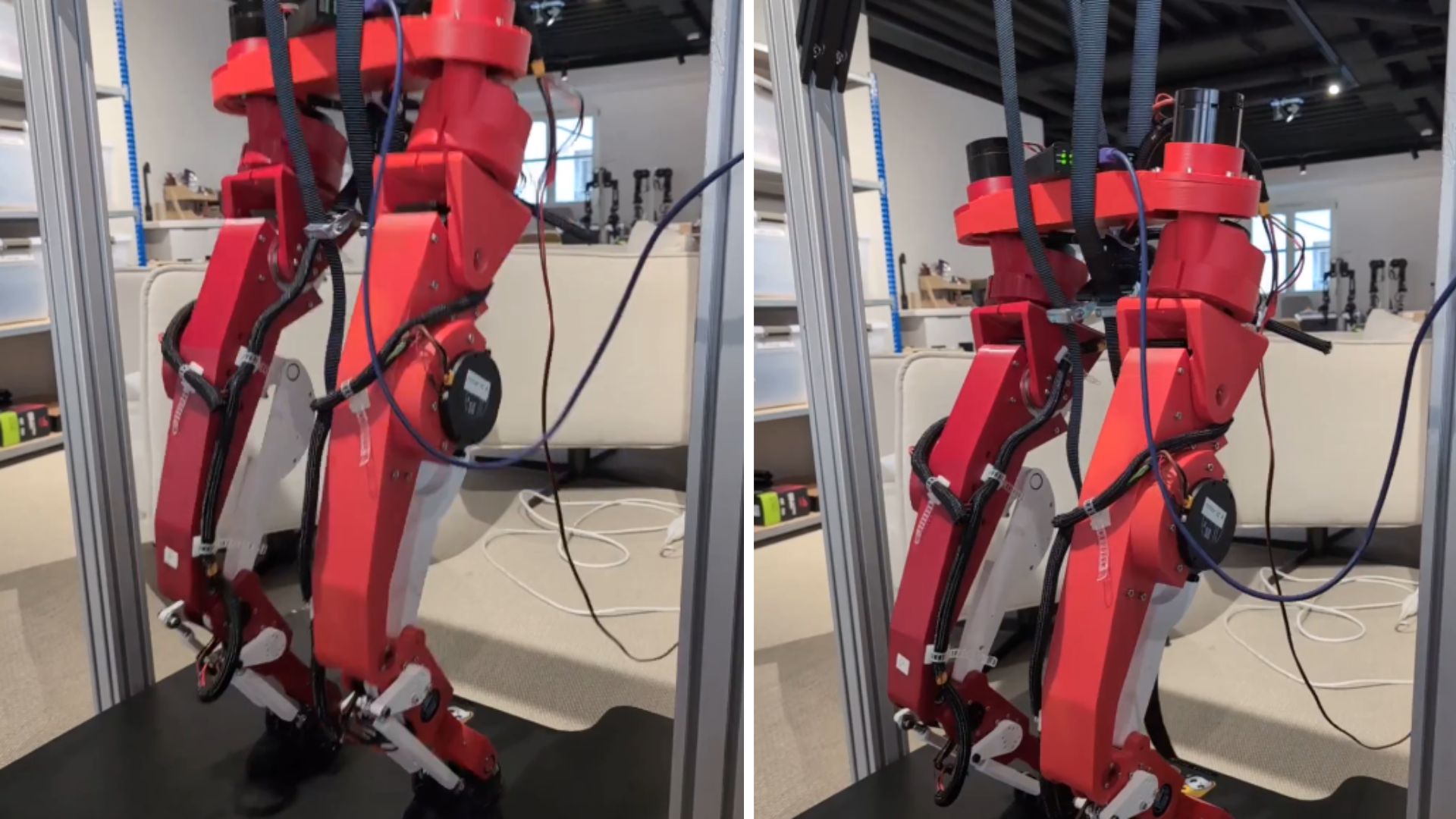
According to a Hugging Face blog post, the company released LeRobot Humanoid, an open, full-stack, 3D-printed bipedal robot project whose parts cost around $2,500 depending on sourcing, shipping, and taxes. The release includes hardware files, a bill of materials, assembly documentation, wiring diagrams, simulation assets, calibration and identification tools, and training environments, per the blog. Reporting by Ars Technica and Hackster highlights that the current physical platform is a lower-body bipedal system, effectively a pair of legs, built from 3D-printed parts and off-the-shelf electronics and actuators. The project is positioned as an experimental, reproducible platform for researchers, students, and hobbyists to close the loop between simulation and real-world robot learning experiments, per Hugging Face and subsequent coverage.
What happened
Hugging Face published a project release called LeRobot Humanoid, described as an open, low-cost humanoid robot platform, in a blog post on Hugging Face's website. The blog states the current bipedal build costs about $2,500 in parts, depending on sourcing, shipping, and taxes, and that the release is offered as a "full-stack" DIY robotics platform including hardware files, a bill of materials, assembly documentation, wiring diagrams, simulation assets, calibration and identification tools, and training environments. Reporting by Ars Technica and Hackster.io confirms those elements and emphasizes that the present physical release focuses on a lower-body bipedal platform, effectively a pair of legs, rather than a full-bodied humanoid.
Technical details
Per the Hugging Face blog, the platform is built from 3D-printed parts, off-the-shelf electronics, and relatively affordable actuators intended to maximize reproducibility and ease of repair. The published materials include files for printing structural parts, wiring documentation, runtime software for controlling the hardware, and simulation assets to run experiments in virtual environments before transferring to the physical robot. Ars Technica notes the project aims to connect the full loop: design exploration, simulation, data collection, system identification, training, and real-world control.
Editorial analysis, technical context
Industry-pattern observations: Open, reproducible robotics hardware lowers the barrier for closing sim-to-real loops because teams outside well-funded labs can iterate on hardware and collect real-world data. Platforms that supply a bill of materials, simulation assets, and identification pipelines reduce friction for reproducing experiments across sites, which is especially relevant for robot learning research that depends on real-world validation.
Context and significance
What to watch
Editorial analysis
The release follows a broader trend where ML and tooling companies publish hardware and datasets to accelerate research beyond purely software innovations. While LeRobot Humanoid is not aimed at producing a cutting-edge humanoid athletic platform, the combination of affordability, open hardware, and integrated software tools makes it a practical experimental substrate for labs and advanced hobbyists testing policies learned in simulation on real actuators and sensors. Observers covering the project highlight that a replicable lower-body platform can help researchers tackle locomotion, balance, and control transfer challenges at human scale without the cost and fragility of many proprietary humanoid platforms.
Practitioners and researchers should watch three indicators: community adoption and forks of the hardware files, the development of shared datasets collected on the platform, and compatibility or integration with popular robot-learning toolchains and simulators. Reporting so far does not include large-scale deployments or a commercial consumer roadmap; Hugging Face's blog provides the release materials and documentation but does not frame future product plans beyond the posted project materials.
Quote from source
In the Hugging Face blog post coauthored by project contributors, the team wrote, "If you are looking for the most advanced humanoid robot, this is not it. If you are looking for a humanoid you can build, understand, repair, instrument, simulate, and use for learning experiments, this is the robot we are trying to make."
Key Points
- 1Open, low-cost hardware plus full-stack software lowers entry barriers for hands-on robot learning experiments across labs and hobbyists.
- 2Providing 3D-print files, BOMs, and simulation assets addresses reproducibility and sim-to-real transfer challenges in robotics research.
- 3A modest-price bipedal platform shifts early experimentation cost from specialized labs to broader academic and maker communities.
Scoring Rationale
The release makes a practical, reproducible hardware platform available to researchers and advanced hobbyists, which is notable for robot-learning practitioners but not a frontier-model breakthrough. It materially lowers costs for physical experiments but does not change foundational ML capabilities.
Sources
Public references used for this report.
Practice interview problems based on real data
1,625 SQL & Python problems across 15 industry datasets — the exact type of data you work with.
Try 250 free problems