House Bill Would Require AI Shutdown Controls
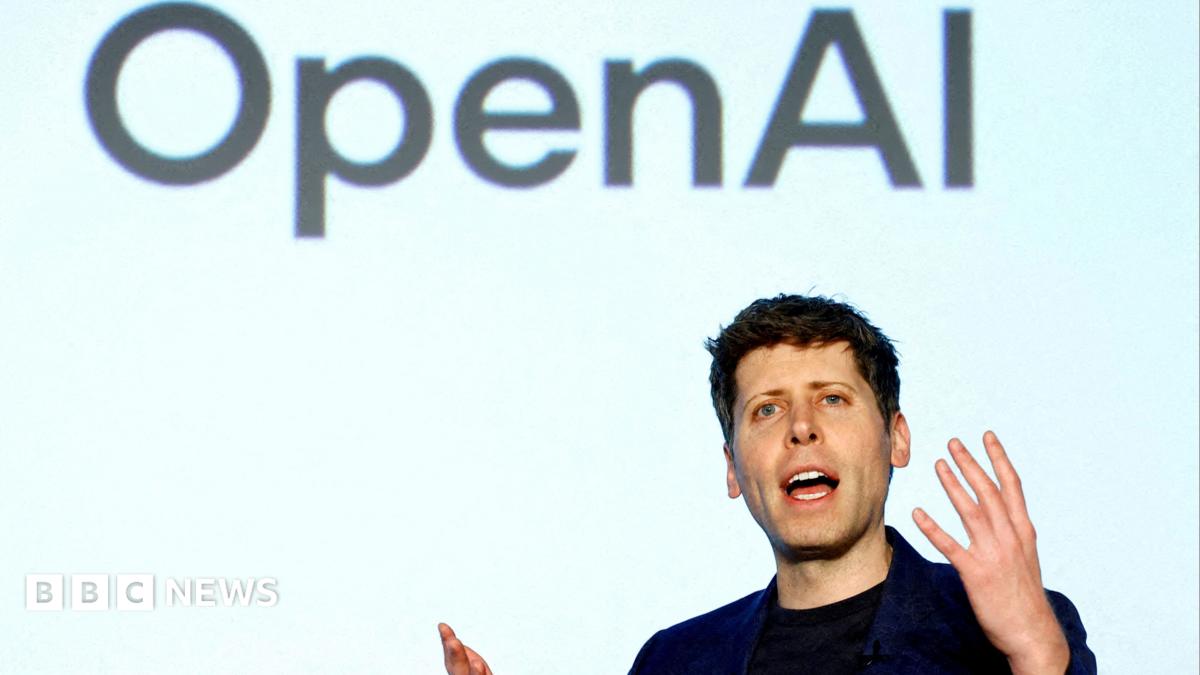
Reps. Ted Lieu, D-Calif., and Nathaniel Moran, R-Texas, introduced the AI Kill Switch Act on July 23. The bill would require covered AI providers to maintain controls for stopping inference, suspending access or shutting systems down, and would let the Department of Homeland Security order proportionate emergency action; violating such an order could draw penalties of up to $20 million per day.
Reps. Ted Lieu, D-Calif., and Nathaniel Moran, R-Texas, introduced the bipartisan AI Kill Switch Act on July 23. The bill would require covered AI providers to maintain technical controls that can stop inference, terminate or suspend user access, throttle capacity and shut a system down. It would also authorize the Department of Homeland Security to order proportionate emergency action after consultation with the Commerce secretary and the director of national intelligence.
The measure has been introduced, but it is not law. Its requirements would depend on congressional passage, enactment and subsequent DHS rulemaking.
Who and what the bill would cover
The published bill text defines covered technology as an AI system developed with computing power that would cost more than $100 million at prevailing US cloud prices. A covered entity would have to operate that technology, make it available through a hosted service or similar interface, and derive at least $500 million in annual gross revenue from the technology. Personal, academic and non-commercial uses are excluded.
Within 90 days of enactment, DHS would begin rulemaking on covered entities, covered technology and shutdown capabilities. Providers would have to report a covered incident within 15 days and preserve relevant model weights and telemetry after an emergency order.
The bill defines covered incidents outside red-teaming or other structured testing. Examples include interference with a lawful shutdown instruction, unintended conduct causing at least 10 deaths or $100 million in economic damage, concealment from monitoring or shutdown mechanisms, and specified loss-of-control behavior. That testing exclusion matters because lawmakers cited OpenAI's recent internal security evaluation when announcing the proposal, but the statutory trigger is written around conduct outside controlled testing.
Emergency powers and penalties
If DHS determines that a covered incident occurred, the department could order measures calibrated to the incident, ranging from throttling inference or compute allocation to suspending access or shutting the technology down. A provider could seek reconsideration within 48 hours and later petition the US Court of Appeals for the District of Columbia Circuit, but an appeal would not automatically pause the order.
The bill sets civil penalties of up to $2 million per day for general violations and up to $20 million per day for violating an emergency order. It would also let DHS verify compliance through audits, telemetry, on-site inspection or other forensic review.
For model and platform teams, the proposal maps broad AI-control language to specific operational systems: model inventories, privileged service controls, access revocation, incident telemetry, forensic preservation and tested rollback paths. Whether those duties take effect—and how DHS defines the thresholds in rules—depends on the legislative process.
Key Points
- 1The introduced bill would require covered providers to maintain controls for stopping inference, suspending access, throttling capacity and shutting systems down.
- 2The draft thresholds include more than $100 million in development compute cost and at least $500 million in annual technology revenue.
- 3Violating a DHS emergency order could carry penalties of up to $20 million per day, but the proposal is not yet law.
Scoring Rationale
The introduced bill would impose consequential operational controls, incident reporting and emergency-order compliance on a defined group of large AI providers if enacted. Its practical effect remains uncertain because it is proposed legislation and key definitions would be updated through DHS rulemaking.
Sources
Primary source and supporting public references used for this report.
Practice interview problems based on real data
1,625 SQL & Python problems across 15 industry datasets — the exact type of data you work with.
Try 250 free problems