Herndon and Dryhurst Reimagine Art with AI
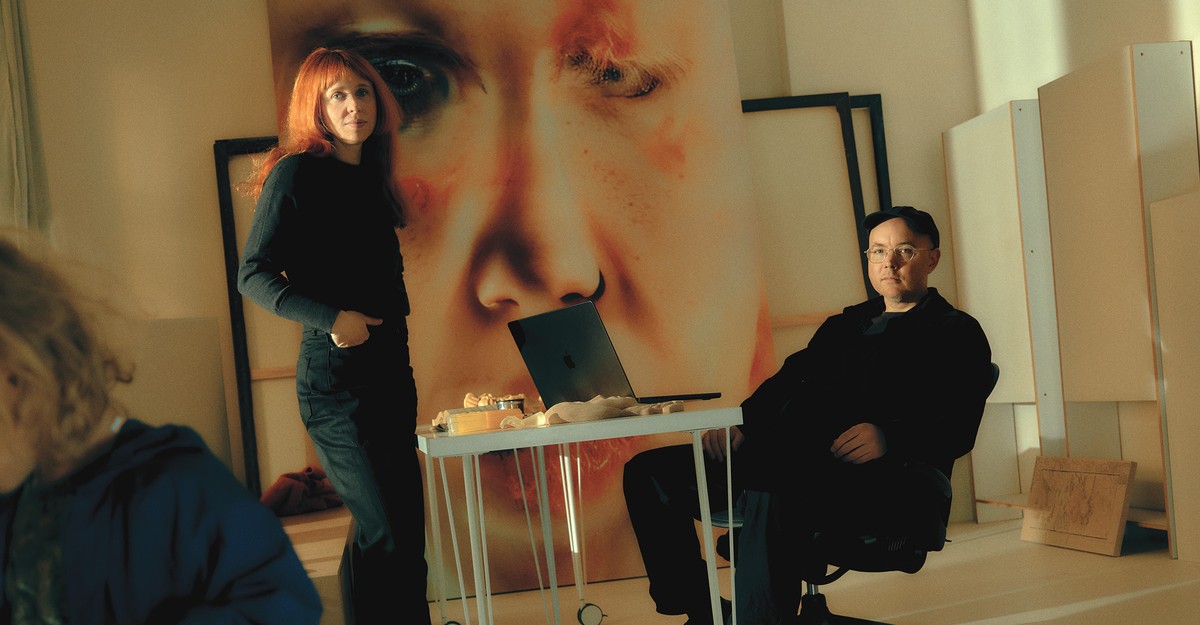
Artists Holly Herndon and Mat Dryhurst are presenting "Attention Guild," a new AI-themed installation, at the Venice Biennale as part of the "Strange Rules" exhibition they co-curated with Hans Ulrich Obrist at Palazzo Diedo, according to The Atlantic and Ocula. The Atlantic reports the pair originally planned to build the piece from 3-D-printed sand sculptures before realizing the material would be too heavy for the 18th-century palazzo -- Herndon told the magazine it "is way harder to do, because everything's on boats." Attention Guild, created with architecture studio SUB, stages a "parliament" where humans speak on the ground floor while AI agents debate above them, fed by the same stream of anonymously gathered conversation. The Atlantic frames Herndon and Dryhurst as high culture's most influential exponents of AI, and reports they argue the technology could spark a renaissance in the arts rather than end them.
For practitioners building generative tools that leave the screen, this project is a concrete case study in what changes when model output becomes physical infrastructure: fabrication constraints (weight, material behavior, structural load) become as central as prompt design, and the metadata trail linking a finished object back to its generative process becomes a curatorial and conservation requirement, not an afterthought.
What happened
According to The Atlantic and Ocula, Holly Herndon and Mat Dryhurst are presenting Attention Guild, a new commission built with architecture studio SUB, as part of Strange Rules, an exhibition they co-curated with Hans Ulrich Obrist at Palazzo Diedo for the Venice Biennale. Attention Guild is structured as a parliament: humans speak on the ground floor while, above them, AI agents debate, forming a mirror assembly fed by the same stream of anonymously gathered conversation. The Atlantic reports the artists originally planned to build the installation from 3-D-printed sand sculptures, but abandoned that approach once they realized the material would be too heavy for the 18th-century palazzo; Herndon told the magazine building physically "is way harder to do, because everything's on boats." The Atlantic describes the pair's practice as spanning music, images, and software, and reports they frame AI as a potential renaissance for the arts rather than a threat to it.
Technical context
Moving generative output into physical installations forces cross-disciplinary pipelines that pure software projects can skip: dataset and model provenance, versioning of prompts and checkpoints, and engineering review of manufacturability and structural safety. The palazzo's weight constraint is a concrete example -- a purely digital or screen-based version of Attention Guild would not have hit that limit, but a museum-grade physical installation did, and forced a material substitution.
For practitioners
Teams building AI-driven physical or spatial installations should budget for materials and structural engineering review as part of the creative pipeline, not after it, and should maintain provenance metadata (prompts, checkpoints, model versions) that survives the transition from digital output to physical artifact for later curation, conservation, or rights questions.
What to watch
How museums and biennials formalize provenance and attribution requirements for AI-assisted physical work, and whether other high-profile artists follow Herndon and Dryhurst's "Protocol Art" framing -- treating algorithms and AI models themselves as the subject of the work rather than just a production tool.
Key Points
- 1Holly Herndon and Mat Dryhurst built Attention Guild, an AI-themed installation, for their Strange Rules exhibition at the Venice Biennale.
- 2A planned 3-D-printed sand sculpture was scrapped because it was too heavy for the 18th-century Palazzo Diedo, forcing a material rethink.
- 3The project shows how physical AI installations require engineering and provenance pipelines that purely digital generative work can skip.
Scoring Rationale
Well-corroborated arts profile (Atlantic feature plus two independent art-press interviews/coverage) with genuine, if narrow, relevance to AI-in-physical-installation practice; scored in the solid-but-modest range typical of creative-industry AI applications.
Sources
Public references used for this report.
Practice interview problems based on real data
1,625 SQL & Python problems across 15 industry datasets — the exact type of data you work with.
Try 250 free problems