Hebrew University Deploys VertINGreen For Indoor Air
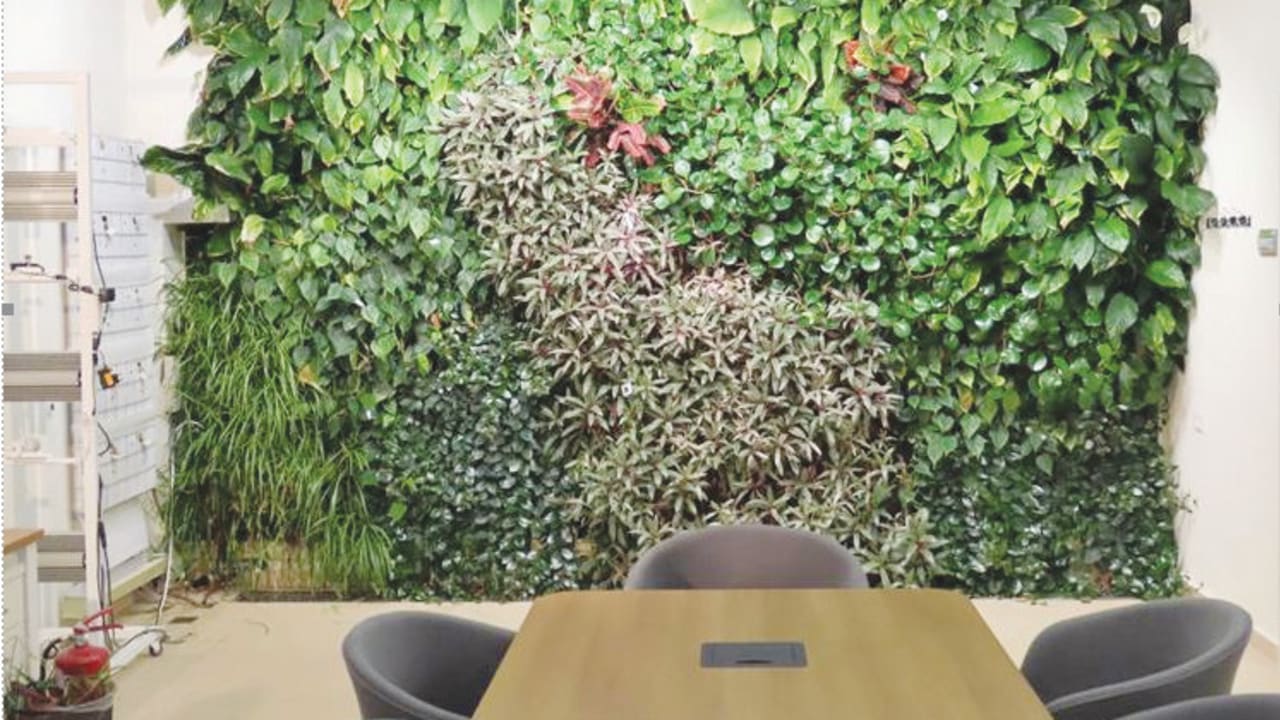
Researchers at the Hebrew University of Jerusalem have unveiled VertINGreen, a web-based platform that uses remote sensing, hyperspectral imaging, and machine learning to turn vertical living walls into predictable, monitorable systems for improving indoor air quality and reducing HVAC loads. Based on roughly 2,000 plant gas-exchange measurements gathered with instruments including LI-COR LI-6800, the platform trains predictive models to estimate carbon dioxide uptake, transpiration rates, and likely energy savings before installation. Once deployed, VertINGreen monitors plant health in real time and detects stress signals weeks before visual symptoms, enabling proactive maintenance and consistent performance. The system targets architects, facilities teams, and building managers seeking low-energy, nature-based air quality solutions that can be planned and evaluated like other building infrastructure.
What happened
Researchers at the Hebrew University of Jerusalem introduced `VertINGreen`, a web-based platform that converts vertical green walls from decorative elements into measurable environmental systems. The team collected about 2,000 detailed gas-exchange measurements using instruments such as LI-COR LI-6800 and combined those observations with remote sensing and hyperspectral imaging to train machine learning models that predict a wall's CO2 uptake, transpiration, and potential to reduce mechanical ventilation needs. The study and platform are described in a paper published in Indoor Air.
Technical details
VertINGreen links physiological measurements, light-mapping, and spectral indices to supervised predictive models. The dataset captures photosynthetic response and transpiration across multiple common indoor species and across light gradients categorized as high, moderate, and low. Remote sensing provides spatially resolved inputs that let the system:
- •forecast per-area CO2 absorption and water fluxes prior to installation
- •detect early plant stress via subtle spectral shifts weeks before visual symptoms
- •estimate impacts on HVAC demand and identify optimal species placement across a wall
The research team used gas-exchange chambers for ground truth and hyperspectral imaging for operational monitoring. Models were trained to map spectral and environmental features to physiological outputs; the platform exposes planning dashboards and real-time alerts for maintenance teams.
Context and significance
Nature-based solutions for buildings have long been advocated for aesthetics and biophilic benefits, but inconsistent performance and high maintenance costs limited adoption. `VertINGreen` addresses the two largest adoption barriers: unpredictability and operational burden. By converting living walls into instrumented assets with quantified performance metrics, the platform lets architects and engineers treat green walls like other building systems. For ML practitioners, this is a clear applied example of fusing physics-informed plant physiology data with remote sensing and supervised learning to produce actionable building-level outputs. It also demonstrates a practical path to integrate biological components into building management systems and energy models.
Limitations and caveats
The published work is grounded in controlled measurements and early deployments. Key unknowns for practitioners include long-term drift in spectral signatures under biofouling or dust accumulation, species-specific generalization across climates, the platform's sensitivity to sensor calibration, and the net effect on indoor pollutant removal beyond CO2, such as VOCs and NO2. Energy impact estimates depend on building envelope, occupancy, and HVAC control strategy, so site-specific modelling remains necessary. The platform reduces uncertainty but does not eliminate the need for engineering tradeoffs between ventilation, filtration, and living materials.
What to watch
Expect early commercial adoption in green building projects, hospitals, and corporate campuses where energy and wellness claims must be measurable. Watch for integrations between `VertINGreen` and building management systems, standardization of spectral-to-physiology mappings across vendors, and follow-on field studies that validate long-term pollutant removal and energy savings in diverse climates.
Bottom line
This work is a pragmatic application of remote sensing and ML to close the measurement gap for indoor living walls. For practitioners, it provides a reproducible pipeline from chamber-level physiological data to site-scale performance forecasts and automated monitoring, enabling more confident specification and operation of plant-based indoor air interventions.
Key Points
- 1VertINGreen combines hyperspectral remote sensing and ML with ~2,000 gas-exchange measurements to predict green wall CO2 uptake and transpiration.
- 2Real-time spectral monitoring detects plant stress weeks before visible symptoms, enabling proactive maintenance and more reliable performance.
- 3By quantifying expected HVAC load reductions, the platform lets designers evaluate green walls as engineered building systems rather than decorative features.
Scoring Rationale
The story presents a practical applied ML tool that materially reduces uncertainty for a nature-based building solution. It is notable for practitioners building sensor-model-product pipelines, but it is not a frontier research breakthrough nor a major industry paradigm shift.
Sources
Public references used for this report.
View 5 more sources
- High-Throughput Remote Sensing of Vertical Green Living Walls ...mdpi.com
- Astronomers Need to Rethink Where Life Could Exist Beyond Earth ...afhu.org
- Automated wall breathes literal life into ambitious architecturenewatlas.com
- Web application turns indoor green walls into smart, living systems ...techxplore.com
- Smart Green Walls Could Cut Costs and Boost Indoor Air Qualityisrael.com
Practice interview problems based on real data
1,625 SQL & Python problems across 15 industry datasets — the exact type of data you work with.
Try 250 free problems