Harvard Student Builds Softball-Collecting Autonomous Robot
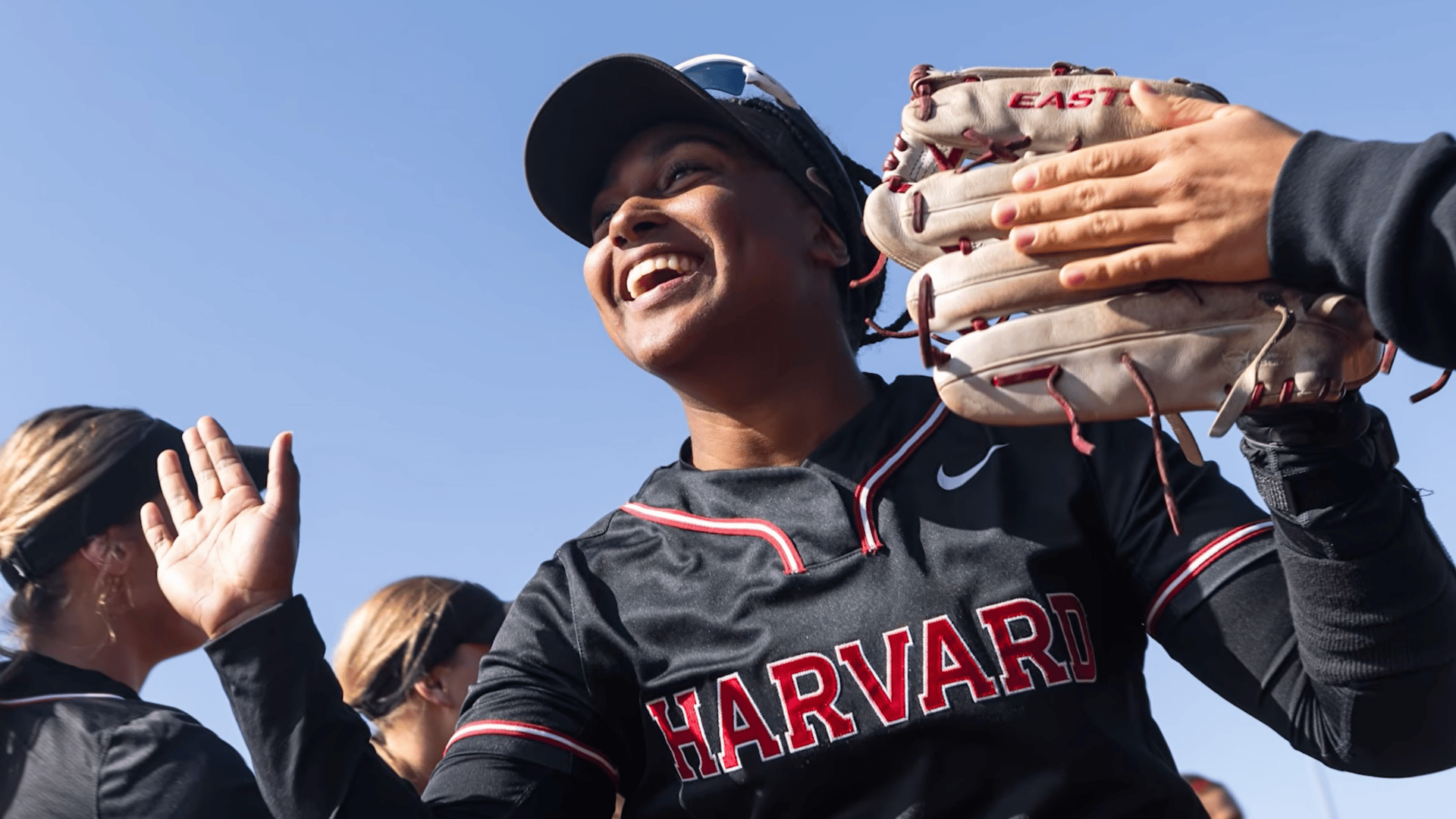
Harvard Gazette reports that mechanical engineering concentrator and Crimson outfielder Lael Ayala built an autonomous robot, SoftBot, as her senior thesis to detect and collect softballs during outfield practice. Ayala trained the robot using machine learning on "hundreds of photographs," and combined sensing, a horizontal roller intake, and a ramp-based storage system to produce a cart-like device that collected an average of 6.5 softballs per testing session, per the Gazette. Professor Seymur Hasanov is quoted praising the project for linking sport and engineering, and Ayala described the robot as "almost like a Roomba" for the outfield. The project developed over fall and spring work and was completed as part of Ayala's thesis, according to the article.
What happened
Harvard Gazette reports that senior mechanical engineering concentrator and softball outfielder Lael Ayala developed an autonomous softball-collecting robot named SoftBot as her senior thesis. The Gazette says Ayala began work in the fall, ``employing machine learning to train her SoftBot, using hundreds of photographs, to recognize softballs.'' The assembled system used a horizontal roller intake and a ramp to store balls, and the robot collected an average of 6.5 softballs per testing session, according to the Gazette. Professor Seymur Hasanov, Ayala's adviser, is quoted saying the project connected her sport and engineering interests.
Technical details
Per the Gazette, Ayala used machine learning image training on "hundreds of photographs" to enable softball recognition, then integrated perception with a cart-like mechanical intake and onboard storage. The reported intake mechanism is a horizontal roller that feeds balls onto a ramp into storage; Ayala described the prototype as functioning ``almost like a Roomba'' for outfield practice. The article presents these elements as the core sensing-to-actuation pipeline tested in on-field drills.
Editorial analysis
Student-built robotics projects like this commonly pair off-the-shelf perception techniques and simple mechanical subsystems to automate narrowly scoped, repetitive tasks. For practitioners, the most accessible path to a field-ready prototype is often: gather labeled images, train a lightweight classifier or detector, and couple detection to a robust but simple mechanical feed system. This pattern prioritizes reliability of the physical intake and ease of retraining over developing novel, large-scale ML models.
Context and significance
Hobbyist and academic teams frequently use applied ML to reduce manual friction in sports, agriculture, and facility maintenance. A modestly performing autonomous collector that achieves consistent, repeatable behavior in a controlled practice environment demonstrates useful proof-of-concept engineering and can inform future iterations focused on robustness, navigation, and multi-agent coordination.
What to watch
Observers can look for details on the perception stack (model type, inference hardware), tests across varied lighting and ball placements, and whether Ayala documents code or designs for reuse. The Gazette does not provide those technical specifics in the article.
Key Points
- 1A student thesis used ML-based image training and a simple mechanical intake to automate a narrow, repetitive sports task, showing rapid prototyping value.
- 2Using "hundreds of photographs" for detection plus a robust physical intake yielded a functional prototype, highlighting practical tradeoffs between perception and mechanics.
- 3Field-focused student projects provide reusable lessons for practitioners building niche automation: prioritize reliable hardware integration and dataset quality.
Scoring Rationale
This is a localized, practical student project that illustrates applied ML and robotics prototyping for a niche use case. It is useful as a proof of concept for practitioners but does not introduce new models, benchmarks, or broad industry shifts.
Sources
Public references used for this report.
Practice interview problems based on real data
1,625 SQL & Python problems across 15 industry datasets — the exact type of data you work with.
Try 250 free problems