Google Unifies Enterprise Agent Tools Into Platform
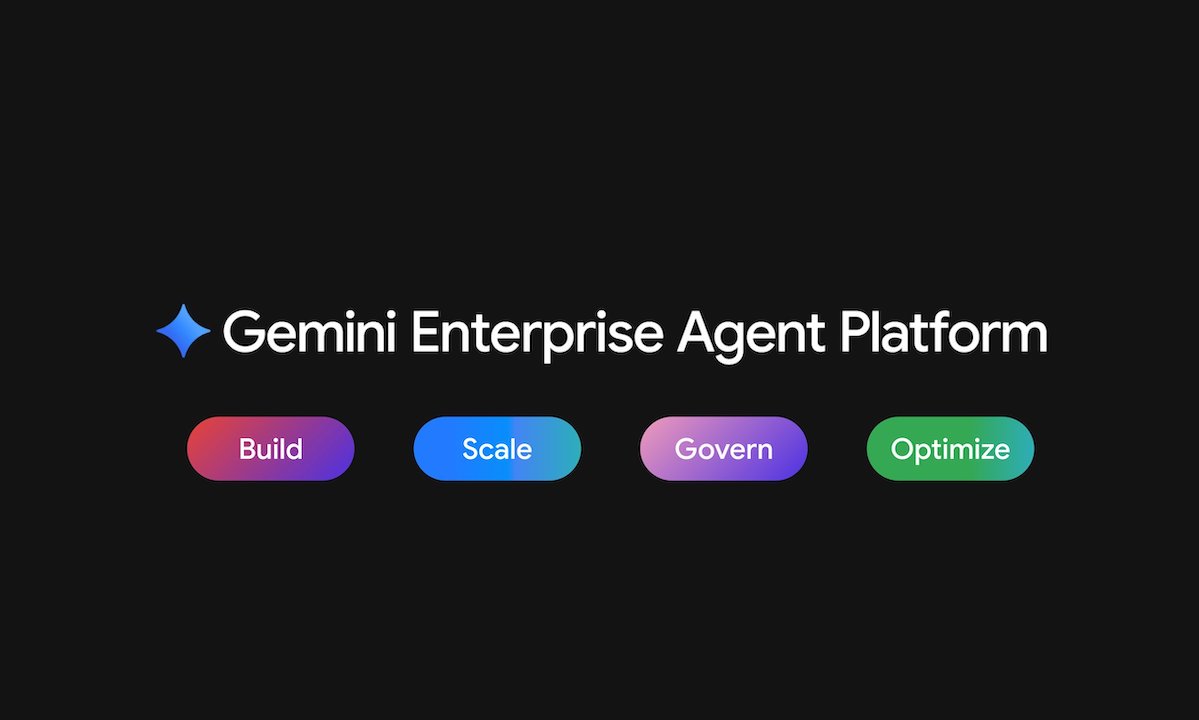
Google launched the Gemini Enterprise Agent Platform at Google Cloud Next 2026, consolidating agent building, deployment, governance, and runtime into a single enterprise product. The platform replaces Vertex AI as Google Cloud's primary enterprise AI development environment and provides first-class access to over 200 models via Model Garden, including Gemini 3.1 Pro and third-party models. It bundles a code-first Agent Development Kit (ADK), a low-code Agent Studio, a long-running Agent Runtime backed by a Memory Bank for persistent context, and governance primitives such as Agent Identity and Agent Gateway. Google also introduced an Agent Gallery with partner-built agents from firms like ServiceNow, Accenture, Adobe, and Salesforce, and emphasized interoperability through Agent-to-Agent protocols and a Model Context Protocol. The move shifts competition from model-only arms races to platform orchestration, governance, and operational scale.
What happened
Google announced the Gemini Enterprise Agent Platform at Google Cloud Next 2026, consolidating agent building, orchestration, runtime, security, and governance into one platform and replacing Vertex AI as the enterprise AI development surface. The company said the platform provides access to more than 200 models via Model Garden, including Gemini 3.1 Pro and third-party models, while integrating partner-built agents from names like ServiceNow, Accenture, Adobe, and Salesforce.
Technical details
The platform separates tooling by audience. Technical teams get the code-first Agent Development Kit (ADK), which supports graph-based, multi-agent topologies and delegated workflows. Business users receive Agent Studio, a low-code visual builder for designing agent logic without code. Google upgraded runtime and state handling with the Agent Runtime and a Memory Bank for persistent context, enabling agents to maintain state across days and multi-step workflows. Governance and security primitives include Agent Identity for cryptographic agent identities, an Agent Gateway to mediate calls and enforce policies, and controls that prevent customer data from being used to train Google models. The platform also ships an Agent Gallery with partner-certified agents and a two-step governance workflow for IT approval.
Feature set
- •Model access through Model Garden with first-party and third-party models, flexible model selection
- •Development tooling: ADK, Agent Studio, simulation environments, and orchestration APIs
- •Runtime and memory: Agent Runtime, Memory Bank for long-running, stateful agents
- •Security and governance: Agent Identity, Agent Gateway, audit trails, policy controls
- •Partner ecosystem: Agent Gallery with certified agents from enterprise software vendors
Context and significance
Enterprises have shifted from experimenting with single-chatbot flows to deploying fleets of specialized, long-running agents that act across systems. Google's move reframes the vendor competition: model quality alone is less decisive than platform capabilities around integration, observability, governance, and secure data handling. Making Vertex AI capabilities available exclusively through the Agent Platform signals a strategic consolidation, simplifying procurement and vendor lock-in calculus for large customers. Partnership integrations, exemplified by the ServiceNow collaboration, demonstrate Google's bet on cross-platform interoperability, with open protocols like a Model Context Protocol enabling agents to exchange structured context and actions. Kevin Ichhpurani framed the interoperability thesis directly: "Real customer value from agentic AI will be unlocked when agents seamlessly interoperate across platforms and systems, with enterprise-grade governance," said Kevin Ichhpurani, president, Global Partner Ecosystem at Google Cloud.
What to watch
Adoption will hinge on real-world reliability of long-running agents, the effectiveness of governance controls in regulated environments, and how easily third-party models and partner agents interoperate at scale. Expect competitors to accelerate similar platform-level plays that bundle models with integration, DevOps, and governance capabilities.
Key Points
- 1Google consolidated agent development, runtime, governance, and partner agents into a single Agent Platform, reducing integration friction for enterprises.
- 2Platform focus shifts competition from raw model performance to orchestration, long-running state, security, and governance, which determine production viability.
- 3Partner-built agents and open protocols aim to enable cross-platform interoperability, making ecosystems and governance the primary vendor lock-in levers.
Scoring Rationale
This is a major enterprise product release that consolidates Google Cloud's AI stack and repositions Vertex AI capabilities under a new platform, which materially affects enterprise deployment patterns. The story is timely and widely relevant to practitioners, but it is a product consolidation rather than a frontier model breakthrough, so it ranks as major rather than industry-shaking.
Sources
Public references used for this report.
Practice interview problems based on real data
1,625 SQL & Python problems across 15 industry datasets — the exact type of data you work with.
Try 250 free problems