Google Teases Pixel Drop With AI Music, Gemini Video
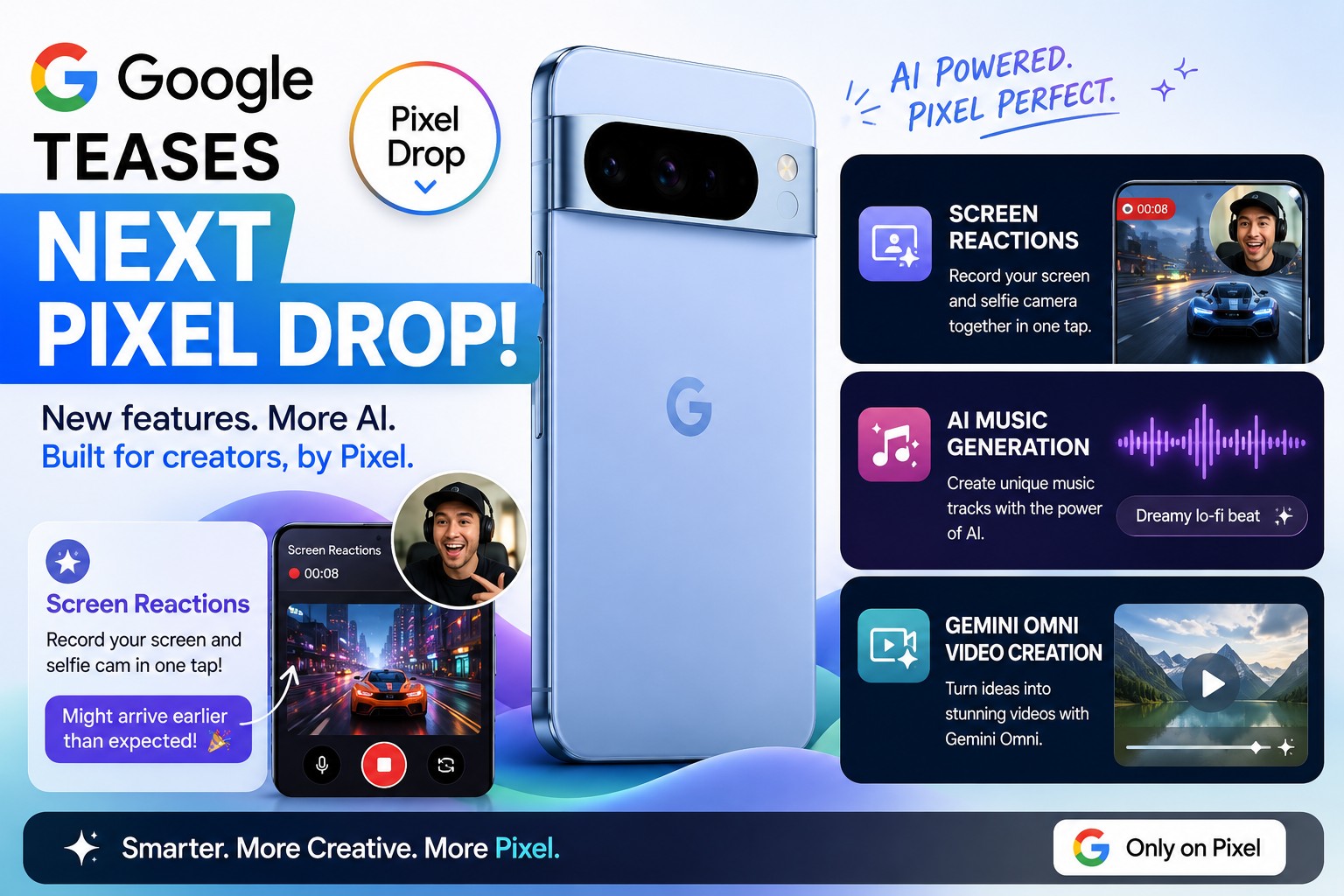
Google's June Pixel Drop turns the phone into a generative content studio, and the practitioner story is about model locality and gating rather than the feature list itself. Per Google's official blog post (June 16, 2026), the drop ships Screen reactions (selfie video composited into screen recordings on Android 17), Gemini Omni text-to-video creation including custom AI avatars, and Gemini music generation that produces full tracks with lyrics from a prompt or photo, plus floating-window Bubbles multitasking and wider Voice Translate. The leak source NokiaPowerUser first surfaced these via teaser clips on Google's Amazon storefront before the official rollout. Several capabilities require a Google AI subscription and are gated 18-plus, signaling cloud-backed inference. For builders, the open questions are which features run on-device versus on Gemini cloud endpoints, and how export formats and provenance metadata are handled.
Why it matters for builders
The interesting question is not the feature checklist but how Google split the work between device and cloud. Gemini Omni video generation and music generation with lyrics are compute-heavy, and the official footnotes tie several capabilities to a paid Google AI subscription with an 18-plus gate - both signals of cloud-backed inference rather than fully local models. For anyone building creator tooling or planning around Pixel as a capture-and-generate device, the load-bearing unknowns are model locality, latency and offline behavior, available export formats, and whether generated media carries provenance metadata.
What shipped
Google's official June Pixel Drop post (published June 16, 2026) confirms the features that leak outlet NokiaPowerUser had surfaced a day earlier from teaser clips on Google's Amazon storefront. Screen reactions composites a front-facing selfie video directly into a full-screen screen recording, a Pixel-first feature requiring Android 17 or newer. Gemini Omni lets users create and edit video by blending text, images, and clips, remix camera-roll media, or generate a custom AI avatar that looks and sounds like them. Music generation in the Gemini app turns a text prompt or photo into a full audio track with lyrics, customizable by style, vocals, and tempo.
Beyond creation
The drop also adds Bubbles, which turns any app into a floating window for multitasking, expands Voice Translate (real-time speech-to-speech call translation) to more devices, and widens availability of Take a Message, Custom Greetings, and conversational Edit with Ask Photos across more regions. Google says the features roll out starting June 16 and continue over the following weeks.
What to watch
Watch Google's per-feature documentation for explicit on-device versus cloud disclosures, the exact tiers and geographies where Gemini Omni and music generation are available, export and interoperability with desktop editors and DAWs, and how generated audio and video are labeled for provenance as synthetic-media disclosure expectations tighten.
Key Points
- 1WHAT: Google's official June Pixel Drop ships Screen reactions, Gemini Omni text-to-video, and Gemini music generation, confirming earlier NokiaPowerUser teasers.
- 2WHY: Generative video and music move from desktop tools onto the phone, but subscription gating and 18-plus limits point to cloud-backed inference.
- 3SO-WHAT: Creators get phone-native generation; practitioners should watch model locality, export formats, and provenance metadata before building on it.
Scoring Rationale
A notable consumer product update, now confirmed by Google's official June Pixel Drop post rather than a teaser. On-device and cloud generative tools (Gemini Omni text-to-video and Gemini music generation) materially change mobile creator workflows and raise practical questions about model locality and subscription gating, but this is feature distribution rather than a frontier-model release, so it sits mid-range.
Sources
Public references used for this report.
Practice with real Ad Tech data
90 SQL & Python problems · 15 industry datasets
250 free problems · No credit card
See all Ad Tech problems