Google Releases Educator-Led AI Features for Classrooms
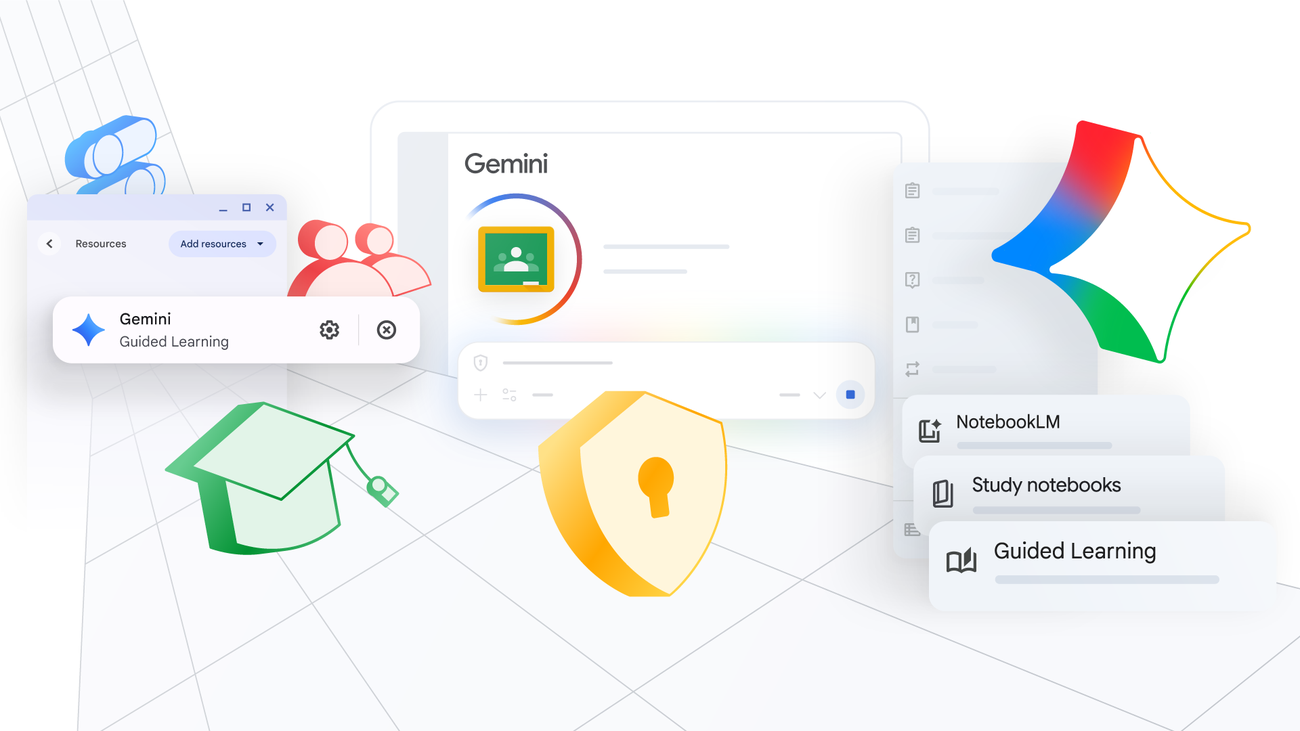
According to Google's blog post by Brittany Mennuti on Jun 25, 2026, Google is rolling out educator-led AI features that integrate with learning management systems via Gemini LTI, beginning with NotebookLM. The blog states the full teacher-led AI experience will be available in the coming months in select LMSs, and that selecting class materials is available now for teacher-led NotebookLM in PowerSchool Schoology and coming soon for Canvas by Instructure. Google also says student insights for NotebookLM will arrive in the coming months across both LMSs, and that Gemini LTI supports Moodle with manual source upload. Per the post, class tools require Google Workspace for Education Plus with the Teaching and Learning add-on and require that the educator and all students have Chromebooks; the Google Classroom app in Gemini is available globally in English for Google Workspace for Education users over age 18. Industry observers will view this as a continuation of an industry trend toward teacher-controlled grounding to improve relevance and reduce hallucination risk in classroom AI.
What happened
According to Google's blog post authored by Brittany Mennuti on Jun 25, 2026, Google announced classroom-focused AI features that keep educators in control and integrate with learning management systems. The post states the full teacher-led AI experience will be available in the coming months in select LMSs via Gemini LTI, starting with NotebookLM. The blog reports that selecting class materials is available now for teacher-led NotebookLM in PowerSchool Schoology and will be available soon for Canvas by Instructure. The post also says student insights for NotebookLM will be available in the coming months across both learning management systems. Google notes that Gemini LTI supports Moodle LMS but requires manual upload of class sources. The post specifies that class tools are available with Google Workspace for Education Plus and the Teaching and Learning add-on, and are available when the educator and all students have Chromebooks. The Google Classroom app in Gemini is reported as available globally in English for Google Workspace for Education users over age 18.
Editorial analysis - technical context
Integrations that let educators select source materials effectively ground model responses in instructor-approved content, a pattern that reduces hallucination and improves curricular alignment. Using an LTI-based connector like Gemini LTI follows established practice for LMS interoperability, but manual upload requirements for some LMSs signal persistent friction for heterogeneous deployments. Device and licensing constraints, such as requiring Chromebooks and Education Plus, are concrete deployment dependencies that influence technical architecture decisions for school IT teams.
Industry context
For practitioners building or integrating AI in education, this announcement illustrates two concurrent trends: shifting control toward educators as content curators, and vendor-driven bundling of features behind specific workspace and device requirements. These patterns affect procurement, privacy assessments, and model-grounding strategies commonly used in K-12 and higher education deployments.
What to watch
Observers should track the timeline and scope of the student-insights rollout, the Canvas integration availability, and whether Google relaxes device or licensing constraints. Also watch for privacy and data-control details in the student-insights feature and for third-party tooling that automates source ingestion for LMSs that currently require manual uploads.
Key Points
- 1Teacher-led source selection grounds AI outputs to curriculum, improving relevance and reducing hallucination risk in classroom use.
- 2LTI integrations lower integration friction, but dependencies on vendor workspace licenses and Chromebooks commonly limit rollout flexibility.
- 3Tracking student-insights rollout and Canvas/Moodle support will indicate operational maturity and privacy tooling readiness for edtech deployments.
Scoring Rationale
A notable edtech product update for practitioners integrating AI into learning systems: educator-controlled grounding via Gemini LTI reduces hallucination risk and improves curriculum alignment. Deployment is constrained by Workspace tier and Chromebook requirements. Score reflects a practical feature update, not a frontier model release.
Sources
Public references used for this report.
Practice with real Ad Tech data
90 SQL & Python problems · 15 industry datasets
250 free problems · No credit card
See all Ad Tech problems