Google launches Nano Banana 2 Lite image model
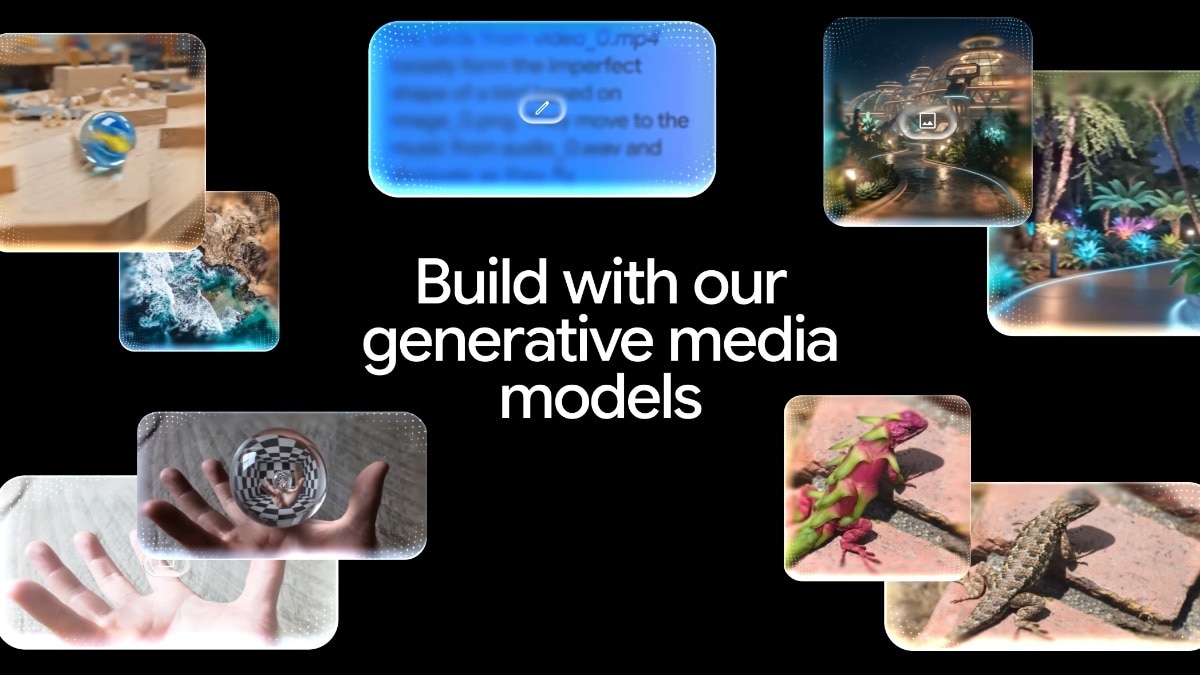
Google released Nano Banana 2 Lite (gemini-3.1-flash-lite-image) on June 30, its fastest and cheapest Gemini image model, generating text-to-image outputs in about 4 seconds at $0.034 per 1K-resolution image, according to Google's own announcement. The release also brings Gemini Omni Flash - a video generation and conversational-editing model priced at $0.10 per second of output, matching Veo 3.1 Fast - to developers for the first time via the Gemini API and Google AI Studio. Google positions Nano Banana 2 Lite as the direct upgrade path for developers still on the original Nano Banana (gemini-2.5-flash-image), and both new models embed SynthID watermarking. For teams running high-volume image or video generation pipelines, the combination lowers per-unit cost enough to change build-vs-buy and local-GPU-vs-hosted-API tradeoffs for prototyping.
The more consequential move here for practitioners is not the image model alone but Google explicitly chaining it to video: Nano Banana 2 Lite generating a reference image that Gemini Omni Flash then animates in the same session, via the Interactions API's multi-turn context. That workflow pattern - cheap image draft, then paid video refinement - is a cost-shaping decision other multimodal vendors will likely be measured against.
What happened
Google announced Nano Banana 2 Lite (gemini-3.1-flash-lite-image) on June 30, describing it as the fastest, most cost-efficient model in the Nano Banana image family, per its own blog post. Google says the model produces text-to-image outputs in about 4 seconds at $0.034 per 1K-resolution image, and is the recommended replacement for the original Nano Banana (gemini-2.5-flash-image). Alongside it, Google brought Gemini Omni Flash - first introduced at Google I/O - to developers via the Gemini API and AI Studio, priced at $0.10 per second of video output, matching Veo 3.1 Fast's rate. Both models are rolling out to consumer surfaces including AI Mode in Search, the Gemini app, NotebookLM, Google Photos, and Google Flow. TechCrunch and Ars Technica independently confirmed the release and pricing.
Technical context
Google's benchmark chart positions Nano Banana 2 Lite as the low-latency, high-throughput tier below Nano Banana 2 (the balanced "generalist") and Nano Banana Pro (highest-fidelity, slowest). Both new models use SynthID watermarking for provenance, and Google notes several Omni Flash limitations at launch: video generations are capped at 10 seconds, audio-reference uploads aren't yet supported in the API, and character consistency across scene changes remains imperfect.
For practitioners
This is a cost-and-latency tier change, not a capability jump - teams already on gemini-2.5-flash-image get a straightforward upgrade path with no code changes beyond the model ID. The chained image-to-video workflow (generate with Nano Banana 2 Lite, animate with Omni Flash, using session history to stack up to three sequential edits) is the more novel piece: it changes the economics of testing video concepts, since the expensive step (video) only runs on drafts already validated cheaply as images.
What to watch
Independent latency/quality benchmarks against competing fast-tier image models; how quickly the image-to-video chaining pattern shows up in production creative and marketing tools; and, as TechCrunch notes broader community friction around AI image tools, whether SynthID verification and content policy keep pace as bulk-generation pipelines scale on the new lower price point.
Key Points
- 1Google released Nano Banana 2 Lite, generating images in about 4 seconds at $0.034 per 1K-resolution image.
- 2Gemini Omni Flash, priced at $0.10 per second matching Veo 3.1 Fast, reached developers for the first time via the Gemini API.
- 3Chaining the two models lets teams cheaply draft images before paying for video animation, reshaping prototyping cost tradeoffs.
Scoring Rationale
A practical, well-verified product release (confirmed via Google's own blog plus independent press) that lowers latency and per-image cost and, more notably, pairs a cheap image tier with a new developer-facing video model in a chained workflow. Useful for engineering cost models and high-throughput creative pipelines but not a frontier-capability milestone.
Sources
Public references used for this report.
View 6 more sources
- Google introduces a faster, cheaper image generator with Nano Banana 2 Litetechcrunch.com
- Google's new Nano Banana 2 Lite image model is its fastest and cheapest yetarstechnica.com
- Google unveils Nano Banana 2 Lite aka Gemini 3.1 Flash-Lite for low cost, 4-second fast enterprise image generationsventurebeat.com
- Nano Banana image generation - Interactions APIai.google.dev
- Nano Banana | Google AI Studioaistudio.google.com
- Nano Banana 2 Lite: Google Gemini Image Model, API & Pricingcoursiv.io
Practice with real Ad Tech data
90 SQL & Python problems · 15 industry datasets
250 free problems · No credit card
See all Ad Tech problems