GM expands energy storage for AI data centers
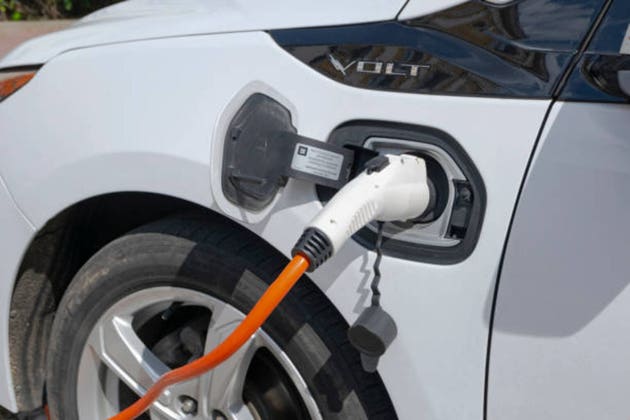
Data-center power procurement just gained another vertically integrated supplier: General Motors is turning its EV battery program into a grid-storage business aimed squarely at AI data centers. At a June 9, 2026 event, GM and startup Peak Energy announced a partnership, backed by a GM Ventures investment, to scale sodium-ion battery cells for grid-scale storage; Forbes reports a 2028 commercialization target, and GM pitches the chemistry as heat-tolerant and cheaper to deploy because it needs no active cooling. Bloomberg and CNBC report GM Energy will sell storage to utilities, commercial customers, and data-center operators; The Verge reports GM will activate vehicle-to-grid capability for some existing EVs; and Electrek reports an expanded recycling collaboration with Redwood Materials. For practitioners planning AI infrastructure, the significance is optionality: an automaker converting cell R&D, recycling, and aggregated EV capacity into grid services expands the supplier pool on the power side of the buildout, though no customer contracts or capacity commitments have been disclosed yet.
The binding constraint on AI data-center growth is increasingly electricity rather than silicon, and the supplier pool for storage just widened. General Motors is converting its EV battery program into a grid-storage business, and the practitioner-relevant part is the shape of the offer: new sodium-ion cells co-developed with a storage startup, recycled-material supply through Redwood Materials, and aggregated EV batteries sold back to the grid as a service.
What was announced
At a June 9, 2026 event in San Francisco, GM and Peak Energy announced a partnership to scale next-generation sodium-ion batteries for grid-scale storage, supported by a strategic investment from GM Ventures, per the companies' joint release. Bloomberg, CNBC, and Forbes report GM's GM Energy unit will pursue storage projects for utilities, commercial customers, and AI data-center operators. Forbes reports the partners target commercialization by 2028; the joint release says combining GM's cell expertise with Peak Energy's passively cooled storage platform targets roughly 20% lower costs and more than 99% uptime, and the Detroit News reports development work is underway at GM's Wallace Battery Cell Innovation Center in Warren, Michigan.
Why sodium-ion
Forbes quotes GM battery chief Kurt Kelty: "Sodium-ion actually is the better chemistry for that application. And when I say sodium-ion is better, I mean GM's version of sodium-ion." The reported case for the chemistry in stationary use: tolerance of high temperatures removes the need for active cooling, cutting installed system cost; long cycle life suits stationary duty; and the joint release emphasizes materials that can be sourced domestically, relevant given China-dominated LFP supply chains, a theme Financial Times and Fortune coverage also picks up.
The rest of the stack
The Verge and Bloomberg report GM will activate vehicle-to-grid (V2G) capability for some existing EVs and home-energy customers, alongside an "Energy Pass" to simplify public charging. Electrek reports an expanded collaboration with Redwood Materials covering recycling and second-life batteries. Together that sketches a vertically integrated model: make cells, deploy them in stationary systems, aggregate distributed EV capacity for grid services, and recover materials at end of life.
For practitioners and what to watch
For anyone planning data-center power, this is optionality rather than immediate capacity: no customer contracts, capacity targets, or detailed commercial terms were disclosed in the coverage. The signals that would make it real: validated pilot deployments of the sodium-ion cells; firm capacity commitments against the 2028 target; contracts with named data-center operators or utilities; and how state and federal interconnection rules for V2G aggregation evolve. Until then, treat GM as a credible new entrant on the power side of AI infrastructure, not yet a procurable supplier.
Key Points
- 1Auto-makers are converting EV battery R&D into grid-scale offers, expanding supplier options for data-center power procurement.
- 2Sodium-ion cells promise lower installed costs by removing active cooling, which matters for utility-scale and data-center deployments.
- 3Pairing new cells with recycling and V2G aggregation creates a vertically integrated supply-and-services model for grid resilience.
Scoring Rationale
Reliable, lower-cost grid storage directly affects data-center power planning and total cost of ownership for AI infrastructure, and GM entering with sodium-ion cells, V2G aggregation, and a recycling loop is a notable corporate strategy shift, confirmed by the companies' joint release. Not a model or benchmark story; scored as notable infrastructure news.
Sources
Public references used for this report.
View 13 more sources
- America's grid is reeling. General Motors offers itself as a distributed utility in disguisefortune.com
- GM Doubles Down On Energy Business To Serve Data Center Electricity Demandforbes.com
- GM thinks EVs can help offset AI's energy suck with vehicle-to-grid techtheverge.com
- GM bets big on energy storage for data centers and the gridtechcrunch.com
- GM bets on homegrown battery tech to challenge Chinese dominanceft.com
- GM bets bigger on battery storage - Axiosaxios.com
- General Motors Is Bringing Sodium-Ion Battery Production To Americainsideevs.com
- GM becomes first automaker to partner with Redwood across full battery lifecycleelectrek.co
- General Motors taps new battery tech to help power data centersdetroitnews.com
- New battery tech to help GM power AI data centers - WLNSwlns.com
- GM joins race to build batteries for AI data centers and the gridfinance.yahoo.com
- GM and Redwood Materials to pursue use of U.S.-built batteries for energy storage (July 2025)news.gm.com
- GM is pushing EV batteries for energy storage. Will its peers follow suit? (Aug 2025)latitudemedia.com
Practice interview problems based on real data
1,625 SQL & Python problems across 15 industry datasets — the exact type of data you work with.
Try 250 free problems