Genesis AI unveils GENE-26.5 robotic manipulation system
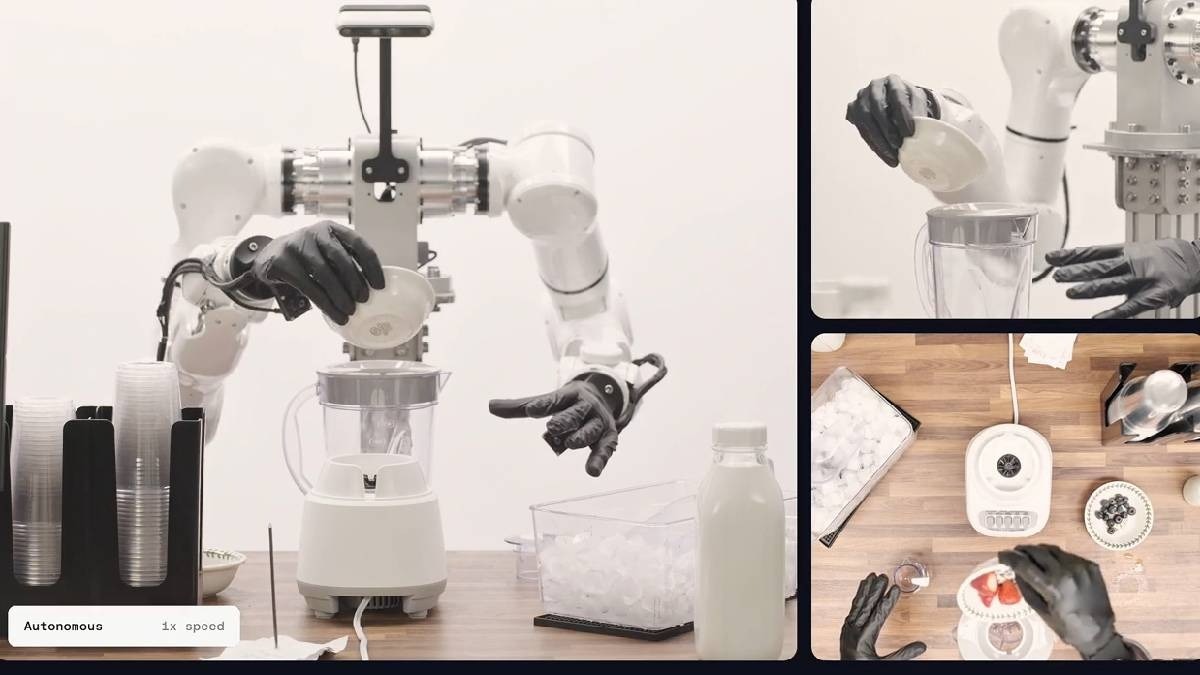
In a company blog post and demo releases, Genesis AI introduced GENE-26.5, a robotic foundation model system paired with a human-scale dexterous hand called Genesis Hand 1.0, and a sensor-glove data pipeline, aimed at contact-rich tasks such as cooking, piano playing, wire harnessing, lab pipetting and solving a Rubik's cube (Genesis blog; company demo). Reuters reports Genesis AI raised $105 million in a seed round and is backed by investors including Eric Schmidt and Xavier Niel; Reuters also reported the startup was founded in early 2025 and is in advanced talks with potential customers in France, Germany and Italy. TechCrunch and Fox News ran interviews with co-founders Zhou Xian and Théophile Gervet describing the full-stack approach and in-house hardware. IndiaToday cites a Business Insider remark that the team of around 60 people taught the robot a new piano song in about one hour.
What happened
In a May 7 blog post, Genesis AI introduced GENE-26.5, which it describes as its first robotic foundation model system and public release in the GENE family (Genesis blog). The release is accompanied by demonstrations of a human-scale dexterous hand, Genesis Hand 1.0, plus a sensor-equipped glove and simulation tools used to train the system for contact-rich tasks including cooking, making smoothies, lab pipetting, wire harnessing, multi-object grasping, solving a Rubik's cube, and piano playing (Genesis blog; company demo footage cited in TechCrunch). Reuters reported Genesis raised $105 million in a seed round and named backers including Eric Schmidt and Xavier Niel, and added the company was founded in early 2025 and is in advanced talks with prospective customers in France, Germany and Italy (Reuters). TechCrunch and Fox News published interviews with co-founders Zhou Xian and Théophile Gervet about the company's "full-stack" hardware-plus-model approach; IndiaToday quotes Business Insider on a remark that a team of around 60 people taught the system a new piano song in about one hour (TechCrunch; Fox News; IndiaToday).
Technical details
Per Genesis' technical writeup, GENE-26.5 is presented as a single model and control stack intended to run across multiple robot platforms, paired with a human-scale hand that the team describes as having 20 degrees of freedom and soft-contact surfaces for richer tactile interaction (Genesis blog). The company describes a data strategy built around human demonstrations captured with sensor gloves, high-fidelity simulation for iteration, and a control stack that integrates perception, timing, and motor control for long-horizon manipulation tasks (Genesis blog; TechCrunch).
Editorial analysis - technical context
Industry observers note that contact-rich manipulation differs from navigation or locomotion because tasks demand precise force, timing, and anticipatory control across uncertain object dynamics. Companies combining high-fidelity simulation with human demonstration data typically aim to reduce the "embodiment gap"-the mismatch between human and robot morphology-by using human-scale end effectors and motion-capture pipelines. For practitioners, this pattern implies a heavier emphasis on integrated hardware-software stacks, richer tactile sensing, and simulation fidelity when evaluating dexterous manipulation solutions.
Context and significance
Foundation-model-style thinking is spreading from perception and language into embodied robotics, with startups and labs experimenting with large, general models that aim to control multiple tasks and platforms. Genesis' presentation combines model, hardware, and data claims; Reuters' funding disclosure ($105 million) underscores investor appetite for robotics ventures that attempt full-stack solutions. For industrial applications such as automotive wiring or lab automation, successful generalization across unpredictable contact tasks would be commercially meaningful, but independent verification and long-duration field testing remain open questions.
What to watch
- •Whether independent third-party evaluations replicate the demos on consumer or industrial hardware.
- •Customer pilots in Germany, France, or Italy that quantify throughput, error rates, and cycle time.
- •Publications or benchmarks detailing success rates, sample efficiency, and sim-to-real transfer metrics from the Genesis team or external labs.
Key Points
- 1Combining human-scale hands with foundation-style control models narrows the embodiment gap, enabling faster transfer of human skills to robots in manipulation tasks.
- 2Full-stack approaches that include sensors, simulation, and hardware accelerate iteration, but independent benchmarks are necessary to confirm real-world reliability.
- 3Investor interest in dexterous-robotics seed rounds signals growing commercial focus on contact-rich automation for sectors like automotive, electronics, and lab work.
Scoring Rationale
Notable product release: a foundation model explicitly targeted at dexterous manipulation plus bespoke hardware and a $105 million seed raise make this material for practitioners tracking embodied AI. The story is significant but lacks independent benchmarks and broad deployments, keeping it below the highest-impact tier.
Sources
Public references used for this report.
View 6 more sources
- Genesis AI introduces GENE-26.5, its first robotic foundation model ...cnbctv18.com
- New AI brain lets robots move like humansfoxnews.com
- Genesis AI introduces GENE-26.5 model for more dexterous robot manipulationtherobotreport.com
- Genesis AI unveils GENE-26.5 robotic brain that enables human ...robotics247.com
- Genesis AI Unveils GENE-26.5, the First AI Brain to Enable Robots ...prnewswire.com
- New AI brain lets robots move like humans - AOL.comaol.com
Practice interview problems based on real data
1,625 SQL & Python problems across 15 industry datasets — the exact type of data you work with.
Try 250 free problems