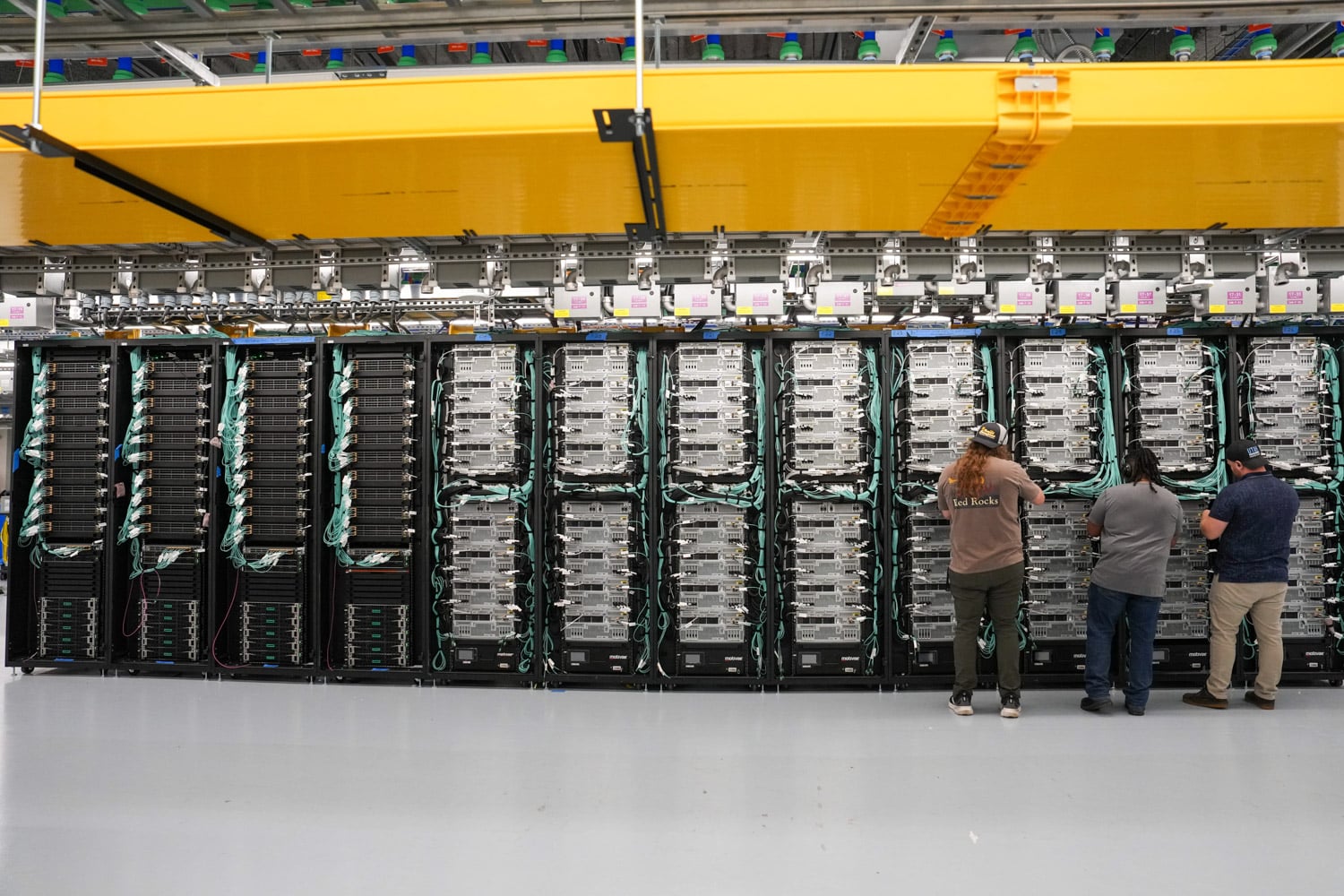
Flexcompute and Northrop Grumman Unveil Physics AI for Docking Simulations
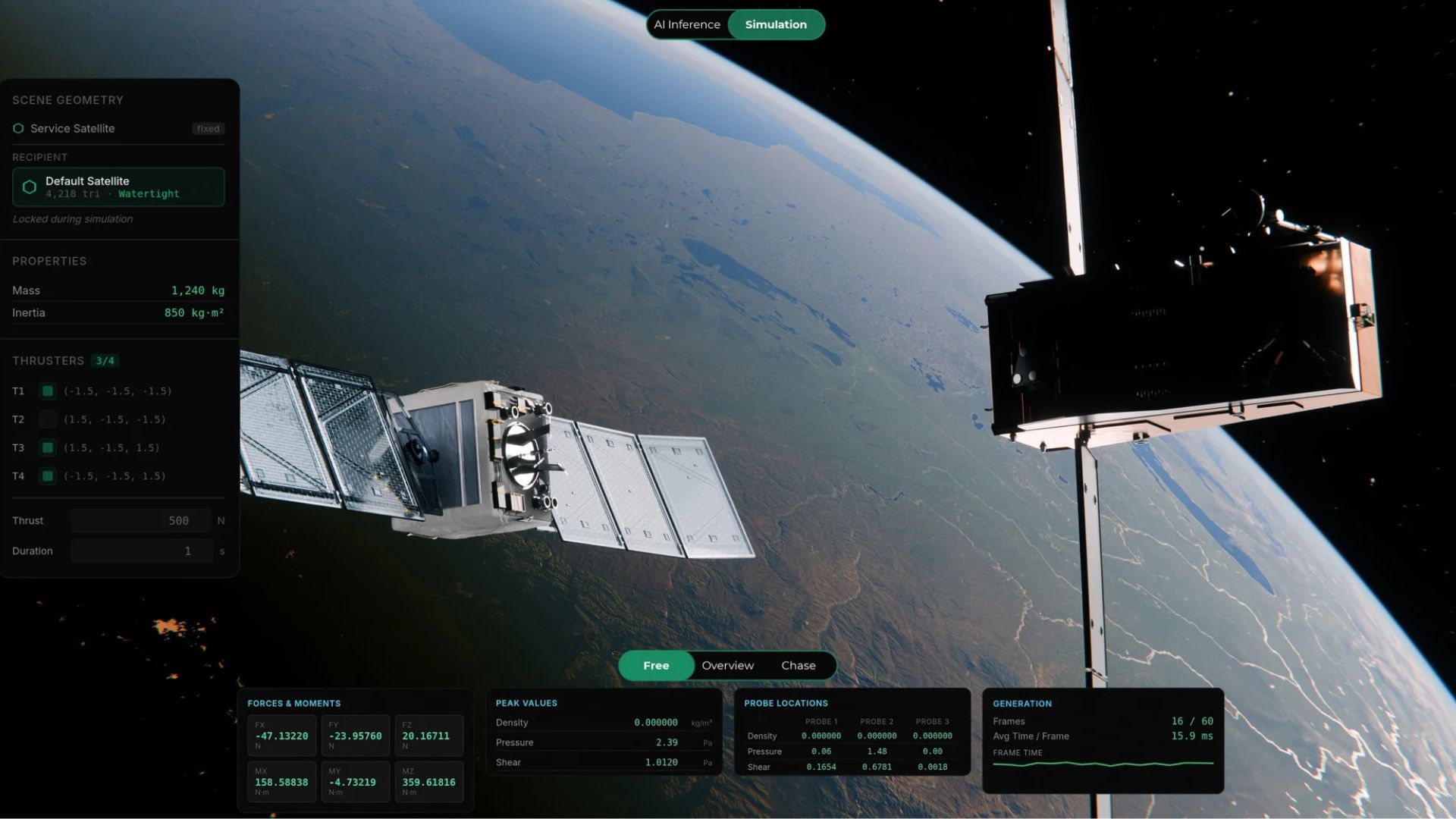
PR Newswire and company releases report that Flexcompute and Northrop Grumman, using NVIDIA technology, have developed an AI-driven physics infrastructure that automates a simulation workflow to predict thruster plume impingement during spacecraft docking. According to the joint announcement reported by PR Newswire on April 21, 2026, the system provides built-in uncertainty estimation and can produce predictions in seconds rather than the months traditionally required, with the companies stating it can reduce mission preparation timelines by up to 100X. MarketScreener and other outlets add that the work is built on the open-source NVIDIA Physics NeMo framework and that Flexcompute extended the framework with customized architectures and physics-aware constraints. Vera Yang, President and Co-Founder of Flexcompute, is quoted in coverage describing the work as enabling engineers to act faster and solve previously infeasible problems.
What happened
PR Newswire and related press coverage report that Flexcompute and Northrop Grumman, enabled by NVIDIA technology, have developed a foundational AI infrastructure to automate simulation workflows for predicting thruster plume impingement during spacecraft docking. PR Newswire states the model includes built-in uncertainty estimation and can produce inference-level predictions "in seconds rather than months," and the joint announcement claims this can reduce mission preparation timelines by up to 100X. MarketScreener and affiliated outlets report the work is built on the open-source framework NVIDIA Physics NeMo, which Flexcompute extended with customized model architectures, physics-aware constraints, and tailored training strategies for nozzle plume interactions.
Technical details
Per the reported materials, the announced system couples high-fidelity GPU-native physics simulation with AI Physics models that are structured to encode physical priors and to deliver uncertainty-aware outputs at inference time. Coverage highlights three technical elements attributed to the announcement and follow-up reporting: - physics-informed model structure; - uncertainty estimation at inference; - GPU-native scaling enabled by NVIDIA hardware. MarketScreener specifically names NVIDIA Physics NeMo as the underlying open-source framework Flexcompute extended for this use case.
Industry context
Companies increasingly use physics-informed machine learning to replace or augment costly ensembles of numerical simulations for design and control. Observed patterns in comparable projects show that embedding physical constraints into model architectures and returning calibrated uncertainty estimates are common requirements for adoption in safety- or mission-critical engineering workflows. For practitioners, these patterns mean verification, validation, and uncertainty quantification efforts remain central when integrating ML-driven surrogate models into control or mission-planning pipelines.
Context and significance
If the reported performance and reliability claims hold under independent validation, the combination of GPU-accelerated simulation backends and physics-aware ML surrogates could materially shorten iteration cycles for spacecraft design, docking procedures, and plume-interaction studies-areas where running millions of high-fidelity simulations has been a bottleneck. The work reported here follows a broader trend of vendors and research groups releasing GPU-native simulation stacks and physics-ML frameworks to compress wall-clock time for large parameter sweeps and control-policy evaluation.
What to watch
independent validation and third-party benchmarks that confirm the claim of 100X speedup and the fidelity of uncertainty estimates, disclosure of dataset generation and coverage, and details about end-to-end integration with flight software and verification processes. Observers should also look for published evaluation datasets, peer-reviewed results, or third-party red-team tests that document failure modes under rare or out-of-distribution plume conditions. Finally, practitioners will watch how the NVIDIA Physics NeMo extensions are released, licensed, and documented for reuse outside the announced partnership.
Quoted material
The coverage includes a quoted statement from Vera Yang, President and Co-Founder of Flexcompute: "We are able to take the most accurate and scalable physics foundations and evolve them into highly trained, customized Physics AI solutions that engineers can rely on." This quote appears in press coverage of the announcement.
Key Points
- 1PR Newswire reports Flexcompute and Northrop Grumman built an AI Physics pipeline that claims to cut simulation timelines by up to 100X.
- 2Industry context: Physics-informed model structure plus uncertainty estimation is becoming a minimum requirement for mission-critical simulation surrogates.
- 3For practitioners: independent benchmarks, V&V artifacts, and dataset disclosure are the key indicators that will determine operational adoption.
Scoring Rationale
The announcement describes a notable application of physics-informed ML and GPU-native simulation to a high-stakes aerospace use case, which is directly relevant to ML practitioners working on surrogate modeling and uncertainty quantification. The story is not a frontier-model release or industry-shaking regulatory event, but it is a meaningful product-level advancement with practical implications for simulation-heavy engineering teams.
Sources
Public references used for this report.
View 9 more sources
- Flexcompute and Northrop Grumman Reduce Space Mission Preparation Time by 100X Using AI Physics Models, Enabled by NVIDIAfinance.yahoo.com
- Flexcompute and Northrop Grumman Develops A Foundational AI Infrastructure Powered by NVIDIA Technologymarketscreener.com
- Flexcompute, Northrop Grumman unveil ‘Physics AI’ to cut simulation timelines by 100xinterestingengineering.com
- Flexcompute, Northrop Reduce Docking Simulations Using AI ...engtechnica.com
- Flexcompute, Northrop Grumman use AI physics models to cut space mission preparation time by up to 100 timesdefence-industry.eu
- Northrop Grumman Accelerates Space Innovation with AI Poweraeromagasia.com
- From Years to Hours: Northrop Grumman's AI Revolution in Spaasdnews.com
- Flexcompute And Northrop Grumman Reduce Space Mission ...aicompetence.org
- Flexcompute and Northrop Grumman Reduce Space Mission Preparation Time by 100X Using AI Physics Models, Enabled by NVIDIAchartmill.com
Practice interview problems based on real data
1,625 SQL & Python problems across 15 industry datasets — the exact type of data you work with.
Try 250 free problems