Fears Block International AI Weapons Agreements
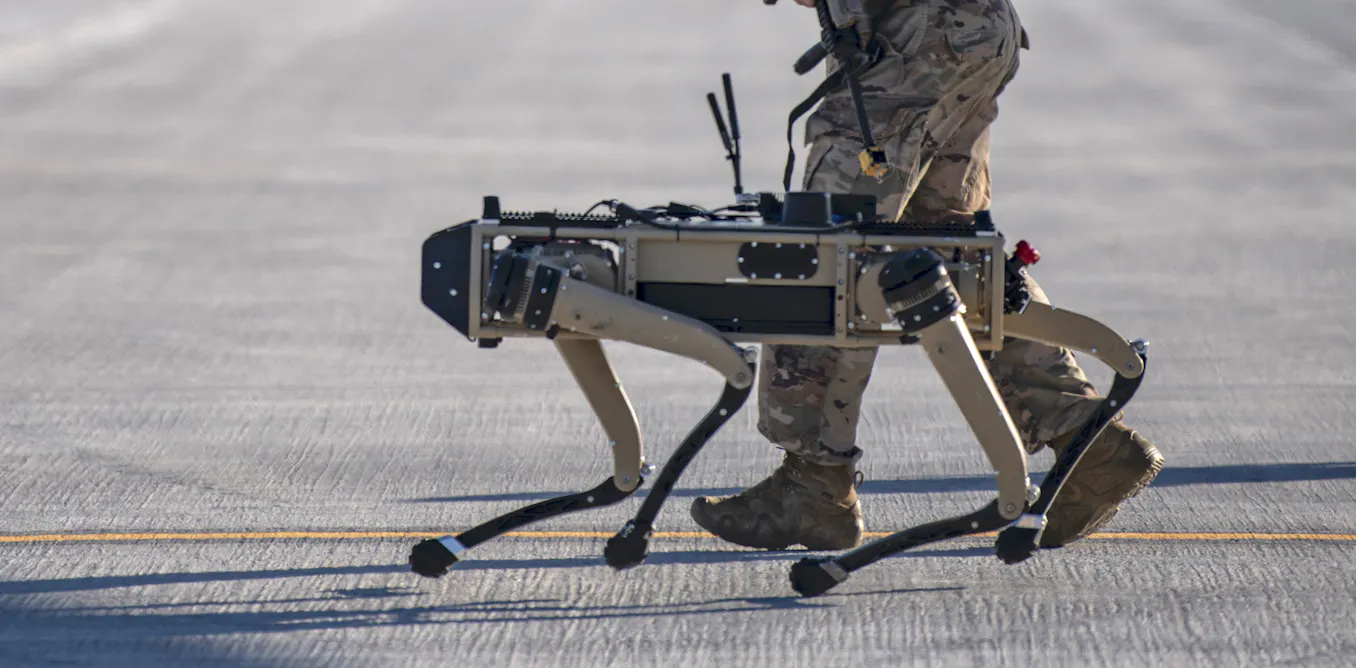
The Conversation reports that at the third military AI summit in La Coruña in February 2026 government officials, military personnel, industry representatives and researchers discussed converting agreed principles on military AI into action. The non-binding REAIM commitment presented at the summit called for human oversight, risk assessments, robust testing, and transparency in military AI decision-making, according to Mark Tsagas at The Conversation. The Conversation reports that fewer than half of countries represented at the REAIM summit signed the non-binding commitment. The article frames concerns that states fear sharing standards or verification measures could help adversaries gain a battlefield advantage, which the author argues is blocking stronger international agreement.
What happened
The Conversation article by Mark Tsagas reports that the third military AI summit met in La Coruña, Spain in February 2026 with attendance from government officials, military personnel, industry and thinktank researchers. Per The Conversation, the summit presented a non-binding REAIM commitment that called for human oversight, country-level risk assessments, robust testing, and transparency on how AI-driven decisions are made in conflict.
The Conversation reports that fewer than half of the countries represented at the REAIM summit signed the non-binding commitment.
Editorial analysis - technical context
Observed patterns in similar international processes show that dual-use technology complicates verification and information sharing. Industry observers note that technical standards for testing, transparency mechanisms and explainability are often treated as sensitive because they can reveal system capabilities and vulnerabilities.
Industry context
States balancing operational secrecy with the desire for interoperable norms face tradeoffs familiar from previous arms-control regimes. Public reporting frames reluctance to adopt binding measures as driven in part by fears that disclosure of testing protocols or verification tools could be reverse-engineered or exploited by adversaries.
What to watch
For practitioners and policy observers, indicators to monitor include whether subsequent diplomatic forums expand technical working groups on verifiable testing, the emergence of anonymized benchmarking protocols, and whether civil-society or multilateral organizations propose escrowed or third-party verification models. Also watch for documented proposals that separate high-level principles from detailed technical-test artifacts to reduce information leakage while preserving accountability.
Methodological note
All factual claims in this summary are drawn from the article by Mark Tsagas published at The Conversation on May 19, 2026. The analysis sections are labeled explicitly and present industry-level patterns rather than claims about any actor's internal intentions or plans.
Key Points
- 1International AI-weapons talks stall when states fear sharing technical standards will reveal capabilities and aid adversaries.
- 2Non-binding frameworks like REAIM emphasize human oversight, testing, and transparency but often secure limited signatures.
- 3Practitioners should track anonymized verification methods and third-party testing proposals as practical ways to advance norms.
Scoring Rationale
This story matters to practitioners because it affects the feasibility of interoperable testing, verification, and transparency standards for military AI. The immediate news is notable but not a paradigm shift, so a mid-high impact score is appropriate.
Practice interview problems based on real data
1,625 SQL & Python problems across 15 industry datasets — the exact type of data you work with.
Try 250 free problems