Ex-DeepMind Founders Raise $50m for Inherent Lab
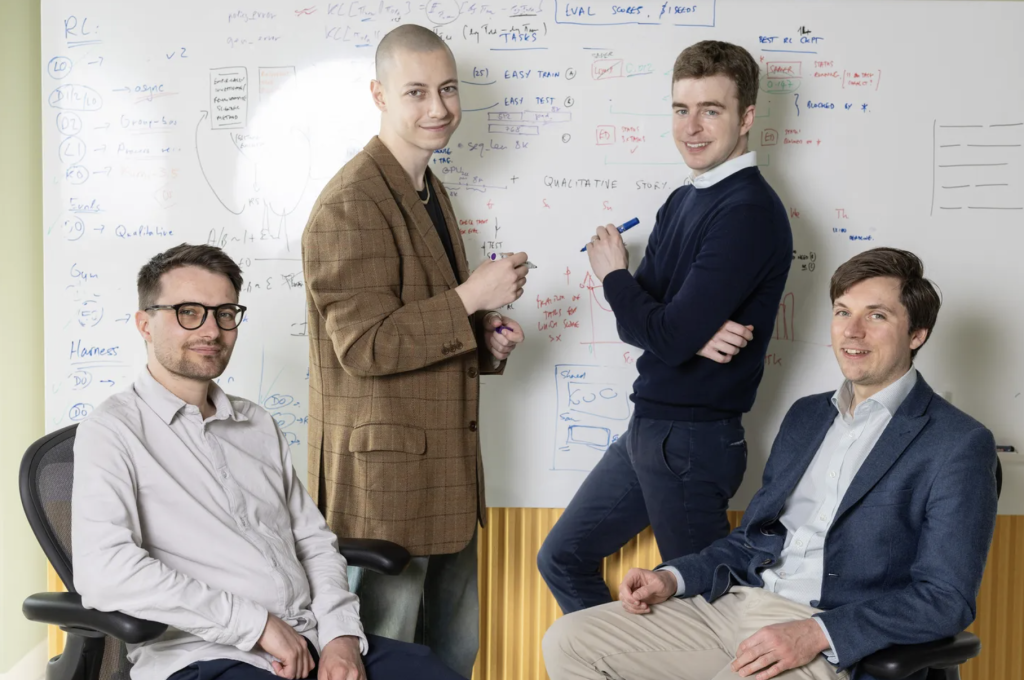
According to Sifted, London-based AI lab Inherent has raised $50m in a seed round led by Index Ventures with participation from Radical Ventures. The company was founded by former DeepMind researchers Tantum Collins, Edward Hughes, and Louis Kirsch, joined by Kaloyan Aleksiev (formerly at Reka AI and Microsoft), per Index Ventures. Per Index Ventures, Inherent is building an AI research platform called Faraday to combine human-led scientific research with advanced AI. Sifted reports that former UK government AI tsar and Entrepreneurs First cofounder Matt Clifford has joined as an adviser. Sifted quotes Danny Rimer, partner at Index Ventures, saying most AI is built to answer questions and cannot yet figure out which questions are worth asking, and that this is the gap Inherent is trying to address.
What happened
According to Sifted, London-based AI lab Inherent emerged from stealth with a $50m funding round led by Index Ventures and with participation from Radical Ventures. The founders are former DeepMind researchers Tantum Collins, Edward Hughes, and Louis Kirsch, alongside Kaloyan Aleksiev, who previously worked at Reka AI and Microsoft, per Index Ventures. Per Index Ventures, the lab's platform is named Faraday and is described as aiming to combine human scientific research with advanced AI systems. Sifted reports that former UK government AI tsar and Entrepreneurs First cofounder Matt Clifford has been recruited as an adviser. Sifted quotes Danny Rimer, partner at Index Ventures, saying most AI is built to answer questions and cannot yet figure out which questions are worth asking, and that this is the gap Inherent is building into.
Editorial analysis - technical context
The team's framing around "AI-native science" and open-ended exploration reflects a broader research impulse to move beyond purely answer-driven models toward systems that support hypothesis generation and exploratory experimentation. Companies and labs pursuing similar aims often combine simulation environments, automated experiment pipelines, and mixed human-AI workflows to surface surprising hypotheses. For practitioners, that pattern implies heavy investment in experiment orchestration, reproducible data capture, and tooling that connects model outputs to wet-lab or simulator execution.
Industry context
Industry observers note growing VC interest in startups targeting scientific discovery with ML, as exemplified by a $50m seed round led by a major investor. The involvement of DeepMind alumni continues a familiar talent flow from frontier research labs into startups focused on applying advanced techniques to domain science. Venture-backed efforts in this space frequently emphasize both fundamental research publications and demonstrable, domain-specific outcomes to attract follow-on funding.
What to watch
Observers will look for technical signals such as open publications, benchmarked results from Faraday-driven workflows, partnerships with academic labs or instrumented facilities, and hires in experimental-science and safety-specialist roles. Funding deployment milestones, early prototype demonstrations, and any third-party validations of discovery outcomes will be the clearest indicators of progress.
Key Points
- 1Founders with DeepMind backgrounds secured a $50m seed round, showing VC appetite for AI-driven scientific discovery.
- 2Inherent's Faraday platform targets open-ended exploration, highlighting demand for tooling that couples hypothesis generation with experiment execution.
- 3Industry observers link DeepMind alumni startups and index-led funding rounds to an acceleration of ML-first approaches in domain science.
Scoring Rationale
A $50m seed for an AI science lab led by Index Ventures is notable for practitioners tracking funding flows and research-to-startup talent migration. The story signals VC interest in ML-driven discovery but does not yet include technical results or widely adopted tooling.
Sources
Public references used for this report.
Practice interview problems based on real data
1,625 SQL & Python problems across 15 industry datasets — the exact type of data you work with.
Try 250 free problems