EU Enters Talks to Join Pax Silica Alliance
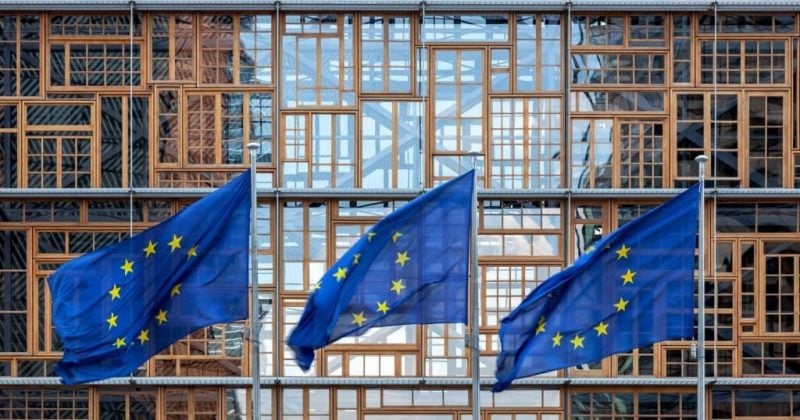
Bloomberg reported that the European Commission has entered talks to join Pax Silica, a U.S.-led initiative to build a "trusted network" securing AI chips, advanced semiconductors, critical minerals, and data centers (reported by Seeking Alpha and Stratfor). CryptoBriefing reports the proposal focuses on supply-chain coordination for sensitive technologies and notes indirect implications for crypto infrastructure because large-scale Bitcoin mining relies on specialized ASICs and many decentralized services run on GPU-powered cloud platforms. MLex reports the EU is divided over participation, citing concerns among some member states about potential U.S. export-control regimes that could fragment the single market. Reporting so far does not include a public, detailed statement from the European Commission on final terms or a formal accession decision.
What happened
Bloomberg reported that the European Commission has entered talks to join Pax Silica, a U.S.-led initiative described as a "trusted network" for securing supply chains for AI chips, advanced semiconductors, critical minerals, and data centers (reported May 12, cited by Seeking Alpha and Stratfor). CryptoBriefing's coverage describes the initiative's focus on AI infrastructure and critical raw materials and highlights that those hardware layers underpin crypto mining and other blockchain infrastructure. MLex reports Brussels is not unified on participation and that some member states fear a new export-control regime on AI chips could fragment the EU internal market.
Technical details
Editorial analysis - technical context
The alliance as described in reporting centers on coordinating access to fabrication capacity, cross-border logistics for specialty metals, and secure sourcing for GPU and AI-accelerator supply lines. Industry reporting identifies the most relevant inputs as advanced node fabrication, GPU/accelerator inventory, and processing of rare earths and specialty metals such as gallium and germanium, which are critical for semiconductor substrates (CryptoBriefing; Seeking Alpha).
Context and significance
What to watch
Editorial analysis
The talks sit at the intersection of industrial policy and geopolitics. Reporting frames Pax Silica as an extension of transatlantic efforts that include the European Chips Act, the Critical Raw Materials Act, and the US-EU Trade and Technology Council, all of which aim to reduce strategic dependence on a single supplier base. MLex documents internal EU debate about balancing access to allied supply chains against preserving the single market and strategic autonomy. CryptoBriefing highlights a downstream effect: hardware restrictions or preferential access arrangements can shift cost structures for hardware-heavy applications such as Bitcoin mining and GPU-backed cloud services.
Observers should track three indicators in coming months. First, formal statements or negotiating texts from the European Commission or member-state capitals that specify membership terms or export-control alignment, as reported by major outlets such as Bloomberg. Second, whether the alliance publishes rules on preferential procurement or allocation mechanisms for chips and accelerators, which would materially affect commercial supply flows. Third, any parallel measures under the European Chips Act or Critical Raw Materials Act that increase domestic capacity or stockpiling, which reporting shows are already part of Brussels' toolbox (CryptoBriefing; MLex).
For practitioners in crypto and cloud infrastructure, supply-chain regimes that prioritize allied access could change procurement timelines and pricing for specialist silicon and accelerators. For semiconductor supply-chain planners, the case underscores the growing role of geopolitics in capacity planning and vendor risk models. Reporting to date does not include a final agreement or a public, detailed statement from the European Commission on accession terms, and MLex documents continuing divisions within the EU about exposure to U.S.-led export controls.
Bottom line
What is reported so far is a negotiation phase, not a concluded policy shift. Multiple outlets attribute the talks to Bloomberg, and coverage from CryptoBriefing and MLex highlights both technical supply-chain links to crypto hardware and internal EU policy tensions. Practitioners should interpret reports as an evolving transatlantic coordination effort with measurable implications for hardware-dependent services, while recognizing that legal terms and implementation details remain unsettled in public reporting.
Key Points
- 1EU talks to join Pax Silica, per Bloomberg coverage, underline transatlantic coordination to secure AI-chip, semiconductor, and critical-mineral supply chains.
- 2Industry reporting flags that preferential access rules for chips and accelerators would alter cost and procurement dynamics for hardware-heavy sectors, including crypto mining.
- 3Member-state divisions documented by MLex show the balance between access to allied supply and preserving EU market autonomy is a central policy tension.
Scoring Rationale
The story is notable because it concerns transatlantic coordination on semiconductor and AI-infrastructure supply chains, which materially affects procurement and risk models for AI and hardware-dependent systems. Remaining uncertainty and internal EU divisions lower immediacy compared with a finalized treaty or controls.
Sources
Public references used for this report.
Practice with real FinTech & Trading data
90 SQL & Python problems · 15 industry datasets
250 free problems · No credit card
See all FinTech & Trading problems