DeSantis signs law regulating AI data centers
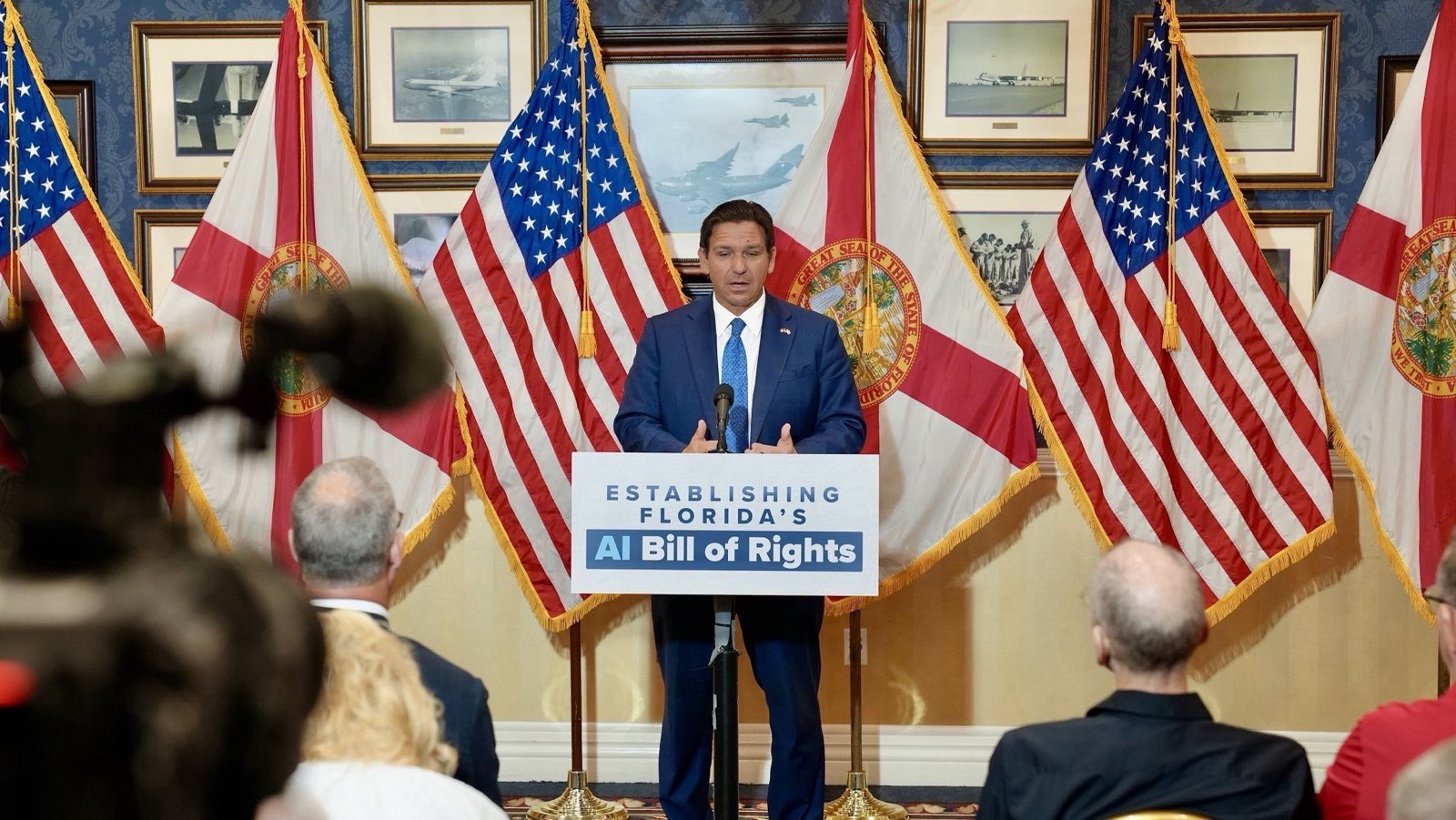
Governor Ron DeSantis signed SB 484 into law on May 7 at Florida Polytechnic University in Lakeland, creating new state rules for large-scale data centers, according to Tampa Bay Times and Orlando Weekly. The law requires that big data centers, those consuming at least 50 megawatts at peak, per Tampa Bay reporting, pay their full utility and infrastructure costs so those costs are not shifted onto Florida electric customers, and it directs the Florida Public Service Commission to develop tariffs and service requirements to implement that rule, per Fox13 and Florida Phoenix. The law also tightens water-permit standards, mandates reclaimed water where possible, allows confidentiality for company plans for up to one year, and orders an OPPAGA study on data center construction and operations due July 1, 2027, according to Florida Phoenix and Tampa Bay Times. DeSantis was quoted at the signing event opposing consumer subsidization of hyperscale centers (Orlando Weekly, Fox13).
What the law requires
- •The use of reclaimed water where feasible and denial of consumptive-use permits if proposed water use "is harmful to the water resources of the area," per Tampa Bay Times.
- •That data centers pay full utility and infrastructure costs and not shift them to Florida electric customers, per Fox13 and Tampa Bay Times.
- •Confidentiality allowances that let companies keep plans private for up to one year, reported by Florida Phoenix and WLRN.
- •A study by the Florida Office of Program Policy Analysis and Government Accountability (OPPAGA) on data center construction and operations due to the governor and legislative leaders by July 1, 2027, per Florida Phoenix.
Editorial analysis - technical context
Industry-pattern observations: State-level limits on cost-shifting and local water permitting address two technical constraints that commonly affect hyperscale data center siting: sustained high electrical load and large-volume cooling needs. Operators building facilities at or above the 50 megawatt threshold typically plan for continuous power provisioning and significant water-for-cooling capacity. Rules that require full-cost recovery via tariffs and tighter consumptive-use permitting raise the bar for local infrastructure planning and may increase the explicit capital and operating costs developers must demonstrate during siting reviews.
What to watch
Industry context
Industry observers have documented repeated community resistance to large data center proposals over water and long-term local economic benefits; Tampa Bay Times and Fox13 report that recent local opposition across several Florida counties informed legislative attention this session. Editorial analysis: States and localities increasingly weave utility-tariff requirements and water-resource conditions into data center approval processes to force clearer accounting of externalities, which can change the commercial calculus for greenfield hyperscale builds.
Observers should track how the Florida Public Service Commission defines tariffs and "full cost of service" in rulemaking or enforcement actions, and whether those tariffs include grid upgrades, standby capacity, or demand charges. Also watch how local water management districts apply the consumptive-use standard and reclaimed-water mandates in permit reviews, and whether the OPPAGA study, due July 1, 2027, recommends further statutory changes or implementation guidance. Finally, follow whether confidentiality allowances (up to one year) become a point of litigation or local policy dispute, as reported by Florida Phoenix and WLRN.
Limitations in reporting
What happened
Gov. Ron DeSantis signed SB 484 into law on May 7 at Florida Polytechnic University in Lakeland, according to reporting by the Tampa Bay Times and Orlando Weekly. The statute creates new state-level rules for large-scale, AI-capable data centers and attaches guardrails around electricity and water use, per Tampa Bay Times and Fox13. The law applies protections for facilities that consume at least 50 megawatts at peak, as reported by the Tampa Bay Times. The legislation requires that such data centers "bear their own full cost of service" so costs are not shifted to utility customers, and it directs the Florida Public Service Commission to develop tariffs and minimum service requirements to operationalize that requirement, as reported by Fox13 and Florida Phoenix.
Several pieces note that earlier, stronger versions of the bill were trimmed during negotiations with industry and the legislature; Florida Phoenix and Tampa Bay Times report that the House rewrote portions after engagement with developers and federal actors. The governor verbally framed the law as protective of consumers and asserted it may be "the first law of its kind in the country," per Tampa Bay Times; those are reported statements, not independent legal determinations.
Practical implications for practitioners
For practitioners evaluating infrastructure and site selection, industry-pattern observations: the combination of explicit tariff obligations and water-use restrictions increases the importance of upfront utility cost modeling, negotiation with utilities on tariff design, and early water-resource assessments. For policy analysts, tracking subsequent PSC rulemaking and local permitting outcomes will show whether the law materially changes commercial decision-making or simply increases administrative hurdles.
Key Points
- 1SB 484 requires large data centers to pay full utility costs, preventing cost-shifting to Florida electric customers, tightening financial accountability.
- 2The law links approvals to water use, requiring reclaimed water where possible and denying permits if water use harms local resources, raising siting constraints.
- 3Industry-pattern observations: combined tariff and water rules increase upfront infrastructure and permitting due diligence, altering site-selection economics for hyperscale builds.
Scoring Rationale
State-level but novel regulation affects hyperscale data center siting, utility cost allocation, and water permitting-directly relevant to practitioners planning AI infrastructure. The impact is notable but not nationally decisive.
Sources
Public references used for this report.
View 7 more sources
- DeSantis signs bill regulating costs, water use tied to large-scale data centers in Floridafox13news.com
- Florida has a new law regulating AI data centersfloridaphoenix.com
- Gov. DeSantis signs bill protecting Florida consumers from data center costsnews4jax.com
- Florida becomes one of first states to regulate AI data centerswctv.tv
- Gov. DeSantis signs bill regulating AI data centers while in Lakelandwfla.com
- DeSantis receives bills on AI data centers, 'Free Cuba' bills | WLRNwlrn.org
- DeSantis Signs Data Center Regulations Into Law | mypanhandle.commypanhandle.com
Practice with real Ad Tech data
90 SQL & Python problems · 15 industry datasets
250 free problems · No credit card
See all Ad Tech problems