Databricks Unveils Agent-Focused Lakehouse and Governance Tools
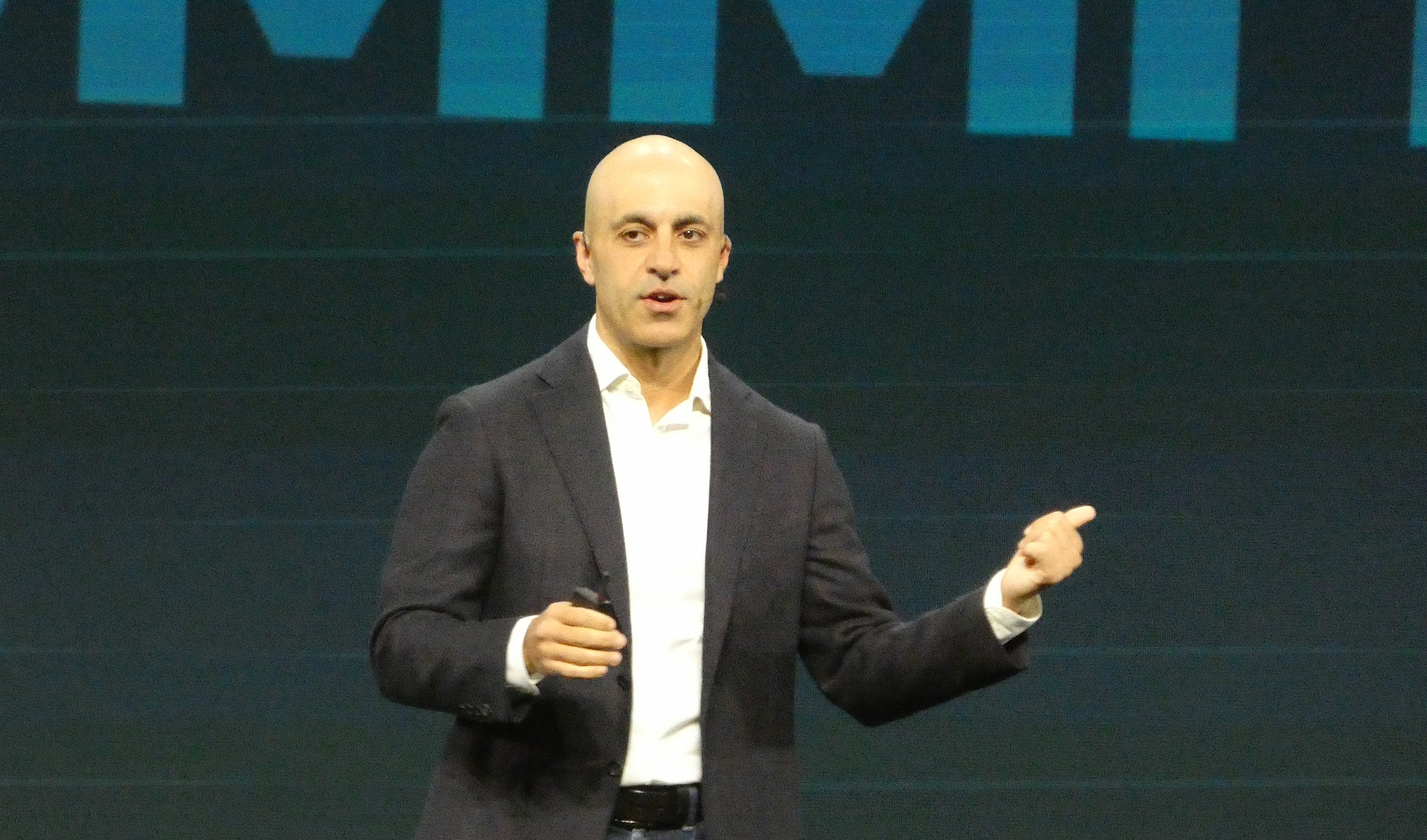
Databricks unveiled a broad platform refresh at its Data + AI Summit 2026 in San Francisco, targeting AI agent infrastructure across data serving, architecture, building, and governance. The company launched Lakehouse//RT, a real-time analytics product powered by a new compute engine called Reyden, which Databricks says delivers sub-100ms latency at 12,000 queries per second directly on governed Delta Lake and Iceberg tables - up to 16x faster than separate real-time serving stacks (per the company's June 16 press release). Alongside Lakehouse//RT, Databricks introduced LTAP (Lake Transactional/Analytical Processing), a new architecture unifying transactional and analytical workloads on a single open-format storage layer, eliminating ETL pipelines. The company also expanded Agent Bricks into a full developer agent platform and launched Genie One, an agentic coworker connecting to Google Drive, Jira, Slack, and 50-plus apps. A new Unity AI Gateway provides centralized governance, budget controls, and contextual policies for agents, models, and tools. Per SiliconANGLE, CEO Ali Ghodsi declared "We believe that AGI is already here," framing these releases as infrastructure for an enterprise era where agents effectively double the workforce.
What happened
Databricks announced a sweeping platform refresh at its Data + AI Summit 2026 (San Francisco, June 16), spanning real-time data serving, unified data architecture, agent building, and AI governance. Per SiliconANGLE reporting on the keynote, CEO Ali Ghodsi declared "We believe that AGI is already here," framing the releases as infrastructure for an era where agents effectively double the enterprise workforce. The summit drew more than 30,000 data and AI professionals in person at Moscone Center.
Lakehouse//RT and Reyden
Databricks announced Lakehouse//RT, the real-time evolution of the Databricks Lakehouse, powered by a new compute engine called Reyden (a nod to co-founder Reynold Xin, per SiliconANGLE). Per the official June 16 press release, Reyden delivers sub-100ms latency at 12,000 queries per second directly on governed Delta Lake and Apache Iceberg tables, with response times as low as 10ms on smaller datasets. Customers have seen up to 16x better performance versus existing dedicated real-time serving stacks. Lakehouse//RT queries the data lake directly, eliminating the need for a separate serving layer and its associated CDC pipelines, governance gaps, and vendor lock-in. Ghodsi is quoted in the press release: "Lakehouse//RT completes the engine spectrum, providing the millisecond speed layer that people want and agents require." Lakehouse//RT is now available in Beta.
LTAP - Lake Transactional/Analytical Processing
Databricks announced LTAP, a new architecture unifying OLAP (analytical) and OLTP (transactional) workloads on a single copy of data in the lake, per the company's press release. The foundation is Lakebase, a serverless Postgres layer on open object storage. Lakebase now serves thousands of customers handling 12 million database launches per day, with enterprise users including Block, Ensemble, Superhuman, and Zillow. LTAP stores Lakebase data directly in Unity Catalog using Delta and Iceberg formats, eliminating ETL pipelines, replicas, and synchronization overhead between operational and analytical systems. LTAP is listed as "coming soon" as part of Lakebase.
Agent Bricks expansion and Genie One
Databricks expanded Agent Bricks into a comprehensive developer agent platform. Per the official Databricks blog (June 16, 2026), over 100,000 agents have been built on Agent Bricks since launch, with the platform processing more than 1 quadrillion tokens per year. The expanded platform adds model choice across OpenAI, Anthropic, Gemini, Qwen, Kimi, and Grok (via a new SpaceX partnership); context retrieval via MCP-connected Unity Catalog for external sources including Google Drive, Jira, Slack, and GitHub; managed agent memory backed by Lakebase; Document Intelligence for PDF and document parsing (GA); and secure compute sandboxes for isolated agent execution. Separately, Databricks launched Genie One, an agentic coworker connecting to Google Drive, Jira, Slack, Confluence, SharePoint, and 50-plus applications for business team automation across structured and unstructured data.
Unity AI Gateway
Unity AI Gateway serves as a unified governance layer for agents, models, MCPs, tools, and external agents, all governed through Unity Catalog. Per the Databricks Agent Bricks blog, capabilities include fine-grained access controls, per-user and per-group budget caps, intelligent traffic routing, contextual SQL-based security policies, agent trace monitoring, and integration with LakeWatch, Databricks' agentic security platform. Agent reasoning traces and memory are stored in the Lakehouse alongside enterprise data.
Industry context
Practitioner takeaway
Editorial analysis
The pattern across these announcements is consistent - Databricks is bundling real-time serving, unified data storage, agent runtime, and governance into one platform rather than requiring practitioners to assemble separate systems. The 16x performance claim for Lakehouse//RT and the elimination-of-ETL premise behind LTAP are vendor-reported figures; independent validation at production scale remains to be seen. The SpaceX-Grok partnership and 100K-plus agent figure signal commercial momentum, though Databricks remains private and has not disclosed unit economics.
For data and AI teams, these releases matter most at the intersection of latency and governance. Lakehouse//RT enables sub-second data reads for agents without a separate serving stack, while Unity AI Gateway adds cost controls and contextual policies for agents calling tools and models. Teams should benchmark Lakehouse//RT under their own workload profiles before committing - the stated 12K QPS figure is on standard analytical benchmarks, not customer-specific data shapes. LTAP's promise of ETL elimination depends on Lakebase GA maturity, which is further along than LTAP itself (coming soon).
Key Points
- 1Databricks launched Lakehouse//RT (Reyden engine) for sub-100ms real-time analytics at 12K QPS, and LTAP to unify transactional and analytical data without ETL pipelines.
- 2Agent Bricks expanded into a full developer platform with MCP-connected context, Unity AI Gateway governance, and a SpaceX partnership for Grok models on Databricks.
- 3CEO Ghodsi declared 'AGI is already here', framing these infrastructure releases as essential for agent-first enterprise operations at scale.
Scoring Rationale
A broad platform refresh from a major enterprise AI vendor at its flagship conference, covering real-time data serving (Lakehouse//RT with verified 16x performance claim), a new data architecture (LTAP), and an expanded agent platform (Agent Bricks, 100K+ agents built). Notable for enterprise ML/AI practitioners but falls below the threshold of a frontier-model release or landmark industry shift.
Sources
Public references used for this report.
View 5 more sources
Practice interview problems based on real data
1,625 SQL & Python problems across 15 industry datasets — the exact type of data you work with.
Try 250 free problems