Cookie Monster Explains AI Safety with Parable
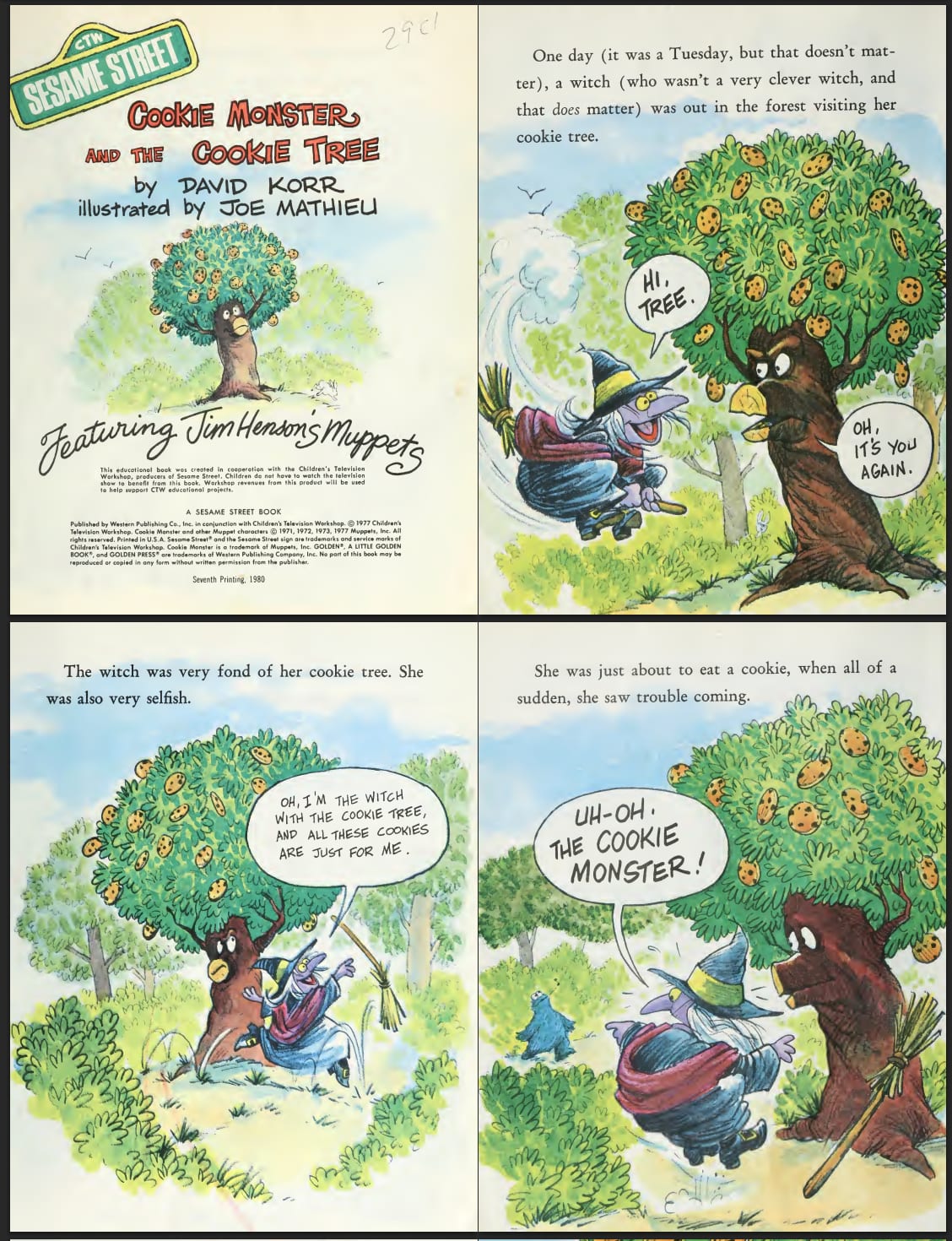
A LessWrong post published 21 June 2026, labeled "Disclaimer: This is a shitpost (or is it?)", retells the 1977 Little Golden Books story "Cookie Monster and the Cookie Tree" to sketch AI safety themes. The post maps story elements to topics such as AGI benefits, control by unnamed proprietary labs, access controls like KYC, and content red lines; it cites Claude and Anthropic as examples when discussing refusal behavior and industry skepticism. The post also highlights specification failures, edge cases in training, and resource disparities between capabilities work and safety field building. This is a rhetorical piece using metaphor and satire to survey common AI-safety talking points rather than presenting new technical results.
What happened
The LessWrong post published 21 June 2026, headlined "The Cookie Monster Explains AI Safety," presents itself as "Disclaimer: This is a shitpost (or is it?)." It retells the Little Golden Books story Cookie Monster and the Cookie Tree and maps its plot beats to contemporary AI-safety topics. The post explicitly links the story to AGI risks and to operational controls used by frontier labs, noting the use of access controls such as KYC and content filters. The post references Claude and Anthropic when discussing model refusal behavior and industry skepticism, and it calls out specification failures and unforeseen edge cases in training as central pitfalls.
Editorial analysis - technical context
Industry patterns around access control and content moderation include authentication (KYC), capability gating, and refusal classifiers. These are layered controls that practitioners deploy to limit misuse, but they also introduce trade-offs: increased latency, higher operational complexity, and adversarial attempts to bypass filters. Separately, the post's focus on specification errors aligns with documented problems in reward-design, distributional shift, and unanticipated failure modes in model behaviors.
Context and significance
Editorial analysis
The piece is rhetorical and satirical, not a technical paper; its value is communicative. Parables like this surface common public narratives: concentrated capabilities, the gap between capabilities funding and safety funding, and the recurring theme of coordination or slowdown as a response. For practitioners, such narratives shape public expectations and can influence hiring, funding, and regulatory attention even when they simplify technical nuance.
What to watch
- •Signals of field resourcing: funding levels and hiring trends for safety vs capabilities work.
- •Public-facing safety claims and how vendors operationalize refusal and access controls.
- •Research addressing specification robustness, adversarial bypasses of filters, and measurable safety benchmarks.
Key Points
- 1Metaphor and satire are being reused to summarize AI-safety themes and shape public perception quickly.
- 2Practitioner-visible controls like KYC and refusal filters are prominent in public narratives about restricting misuse.
- 3Specification failures and funding imbalances between capabilities and safety are recurring community concerns.
Scoring Rationale
The post is a rhetorical, satirical summary of AI-safety talking points rather than new technical work, so its direct impact on practitioners is limited. It is useful as a cultural signal about public narratives and funding priorities.
Sources
Public references used for this report.
Practice interview problems based on real data
1,625 SQL & Python problems across 15 industry datasets — the exact type of data you work with.
Try 250 free problems