Coinbase and Binance Seek Access to Mythos
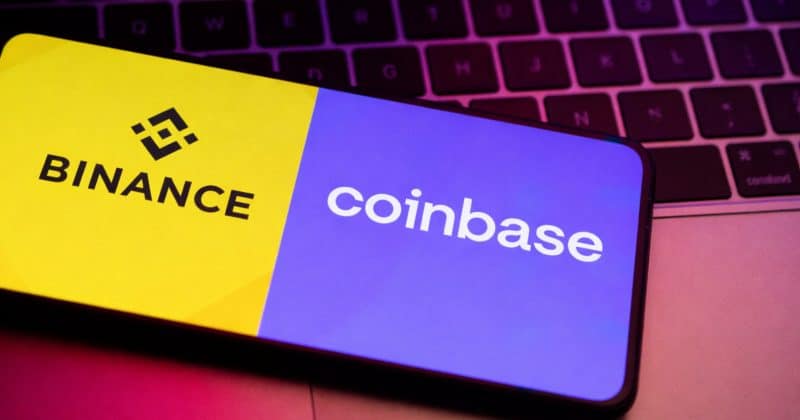
Crypto exchanges Coinbase and Binance are pursuing access to Anthropic's new security-focused model, Mythos, as custodians brace for a new era of AI-enabled vulnerability discovery and exploitation. Anthropic is restricting access through Project Glasswing, granting early entry to a small group of partners including AWS, Apple, Google, Microsoft, Nvidia, and security vendors. Firms like Fireblocks previously tested Opus 4.6, which reportedly found 500+ high-severity flaws in open-source libraries; Anthropic says Claude Mythos Preview can identify and exploit zero-day vulnerabilities across major operating systems and browsers. Exchanges view the model as both a defensive tool and an existential risk, seeking controlled access to accelerate hardening while avoiding adversarial misuse.
What happened
Coinbase and Binance are actively seeking access to Anthropic's new cybersecurity-oriented model, Mythos, as major crypto custodians prepare for an acceleration in AI-driven vulnerability discovery and exploitation. Anthropic is gating the model through Project Glasswing, which includes early partners such as AWS, Apple, Google, Microsoft, Nvidia, and Palo Alto Networks. Industry tests with Opus 4.6 reportedly uncovered 500+ previously unknown high-severity flaws, raising alarms about the speed and scale at which Claude Mythos Preview could both defend and weaponize software flaws.
Technical details
Claude Mythos Preview is described as a frontier model optimized for offensive and defensive cyber tasks, capable of autonomously finding and exploiting complex zero-day vulnerabilities across major operating systems and web browsers. Anthropic has not publicly released model architecture or parameter counts; access is limited to vetted partners under Project Glasswing. Previous models in this family, such as Opus 4.6, demonstrated automated vulnerability discovery without bespoke toolchains, suggesting Mythos combines high-capability static and dynamic analysis primitives with code-generation and exploit synthesis. Project Glasswing partners reportedly include:
- •Amazon Web Services (AWS)
- •Apple
- •Microsoft
- •Nvidia
- •Palo Alto Networks
Context and significance
The practical takeaway for practitioners is that AI is crossing from vulnerability-assistance to autonomous exploit generation at scale. Security tooling has used automation and fuzzing for years, but Mythos signals a qualitative shift where large models can link discovery, exploit synthesis, and even targeted payload creation with minimal human scaffolding. For crypto exchanges and custodians this is acute: the attack surface includes trading engines, custody key management, API endpoints, and user data stores. Coinbase's publicized engagement follows its 2025 insider breach and underscores why exchanges want early access to identify and patch critical issues before adversaries do. At the same time, Anthropic's decision to restrict broad release and channel access through a curated partnership set reflects a new governance pattern for high-risk capabilities: selective distribution, stakeholder coordination, and coordinated disclosure to vendors and platform owners.
Operational implications for security teams
Practitioners should expect accelerated discovery of both legacy and novel vulnerabilities. Engineers need to prioritize measurable mitigation steps: expanded attack-surface inventories, threat modeling for AI-augmented offensive techniques, automated patching pipelines, hardened secrets management, and broader use of runtime monitoring and EDR. Organizations that obtain controlled access will gain defensive value from model-driven red teaming, but they must also invest in operational controls around model outputs, validation, and safe integration into CI/CD.
What to watch
Whether Anthropic expands access beyond Project Glasswing, how vendors standardize secure-testing workflows, and regulatory responses to models that materially lower the cost of exploit creation. Exchanges seeking access signal a pragmatic approach: use the capability defensively while lobbying for strict governance to limit misuse.
Bottom line
Claude Mythos Preview represents a new inflection in automated vulnerability capability, prompting custodians to seek partnership access for defensive hardening even as its existence raises acute operational and policy questions about safe deployment and distribution.
Key Points
- 1Anthropic's Mythos can autonomously find and exploit zero-days, forcing crypto firms to prioritize proactive hardening.
- 2Project Glasswing restricts access to major tech and security partners, reflecting a governance model for high-risk AI capabilities.
- 3Controlled access offers defensive value but raises operational and policy challenges around model misuse and coordinated disclosure.
Scoring Rationale
The story signals a major operational shift: models that can autonomously discover and exploit vulnerabilities materially change defensive posture needs for critical infra. Access controls and partner-driven mitigation reduce immediate systemic shock, but practitioners must treat this as a high-priority security risk.
Sources
Public references used for this report.
Practice with real FinTech & Trading data
90 SQL & Python problems · 15 industry datasets
250 free problems · No credit card
See all FinTech & Trading problems