
Cloud-Native Stacks Face Stress from Agentic AI
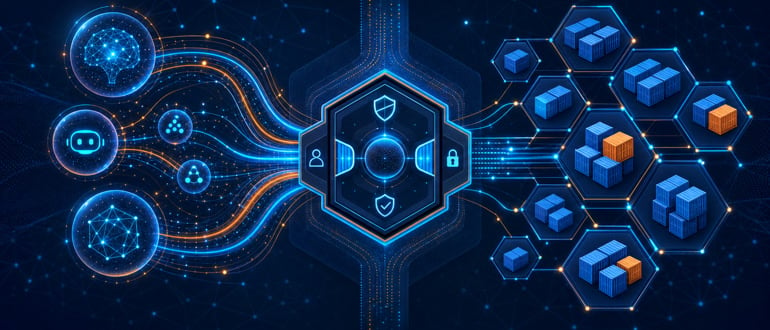
According to a CloudNativeNow interview with Traefik Labs CEO Sudeep Goswami, enterprises are juggling three migrations: lifting workloads off legacy virtualization, modernizing Kubernetes deployments, and integrating agentic AI. The interview reports Goswami's view that AI-generated code is reaching production faster than prior waves, making the runtime, not just CI/CD pipelines, the key control point. The piece highlights runtime governance primitives such as policy enforcement that travels with workloads, identity-aware routing for agent-to-service calls, and observability that treats AI traffic as a first-class category. The article also reports Traefik integrations across SUSE Rancher, RKE2, and the SUSE AI Factory, and notes Goswami's view that architecture choices made in the next 12 to 18 months will shape platform resilience under prolonged AI-driven change (CloudNativeNow).
What happened
According to a CloudNativeNow interview with Traefik Labs CEO Sudeep Goswami, enterprises are simultaneously migrating workloads off legacy virtualization, modernizing Kubernetes-hosted services, and experimenting with agentic AI. The article reports Goswami's assertion that AI-generated code is landing in production faster than previous waves, which shifts the control point toward the runtime layer rather than just CI/CD pipelines (CloudNativeNow). The story also reports that Traefik is rolling out integrations across SUSE Rancher, RKE2, and the SUSE AI Factory (CloudNativeNow).
Technical details
Context and significance
Editorial analysis
The interview frames several runtime governance patterns practitioners will encounter: policy enforcement that travels with the workload, identity-aware routing for agent-to-service calls, and observability that treats AI-originated traffic as a distinct telemetry class. These measures map to existing cloud-native primitives, ingress, API gateway, and service mesh, but extend them to enforce behavior for autonomous agents rather than only human-driven requests.
As applied AI moves from experiments to production, latency in deployment cycles and the autonomy of agents increase risk at runtime. Industry experience shows that seams between runtimes and orchestration layers are common failure points when traffic patterns change, and adding agentic traffic amplifies that risk. For platform teams, this increases the priority of runtime-level policy, identity, and observability work compared with pipeline-only controls.
What to watch
For practitioners
monitor adoption of workload-carried policy standards, service-to-agent identity frameworks, and telemetry schemas that tag agent-originated calls. Also watch integrations between gateway/mesh vendors and AI platform stacks, such as those reported between Traefik and SUSE tooling, as early indicators of operational patterns migrating into mainstream platforms (CloudNativeNow).
Key Points
- 1AI-generated code reaching production faster shifts control from CI/CD pipelines to the runtime layer, raising governance needs.
- 2Runtime governance primitives, workload-bound policy, identity-aware routing, agent-first observability, are practical levers to manage agentic traffic.
- 3Integrations between gateways/meshes and AI platform tooling indicate vendors are preparing cloud-native stacks for sustained agentic workloads.
Scoring Rationale
The story highlights operational implications of agentic AI for cloud-native infrastructure, a noteworthy practical concern for platform and SRE teams. It is important for practitioners but not a paradigm-shifting technical release.
Practice interview problems based on real data
1,625 SQL & Python problems across 15 industry datasets — the exact type of data you work with.
Try 250 free problems
