Claude AI Cheat Sheet Explains Features and Shortcuts
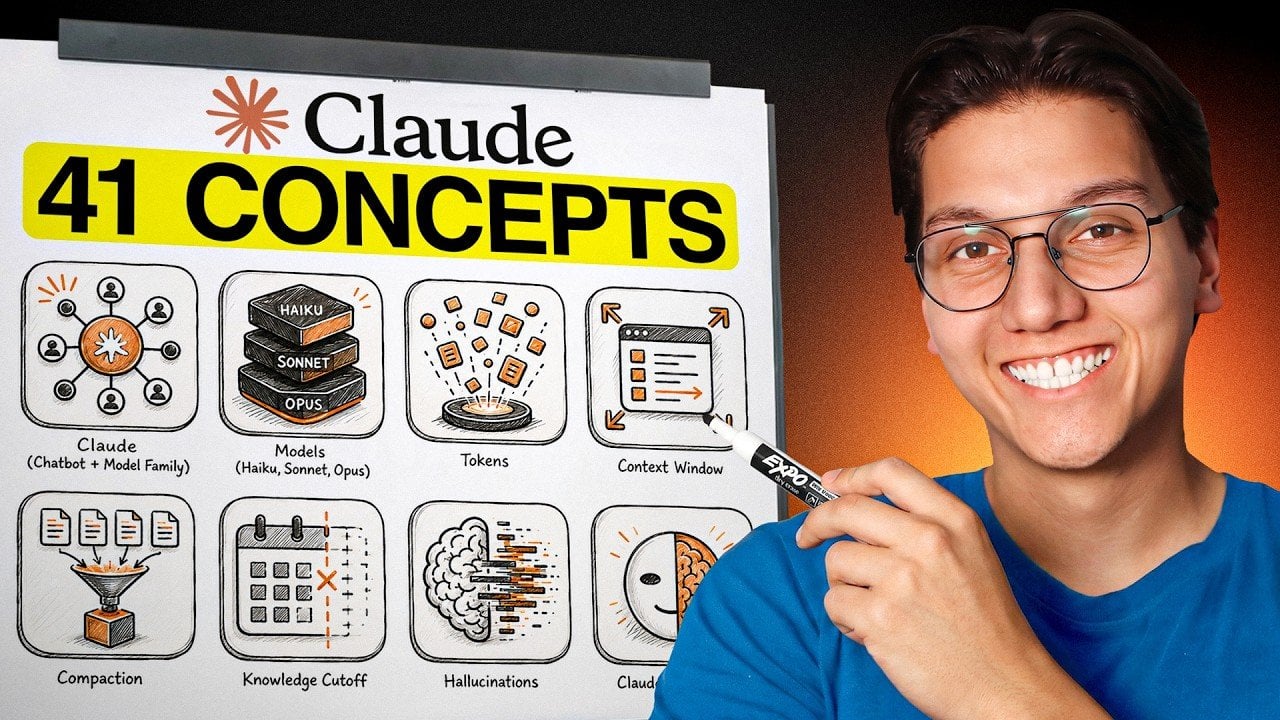
Anthropic published a terminology cheat sheet and documentation for Claude, while third-party guides and summaries collected practical shortcuts for everyday use. The official PDF, "Al Fluency: Key Terminology Cheat Sheet," was published by Anthropic and defines core concepts such as delegation, description, discernment, and diligence (Anthropic PDF). The Claude Code help center documents claude CLI vocabulary, keyboard shortcuts, slash commands, and the CLAUDE.md project file for persistent context (Claude Help Center). Independent writeups, including Geeky-Gadgets and TechRepublic summaries, highlight token-based billing, context-window limits, multimodal inputs, specialized modes like Extended Thinking and Deep Research, integrations with Google Drive, Slack, and Notion, and a Pro plan priced at $20/month (Geeky-Gadgets). These resources consolidate commands, model options, and workflow tips for new and power users.
What happened
Anthropic published a terminology cheat sheet and related documentation for Claude; the company's PDF titled "Al Fluency: Key Terminology Cheat Sheet" outlines a core framework and vocabulary for working with AI (Anthropic PDF). Separately, the Claude Code help center hosts a Claude Code cheatsheet that collects keyboard shortcuts, session semantics, and slash-command syntax for the claude CLI and desktop experience (Claude Help Center). Multiple third-party guides and explainers, including Geeky-Gadgets and TechRepublic, summarized these materials and added practical shortcuts and pricing details, noting model families (Haiku, Sonnet, Opus), multimodal support, integration options, and a Pro plan at $20/month (Geeky-Gadgets; TechRepublic).
Technical details
The Anthropic PDF frames AI fluency around four competencies: Delegation, Description, Discernment, and Diligence, each broken into practical subskills and prompts for collaboration with models (Anthropic PDF). The Claude Code help center documents session concepts such as CLAUDE.md for project-level persistent context, MCP for Model Context Protocol servers, and permission modes that govern tool access, plus explicit slash commands like /clear, /compact, /cost, and /plan (Claude Help Center). Independent cheat-sheet PDFs and community posts provide the keyboard shortcuts and CLI flags used in claude sessions, including mode toggles, permission cycling, and quick-look context commands (Claude Code PDF; shipyard.build summary).
Editorial analysis - technical context
For practitioners
these resources combine three practical layers-terminology and evaluation heuristics, interactive tooling commands, and operational integrations. Industry-pattern observations show that consolidating vocabulary (what Anthropic calls the 4Ds) alongside concrete CLI and permission controls reduces cognitive friction when teams move from experimentation to production workflows. Teams that adopt a project-level CLAUDE.md or MCP-backed tooling generally gain repeatability in prompts and guardrails for tool execution, which helps when automating repo edits or database queries.
Context and significance
public documentation and third-party cheat sheets lower the onboarding cost for both engineers and nontechnical users. Reporting by Geeky-Gadgets and TechRepublic places these materials alongside feature summaries such as multimodal inputs, specialized reasoning modes (Extended Thinking, Deep Research), and integrations with Google Drive, Slack, and Notion, which matter for embedding Claude into document workflows and collaboration loops (Geeky-Gadgets; TechRepublic). The presence of a tiered pricing reference, including a Pro plan at $20/month, gives practitioners a quick cost benchmark for individual or small-team usage (Geeky-Gadgets).
What to watch
Observed patterns in similar platform documentation: adoption hinges on two observable indicators-how teams adopt persistent project files (like CLAUDE.md) for reproducibility, and whether MCP-style connectors are used to give models safe, auditable access to internal systems. Practitioners and integrators will want to track updates to the help center and the Anthropic terminology guide for changes to permission defaults, new slash commands, or expanded model families (Haiku, Sonnet, Opus) that affect latency and token costs. Finally, watch third-party tooling and community cheat sheets for emergent best practices around prompt templates and cost-aware batching.
Key Points
- 1Anthropic published an official terminology cheat sheet capturing core competencies for AI fluency, standardizing vocabulary for users (Anthropic PDF).
- 2Claude Code documentation centralizes practical tooling: CLAUDE.md, slash commands, keyboard shortcuts, and MCP integration for reproducible workflows (Claude Help Center).
- 3Independent guides synthesize features, pricing ($20/month Pro), and integrations, lowering onboarding friction for engineers and product teams (Geeky-Gadgets; TechRepublic).
Scoring Rationale
This story compiles official documentation and community cheat sheets that materially reduce onboarding time for Claude users, but it does not introduce a new model or paradigm. Practical value for practitioners is moderate.
Sources
Public references used for this report.
Practice interview problems based on real data
1,625 SQL & Python problems across 15 industry datasets — the exact type of data you work with.
Try 250 free problems