China Deploys AI Marine Welding Robot for 30-ton Parts
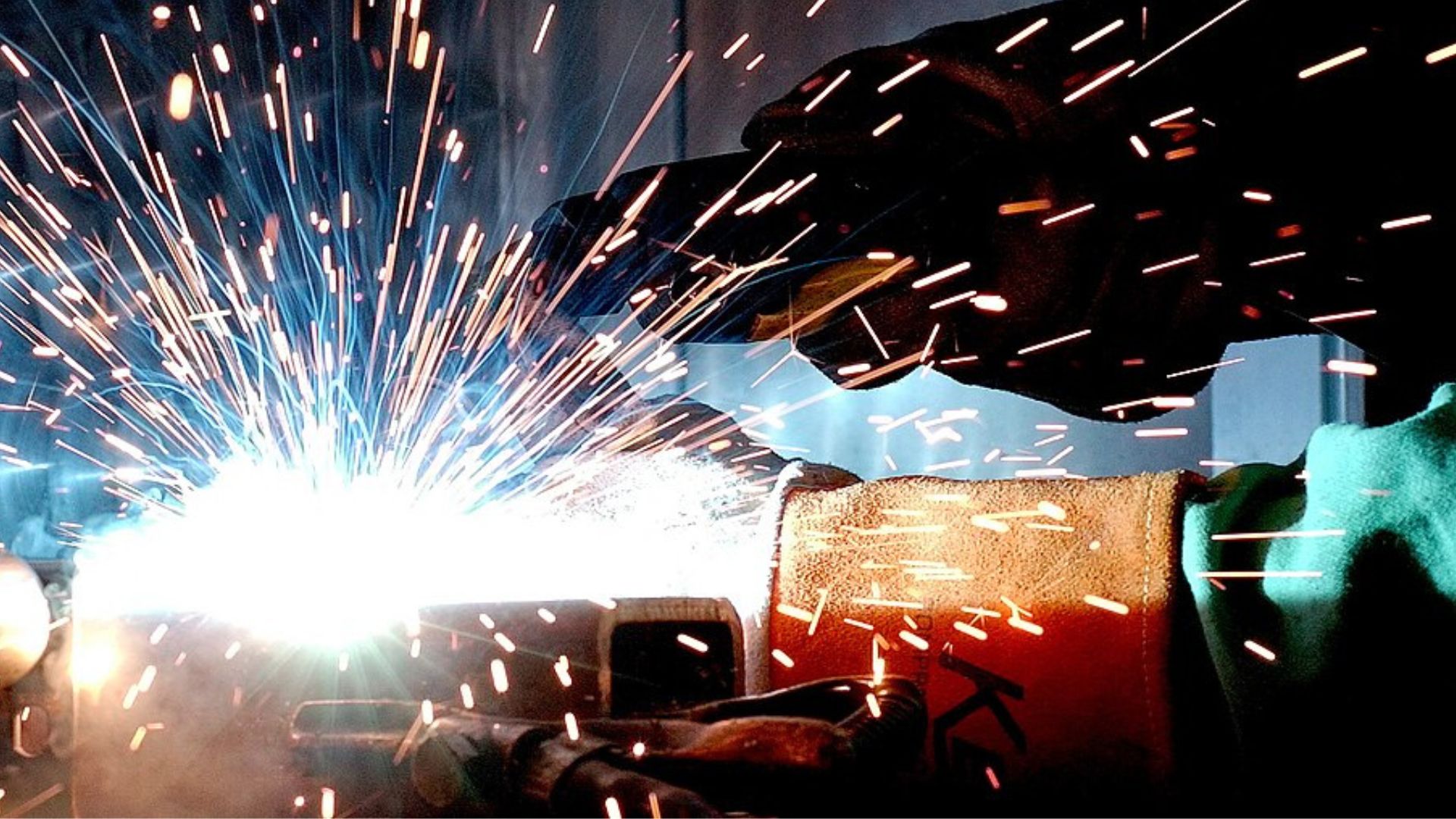
Xinhua News Agency reported, via the Global Times, that China put into operation its first domestically developed intelligent welding robot system for flexible manufacturing in marine engineering on June 14, 2026, at a smart manufacturing base in Tianjin. Developed by Offshore Oil Engineering Co (CNOOC) over nearly 10 months of on-site debugging and approximately 1,000 welding experiments, the system handles steel up to 70 millimeters thick, carries loads up to 30 tons, and achieves a first-pass qualification rate above 98 percent, with overall efficiency improved by more than 40 percent versus traditional welding methods. The system incorporates AI visual weld seam recognition, 3D laser vision alignment, and multi-layer multi-pass welding path planning, all using 100 percent domestically developed core software. A separately developed intelligent grinding robot was also deployed simultaneously, improving grinding efficiency by 15 percent, per Xinhua via Global Times.
What Happened
Xinhua News Agency reported on June 14, 2026 (cited by the Global Times) that China put into operation its first domestically developed intelligent welding robot system for flexible manufacturing in marine engineering at a smart manufacturing base in Tianjin. The system was developed by Offshore Oil Engineering Co, a subsidiary of China National Offshore Oil Corp (CNOOC), specifically for heavy, customized offshore welding tasks including module nodes, deepwater jacket strengthening rings, and buckle rings. Global Times reports the system uses 100 percent domestically developed core software and process libraries. Integration completed in August 2025; after nearly 10 months of on-site debugging and approximately 1,000 welding experiments, all performance indicators met design requirements, per Xinhua via Global Times.
Technical Details
Global Times, citing Xinhua, reports the system handles steel up to 70 millimeters thick and carries a maximum load of 30 tons, with a designed service life of 20 years. Chen Xin, head of the research project, stated the team achieved more than 10 technological innovations, including AI visual weld seam recognition, 3D laser vision intelligent alignment, and multi-layer multi-pass intelligent welding path planning. The robot operates from a single start command and automatically completes component welding, with intelligent weld trajectory correction and intelligent root-pass sealing. The system achieved a first-pass qualification rate above 98 percent and improved overall efficiency by more than 40 percent compared with traditional welding methods, per Xinhua via Global Times. A separately developed intelligent grinding robot was also put into service simultaneously; workshop head Liu Ruifeng stated it completed grinding on more than 500 steel sections, achieving a 15 percent increase in grinding efficiency via intelligent visual positioning and real-time force control compensation, per Xinhua via Global Times.
Technical Context
Heavy-industry welding for offshore structures is a persistent automation challenge because parts are large, irregular, and require deep-penetration joins. The combination of AI-enabled vision-based seam detection with heavy-payload manipulators represents a practical deployment rather than a new model release. For industrial automation teams, the first-pass qualification rate above 98 percent and the 40-percent efficiency gain versus traditional methods are the most directly verifiable performance claims, pending independent third-party evaluation. The system's all-domestic software stack also reflects continued investment in industrial AI independence.
Context and Significance
Global Times, citing Xinhua, presents this as China's first domestically developed system of this class for marine engineering. For industrial automation practitioners, the most relevant aspects are the load capacity (30 tons) and thick-steel capability (70 mm), which together indicate applicability to large-frame marine modules rather than light fabrication. The simultaneous deployment of an intelligent grinding robot at the same Tianjin facility suggests a broader smart-manufacturing push at the site.
What to Watch
Observers should look for corroborating technical documentation, independent weld-quality and throughput benchmarks, and follow-up coverage detailing control architectures, safety interlocks, and continuous-production uptime statistics. Additional AI-robotics deployments at the Tianjin base may follow in coming months.
Key Points
- 1Reported deployment applies AI-enabled vision and 3D laser alignment to heavy marine welding, addressing large, irregular offshore components.
- 2Capacity and durability figures, reported as 30-ton load and 20-year service life, place the system in heavy industrial rather than light manufacturing use cases.
- 3Industry observers will watch for independent weld-quality metrics and uptime data to assess real-world impact on offshore fabrication workflows.
Scoring Rationale
A well-documented first-in-China deployment of AI-driven industrial welding for offshore structures, with verified performance claims (98% first-pass rate, 40% efficiency gain vs. traditional) from Xinhua via Global Times. Relevant to industrial automation practitioners but limited in immediate global AI/DS impact; single-country deployment with no open benchmarks.
Sources
Public references used for this report.
Practice interview problems based on real data
1,625 SQL & Python problems across 15 industry datasets — the exact type of data you work with.
Try 250 free problems