Product Launchchemputationself driving labschemifyrobotic automation
Chemistry Adopts Programmable Chemputation For Reproducible Synthesis
10.0
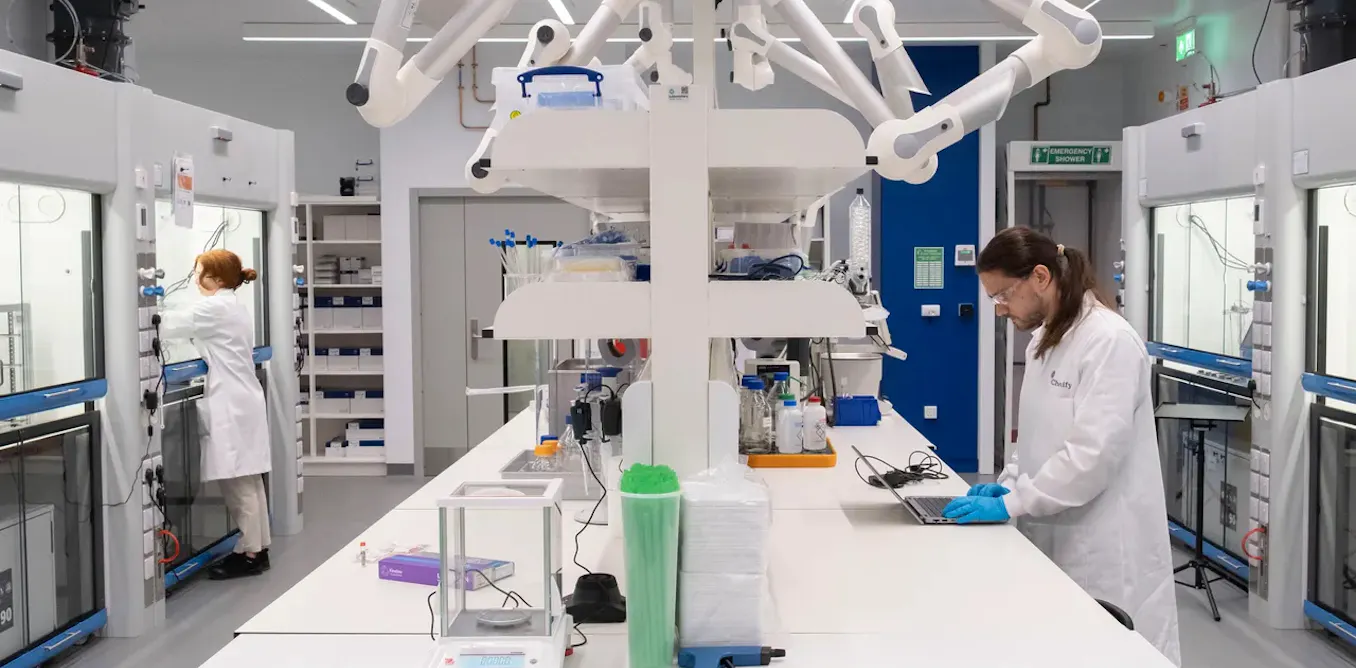
Researchers at the University of Glasgow have developed a programmable "chemputation" language and published a preprint describing executable chemical code, where reagents are data and operations are machine instructions. In June 2025 Chemify, a Glasgow spin-out, launched the world's first chemifarm in Maryhill, applying AI and robotics to self-learning molecule production. The approach aims to improve reproducibility and enable automated, iterative discovery.
Key Points
- 1Developed chemputation language converts syntheses into machine-executable code, encoding operations like mixing and heating
- 2Launched Chemify chemifarm in June 2025 applies AI and robotics to self-learning molecule production
- 3Enables researchers to run reproducible, shareable syntheses and close feedback loops for automated error correction
Scoring Rationale
High novelty, broad applicability and immediate lab usability; limited independent validation beyond initial deployments so far
Practice interview problems based on real data
1,625 SQL & Python problems across 15 industry datasets — the exact type of data you work with.
Try 250 free problems