Chef Robotics Reaches 100 Million Servings Milestone
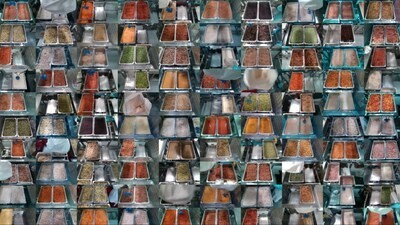
Chef Robotics has surpassed 100 million servings, marking a major scaling milestone for physical AI in food manufacturing. The San Francisco startup uses deployed robotic arms and production-grade vision models trained on real-world, in-facility data to automate high-volume, lower-complexity tasks such as portioning and assembly. Early anchor customers like Amy's Kitchen and enterprise clients in airline catering, school lunch provisioning, and large-scale meal manufacturers have driven repeat orders and continuous data collection. Chef emphasizes that real production data for deformable, organic ingredients is essential to model reliability, creating a self-reinforcing data flywheel that improves coverage across ingredients, use cases, and sites. The company plans to expand into smaller kitchens, ghost kitchens, and more enterprise verticals while leveraging its growing dataset to accelerate product improvements.
What happened
Chef Robotics, a San Francisco physical AI company, announced it has completed 100 million servings in production across more than a dozen facilities. The milestone reflects deployments with enterprise customers including Amy's Kitchen and Chef Bombay, and recurring orders from existing sites. The company defines a "serving" as a portion that a robot deposits into a meal tray, representing components of large-scale meal assembly rather than full meals. Chef positions this scale as the basis for what it calls the production data flywheel, claiming it now holds the largest real-world food manipulation dataset among physical AI companies.
Technical details
Chef focuses on high-throughput, lower-complexity operations where scale delivers ROI. Key elements practitioners should note:
- •Chef uses real production data rather than synthetic simulation because food is a deformable, highly variable material class that resists accurate synthetic modeling.
- •The stack combines industrial robotic arms, custom end-effectors (shielded utensils), and deep learning vision and control models trained on in-facility telemetry and video.
- •Milestone timeline shows rapid scale: 1 million servings (Apr 2023), 10 million (Jan 2024), 25 million (Aug 2024), 50 million (May 2025), 100 million (Apr 2026).
- •Deployments are in production environments across the US, Canada, and Europe, generating continuous labeled examples of deformable-object handling, failure modes, and edge cases.
Context and significance
This is a practical example of physical AI moving from lab proofs to commercial impact. The core insight is the importance of real-world, domain-specific datasets for tasks involving deformable materials. Unlike warehouses or rigid-part assembly where simulation and synthetic augmentation scale well, food handling requires exposure to organic variability: texture, moisture, shape, and packaging differences. By instrumenting customer lines at scale, Chef accelerates model improvement through direct feedback loops. That trajectory matters for practitioners because it shifts investment from simulators and synthetic pipelines toward robust field instrumentation, domain-specific labeling, and lifecycle model maintenance.
Why it matters to operators and engineers
With repeated deployments and per-site model updates, Chef demonstrates a viable path to reducing labor costs and increasing yield in large meal-production settings. Engineers working on perception and manipulation for deformable objects can look to Chef's operational data strategy as a template: prioritize in-situ data collection, design end-effectors tolerant to variability, and tune models for frequent small improvements rather than rare, large architecture changes.
Business and expansion signals
CEO Rajat Bhageria and company spokespeople say the next commercial moves target "smaller kitchens," including airline catering, ghost kitchens, and additional institutional buyers. Each new venue provides different ingredient mixes and packaging constraints, which feeds the data flywheel and broadens model generalization.
What to watch
Track the company's dataset claims and whether Chef publishes benchmarks or tooling for deformable-object perception and control. Watch for partnerships with large food manufacturers or cloud/edge providers offering on-prem inference pipelines. Also monitor how Chef balances on-site model training, transfer learning across facilities, and regulatory/food-safety compliance as it expands into new geographies and kitchen types.
Key Points
- 1Real-world production data is essential for reliable food-handling models because organic, deformable materials defeat purely synthetic simulation approaches.
- 2Chef's 100 million servings milestone evidences a production data flywheel: more deployments produce more training data, improving generalization and ROI.
- 3Focus on high-volume, lower-complexity tasks enabled rapid commercial traction with repeat orders from enterprise food manufacturers and catering providers.
Scoring Rationale
The milestone is a notable demonstration that physical AI can scale in a complex deformable-material domain, offering actionable lessons for practitioners on data strategy and deployment. It is not a frontier-model breakthrough, but it meaningfully advances industry adoption.
Sources
Public references used for this report.
Practice interview problems based on real data
1,625 SQL & Python problems across 15 industry datasets — the exact type of data you work with.
Try 250 free problems